



"Varawut" supports IEAT in creating Low-Carbon Cities Starting with Target Industrial Estates
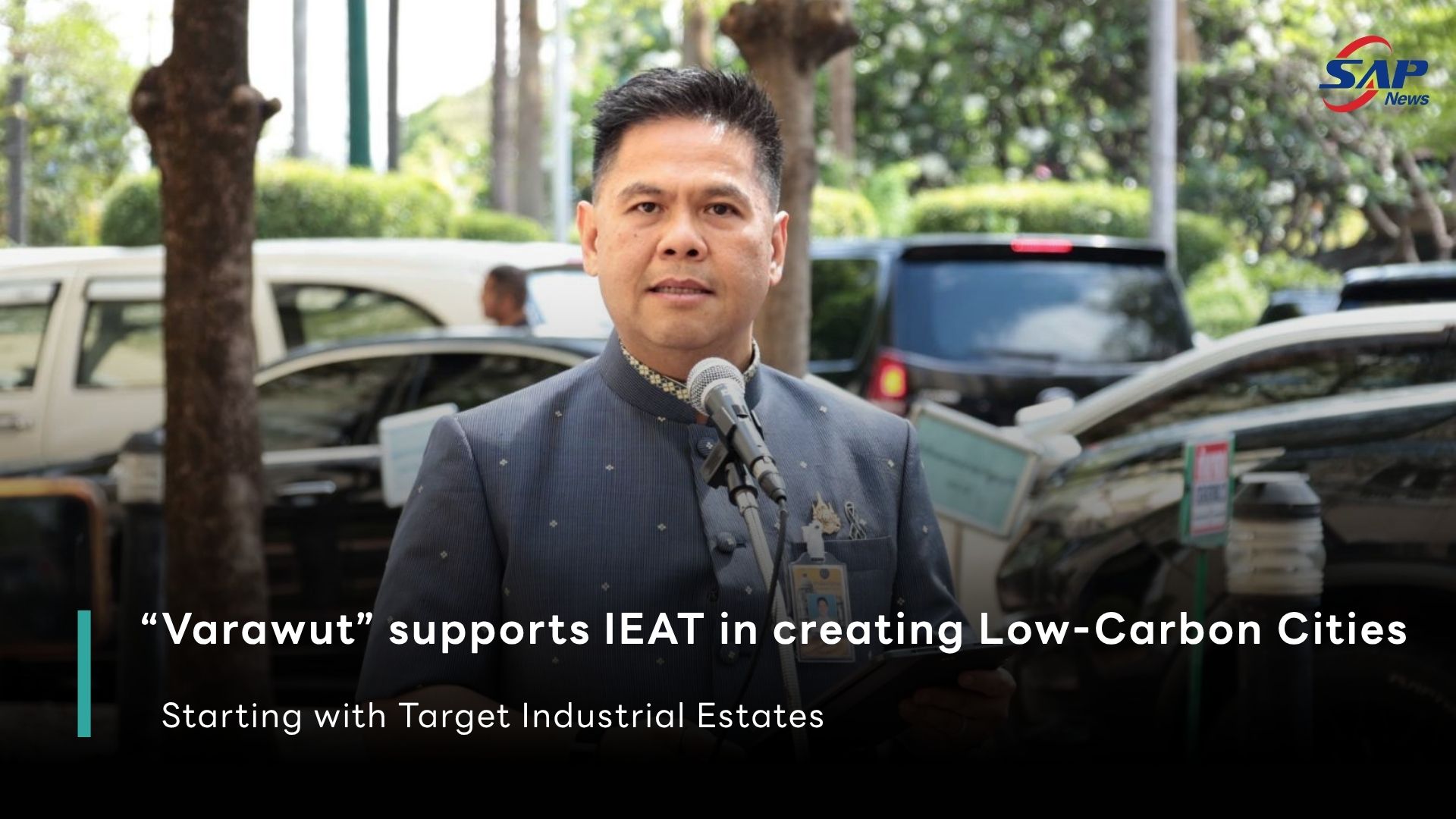
Today (5 May 2026) 9:30 AM at Government House, Mr. Varawut Silpa-archa, Minister of Industry, gave an interview before attending the Cabinet meeting, stating that the direction of driving Thai industry under the Low Carbon Cites & Carbon Market Development (LCC) project, a national strategic project to reform financial and energy infrastructure, aims to create a carbon financial ecosystem. Following a visit to the Industrial Estate Authority of Thailand (IEAT), he learned that the Ministry of Industry accepted the project on March 21, 2025, as a pilot government agency (PSO).
Mr. Varawut said that the carbon financial ecosystem is a first for Thailand, receiving international recognition and focusing on developing carbon financial infrastructure. The Cabinet approved the international carbon market on December 9, 2025. This project is a collaboration between the Department of Climate Change and Environment, the Ministry of Natural Resources and Environment, and the World Bank, through the Export-Import Bank of Thailand (EXIM Bank), to support investment in clean energy technologies, including renewable energy (RE), energy efficiency (EE), and electric vehicles (EVs), on government assets.
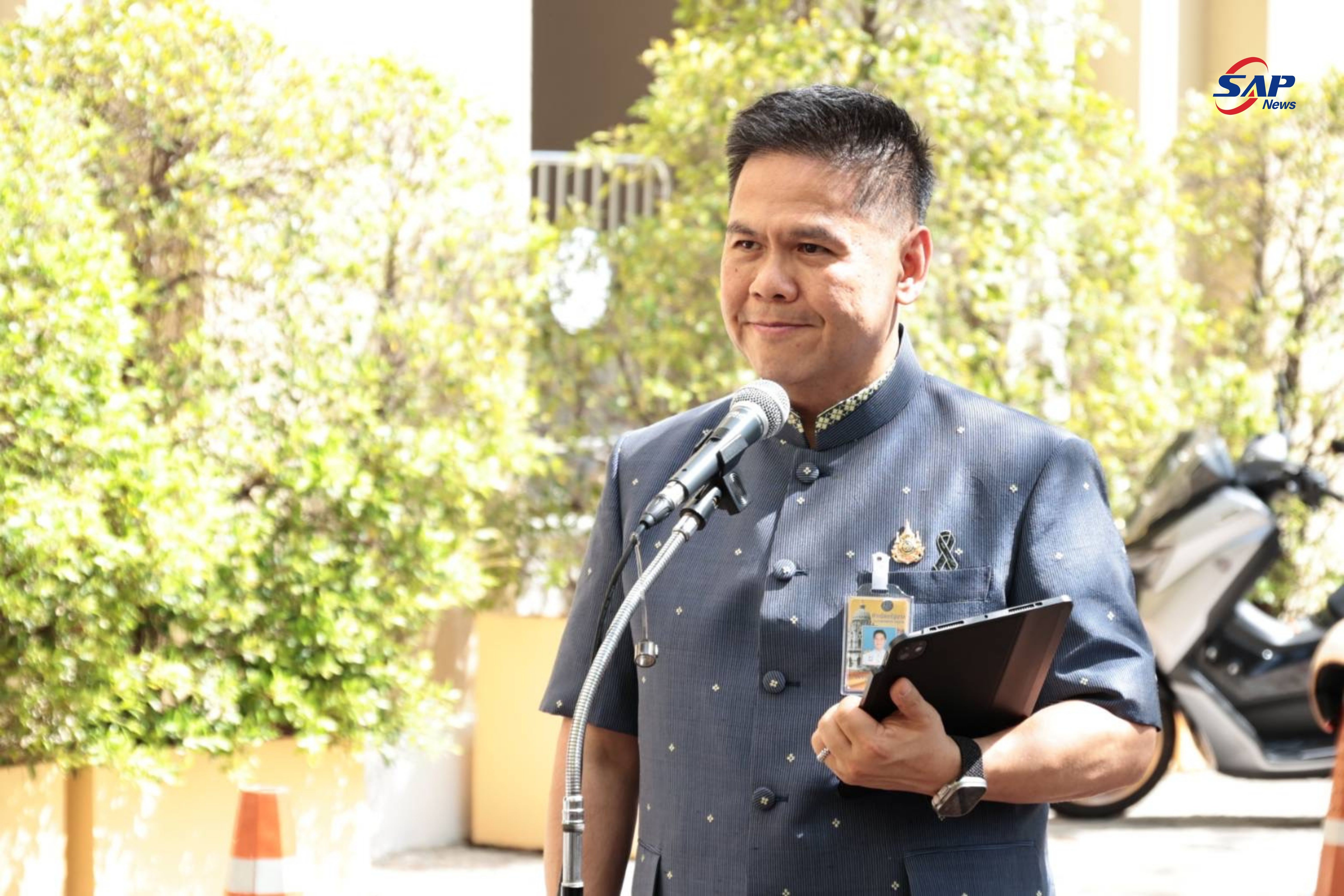
Mr. Varawut further stated that the key goal of this project is to establish a transparent, reliable, and seamlessly integrated voluntary carbon market platform for Thailand. This involves integrated work from various sectors, including the Department of Climate Change and Environment (responsible for standards), the Public Debt Management Office (responsible for financial oversight and the development of a Digital MRV system), and the establishment of the Verified Emission Reductions Monetization Facility (VERMF) to accurately verify, certify, and convert greenhouse gas reductions into value in the international carbon market. This financial innovation will elevate Thailand's carbon credits to high-quality credits marketable globally. It is estimated that within 10 years, this will help reduce greenhouse gas emissions by up to 2.33 million tons of carbon dioxide. It is expected that approximately US$3.4 million will be generated annually from carbon credits, helping to reduce government energy costs, increase green jobs, enhance competitiveness, and strengthen the credibility of Thailand's carbon credit market on the global stage.
Mr. Varawut further stated that Mr. Sumet Tangprasert, Governor of the Industrial Estate Authority of Thailand (IEAT), reported that upon IEAT's acceptance as a pilot government agency, it will receive approximately 3.5 billion baht in investment funding for industrial estates. The project's uniqueness lies in its innovative financial mechanism. IEAT will utilize a business model through Energy Service Companies (ESCOs) that borrow funds from EXIM Bank to operate entirely. Government agencies will only pay for services based on confirmed energy savings (performance-based). IEAT will act as the public asset owner of carbon credits through the Coordinating and Managing Entity (CME) mechanism, managed by Krung Thai Bank and the VERMF (Verified Emission Reductions Monetization Facility), which will aggregate carbon credits and convert them into value through the Stock Exchange of Thailand. Both in the form of sports betting and 10-year forward contracts, the revenue from the sale of carbon credits will be reinvested in new green projects.
Mr. Varawut further stated that the IEAT's current operational plan involves surveying target areas in industrial estates in Northern Thailand (Lamphun Province), Bangpoo Industrial Estate, and Laem Chabang Industrial Estate. The selection process is expected to be completed by May 2026, with the draft RFP scheduled to be finalized by the end of June 2026. Following this, the area will be announced, and ESCO companies will be invited to conduct on-site assessments in July-August 2026. Subsequently, the loan application process will begin, and the installation of the Solar Cow system will commence. This aims to achieve the greenhouse gas reduction target and initiate the carbon credit trading mechanism by May 2027. The long-term map reduction for the period 2027-2029 is an expansion of the Phase 1 project, which involved collaboration with the government, to Phase 2, encompassing industrial estates jointly operated with private sector factories.
Copywriter: Siam Associated Press (SAP) Editorial Department
Pictures: Some illustrations come from the Internet. If there is any infringement, please contact us to delete it.
Source of material: official media /online news
273/3 Ratchadaphisek Rd., Ratchadaphisek, Din Daeng, Bangkok, 10400
Email reporter@sapnewsth.com
Tel. 099 569 5964