



Supajee orders measures against Malaysia's ban on 5 Thai shrimp species Eyeing WTO retaliation and modern trade partnership to distribute 400 tons
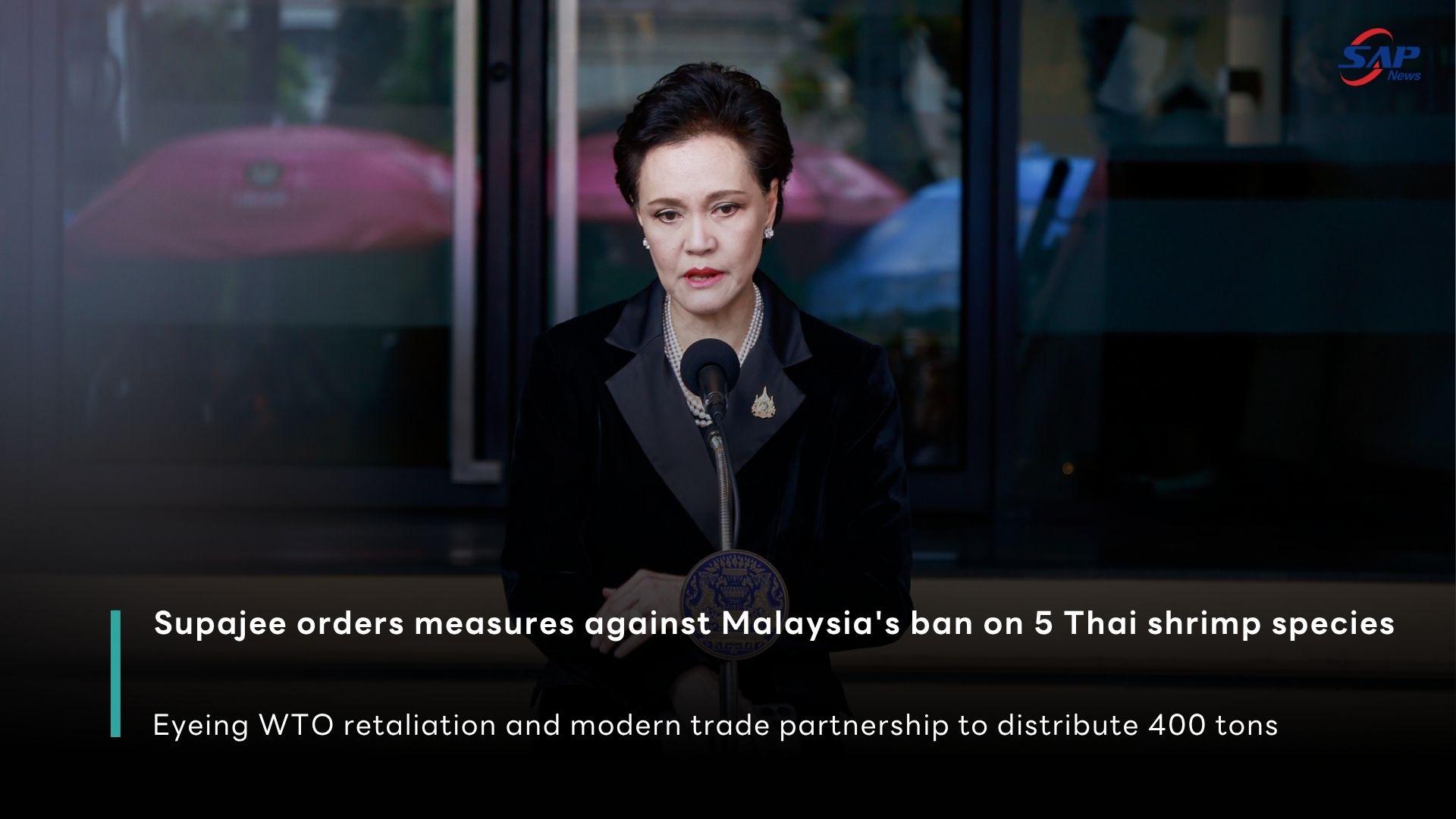
Today (June 10, 2026), at Government House, Mrs. Supajee Suthamphan, Deputy Prime Minister and Minister of Commerce, gave an interview regarding Malaysia's announcement to suspend the import of five shrimp species from Thailand. She stated that for medium- and long-term solutions, there must be a collaborative effort to find new markets to avoid over-reliance on any single market. Normally, if there is an issue with any product, attempts must be made to find alternative markets to replace it. In this case, it must first stem from discussions between the fisheries departments of both countries, though the outcome of the negotiations is currently unknown. If real issues persist, the level of negotiations will likely need to be elevated to the ASEAN level and the World Trade Organization (WTO) to ensure a proper trade retaliation.
When reporters asked whether the more than 400 tons of shrimp per month that cannot be exported to Malaysia could be distributed domestically, Mrs. Supajee said that it would be sufficient. Plans are currently underway to implement immediate actions. Affected farmers must be taken care of, and efforts will be made to absorb the supply, find markets, and create activities by partnering with modern trade businesses to distribute the products through the "Thai Chuay Thai" (Thais Help Thais) project. She believes that the volume of affected shrimp can be managed.
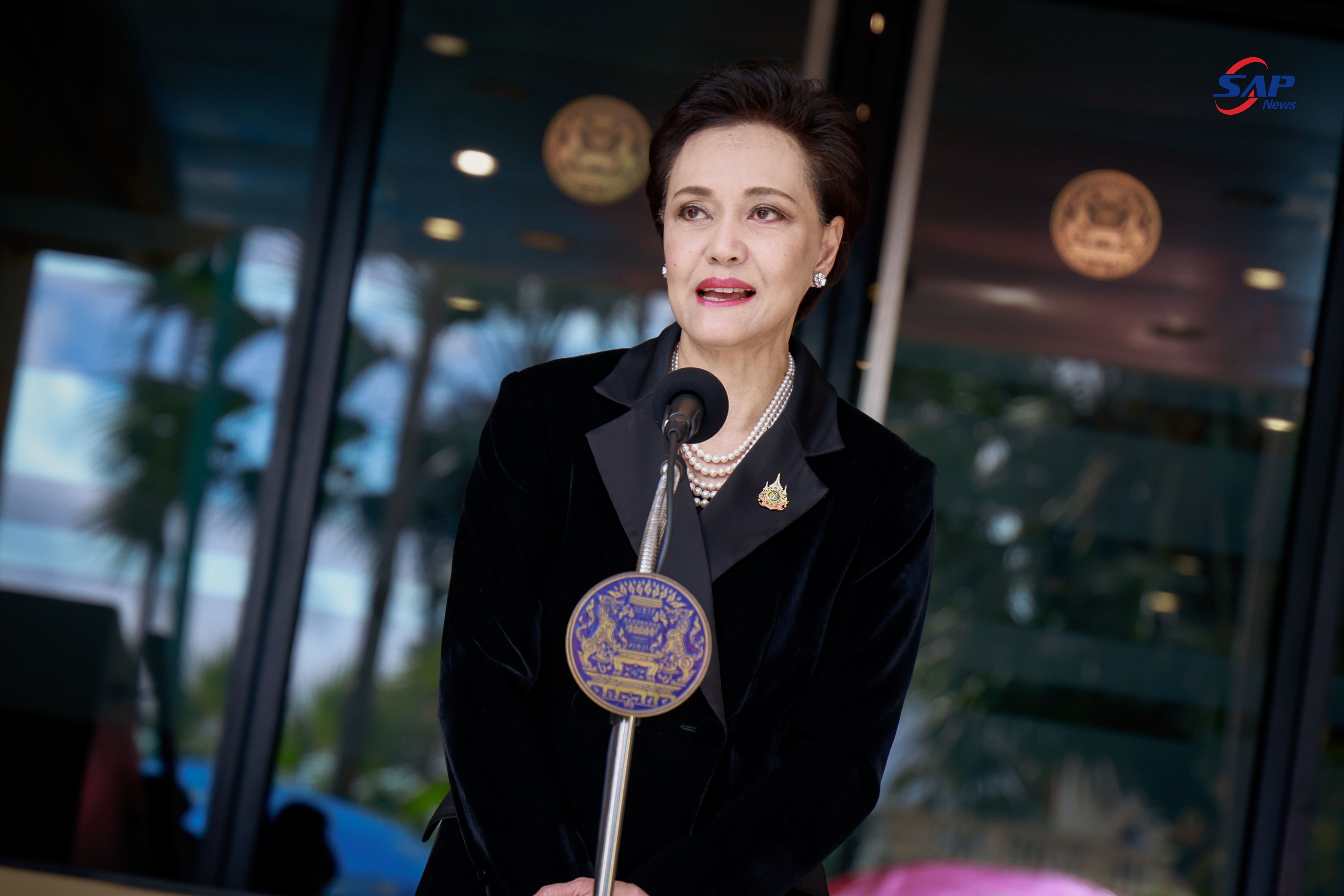
"I don't want to say that Supajee says there is no problem. The problem exists, and we are trying to help solve it to minimize the impact instead," Mrs. Supajee said.
When reporters further asked whether farmers need to adapt, Mrs. Supajee stated that the shrimp Thailand has comes in both processed and frozen forms, and additional markets will be secured for them. However, what needs to be taken care of is how to negotiate with Malaysia to make them understand that Thailand's shrimp do not have any issues, and their immediate import suspension measure is likely not the correct approach. It should be a gradual process from heavy to light, rather than an abrupt, total halt. She extended her encouragement to the Department of Fisheries to conclude the talks with Malaysia smoothly, noting that her ministry's duty is to look after the affected fishery operators by helping to distribute their products as much as possible.
Photo : Weeraphat Ratsameerueangrong
Copywriter: Siam Associated Press (SAP) Editorial Department
Pictures: Some illustrations come from the Internet. If there is any infringement, please contact us to delete it.
Source of material: official media /online news
273/3 Ratchadaphisek Rd., Ratchadaphisek, Din Daeng, Bangkok, 10400
Email reporter@sapnewsth.com
Tel. 099 569 5964