



“Ekniti-Suphajee!” With Due Respect, Please Work for the People: “Chaichana” Slams Failed Administration, Mocks Slow Thinking in Solving Problems, and Offers Fish Liver Oil Plus Vitamin C
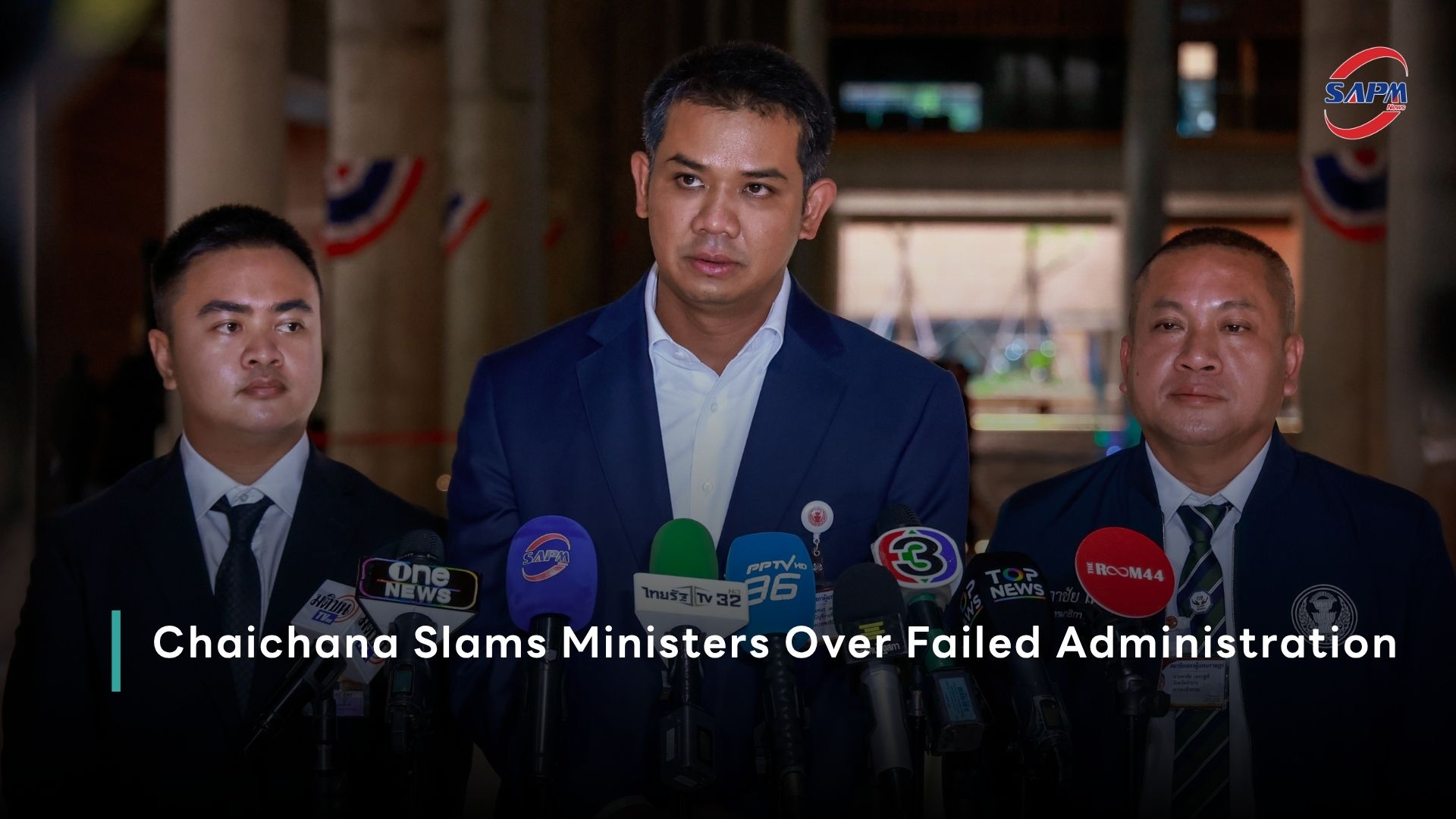
Today (Aug 5, 2026) at 12:30 PM at Parliament, Mr. Chaichana Detdecho, a party-list Member of Parliament (MP) and Deputy Leader of the Democrat Party, gave an interview regarding the opposition's preparations for the no-confidence debate, stating that they must wait for the People's Party to formally submit the motion. Once the joint opposition reaches a consensus, each party will discuss the matter internally. He affirmed full readiness, noting that the timeline must be considered because when parliament reconvenes, the first priority will be considering the Third Reading of the Annual Budget Appropriations Bill for Fiscal Year 2027. Following that, a no-confidence motion can be submitted at any time, so they must monitor the stance of the People's Party and the views of each political party.
When asked about the key debate issues and the government's weaknesses, Mr. Chaichana stated that the government's flaws are currently well known to the general public, such as the "unbearably rich" issue, as well as economic and livelihood matters under the responsibility of Mrs. Suphajee Suthumpun, Minister of Commerce. Despite falling oil prices, product prices have failed to drop accordingly, and announced policies have yet to achieve any success. Furthermore, the government must clarify where the farmers' compensation funds were redirected after claiming money had run out, which Mr. Ekniti Nitithanprapas, Deputy Prime Minister and Minister of Finance, must also explain. Additionally, the government must prepare for the Southern fruit season, particularly mangosteen and durian. All these issues can lead to a no-confidence debate, and the joint opposition will meet to discuss the specific details.
Regarding the chances of bringing down the government, Mr. Chaichana pointed out that it cannot be immediately determined. Toppling the government can occur in two scenarios: the Budget Bill failing to pass, or the government receiving less than half the supporting votes in a no-confidence motion. This depends on the information presented by the opposition in parliament and whether any coalition government parties agree with their assessment. However, as for the opposition, he expressed confidence that they stand fully united, with the Democrat Party, Klah Dharma Party, and People's Party ready to scrutinize the government to the fullest.

“I think the information for this no-confidence debate—if it truly takes place in September or October—will definitely be exciting and certainly not theater in parliament. This is the opposition performing its duties strongly and exposing certain information that has not yet been revealed to society,” Mr. Chaichana said.
As for rumors regarding a shift in power alliances, Mr. Chaichana stated that inquiries should be directed to the source of the news. He was unaware of such matters as the Democrat Party had not held talks with anyone. Similarly, the Klah Dharma Party, led by Captain Thamanat Prompow, and the People's Party have both confirmed no negotiations took place. The only certainty is that the opposition will definitely file a no-confidence motion; as for the exact date, he urged everyone to stay tuned. He also left a message for Mr. Ekniti and Mrs. Suphajee to work earnestly to resolve livelihood issues for the citizens and not leave the public suffering in poverty for an extended period.
“Ekniti and Suphajee, you must work for the nation, not to build your own prestige. Besides failing to solve people's problems, you should both go back and look at the administration within your own ministries. I heard both of you are having issues with permanent civil servants and policy conflicts in both ministries. Ultimately, take plenty of fish liver oil so your minds can function well, giving you the brainpower to administer the country going forward,” Mr. Chaichana said.
When asked if these two ministers would be his primary targets in the debate, Mr. Chaichana stated that he did not yet know who would be debated, but noted that both currently seem to be thinking slower because they have been unable to solve any problems.
“Honestly, I would like to send fish liver oil to them, but knowing they are at the Ministry of Commerce and Ministry of Finance, they should easily be able to buy it at a pharmacy themselves. Therefore, respected Brother Ek and Sister Tam, please work for the people. In addition to fish liver oil, I'll buy some vitamin C for you as well,” Mr. Chaichana said.
Additionally, Mr. Chaichana mentioned the recruitment of volunteer nurses, which closed applications on July 31. He raised observations that selecting candidates solely through interviews appears to be an effort to build a network for campaign influencers. He suggested the government redirect the budget allocated for volunteer nurses to improve benefits for Village Health Volunteers (VHV) or to hire over 7,000 public health officers under the Ministry of Public Health who are still awaiting civil service appointment, rather than hiring volunteer nurses. Therefore, he urged the Prime Minister to review this initiative and open a general competitive examination with written tests to assess medical knowledge for job security and to avoid duplicating the role of VHVs.
Mr. Chaichana added that VHVs serve as the frontline in providing medical care for bedridden and chronic patients, yet they receive compensation of only 600 to 2,000 Baht, whereas late-arriving volunteer nurses receive a monthly salary of up to 15,000 Baht. He viewed this as inappropriate and potentially aimed at building a political voter base—stating that while he would not directly call it creating campaign influencers, it clearly constitutes building a political network.
Regarding the issue raised by Ms. Rukchanok Srinork, a party-list MP from the People's Party, concerning the allocation of the budget primarily to areas under the Bhumjaithai Party, Mr. Chaichana stated that he would not go into deep detail. However, he observed that this year's budget preparation involved cutting provincial budgets by over 20 billion Baht, which was originally hoped to aid local administrative organizations. Instead, the slashed budget was drawn back into central administration, particularly for the "Thai Chuey Thai Plus" project. He emphasized that governing the country requires decentralization of power, and that managing public welfare and developing basic infrastructure must proceed hand in hand.
Photo : Weeraphat Ratsameerueangrong
Copywriter: Siam Associated Press (SAP) Editorial Department
Pictures: Some illustrations come from the Internet. If there is any infringement, please contact us to delete it.
Source of material: official media /online news
273/3 Ratchadaphisek Rd., Ratchadaphisek, Din Daeng, Bangkok, 10400
Email reporter@sapnewsth.com
Tel. 099 569 5964