



Cabinet Approves 16-Million-Baht Budget to Enhance Cooperation with 3 Neighboring Countries to Intercept Drugs and Chemicals at the Source Before Flooding into Thailand
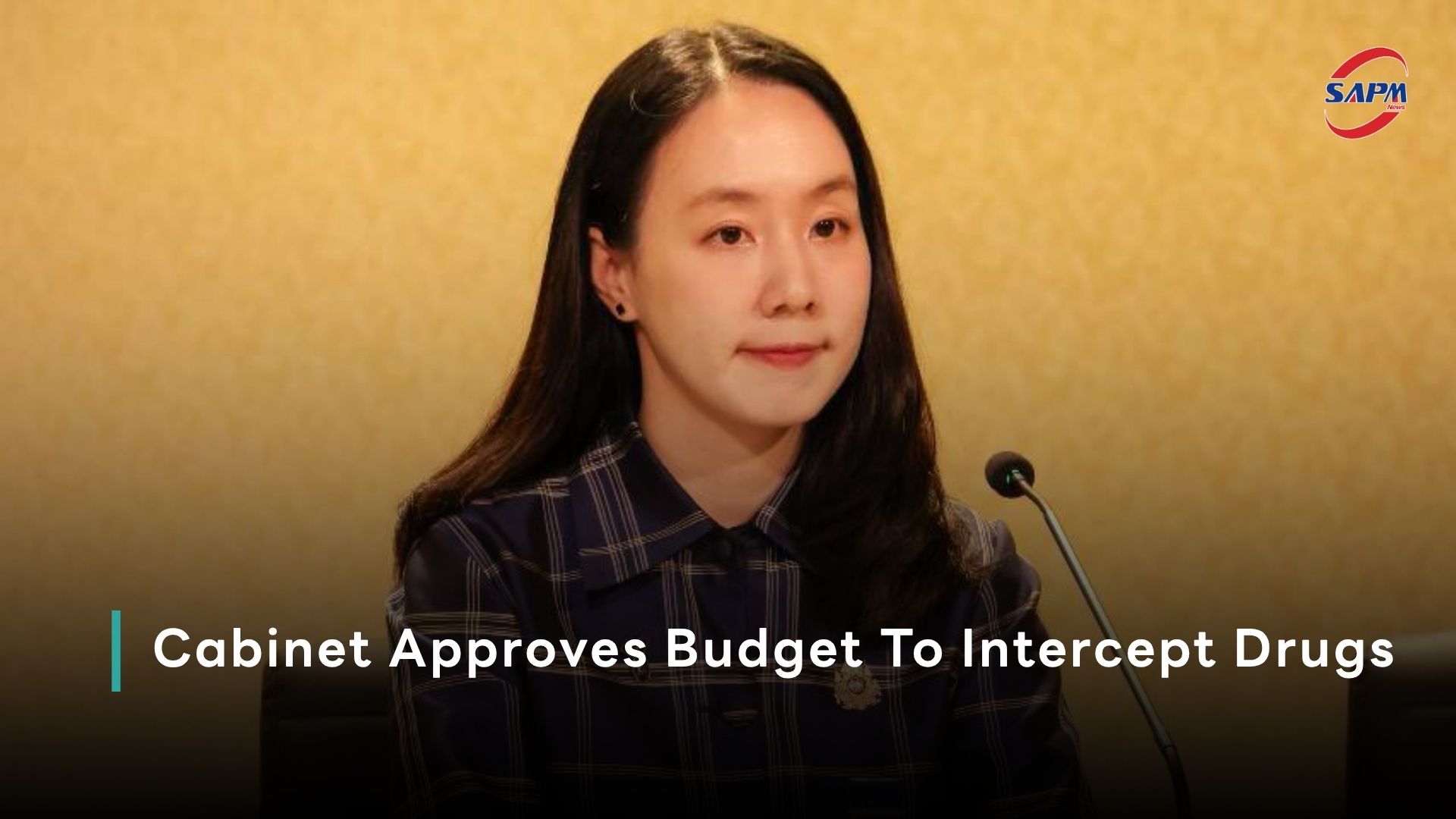
Today (August 5, 2026) at 2:22 PM at Government House, Ms. Lalida Periswiwatana, Deputy Spokesperson for the Prime Minister's Office, revealed that the Cabinet approved the project to strengthen and enhance cooperation with neighboring countries in intercepting drugs and dismantling international drug trafficking networks for fiscal year 2026, with a total budget of 16 million baht. Proposed by the Ministry of Justice through the Office of the Narcotics Control Board (ONCB), the budget aims to support joint operations with Myanmar, Lao PDR, and Vietnam to intercept drugs, precursor chemicals, and raw materials, as well as to suppress transnational drug trafficking networks at their origin before they are smuggled across the border and into Thailand's inland areas.
The Deputy Spokesperson for the Prime Minister's Office stated that the drug situation in the Golden Triangle is currently highly concerning as it has evolved into a major synthetic drug production hub connected to transnational crime groups, with attempts to use Thailand as both a transit route and a final destination. The government is therefore focusing on proactive prevention by establishing interceptive lines outside the country alongside domestic suppression to cut off the opportunity for drugs to flood into local communities.
“Effective drug interception cannot wait until the drugs reach the Thai border. We must unite forces with neighboring countries right from the source—cutting off precursor chemical cycles, seizing shipments en route, and destroying trafficking networks. This support is a strategic investment for public safety and reduces the impact of domestic drug problems,” said Ms. Lalida.
The main objectives of the project are to support operations in intercepting and suppressing drugs, precursors, and chemicals in the Mekong sub-region, drive the Safe Mekong Operation Plan, develop personnel and drug-testing systems, and foster relationships, mutual trust, and coordination mechanisms among agencies in each country. The operational framework covers three main areas: 1. Interception and suppression by enhancing the efficiency of checkpoints, inspection posts, and interception units along transportation routes and borders; 2. Prevention and rehabilitation by involving border communities in surveillance efforts; and 3. Development of the Safe Mekong Coordination Centre as a central mechanism for intelligence sharing and joint operations.
The budget will be allocated to essential missions such as joint operations in high-risk areas, supporting interception units, fuel expenses, chemical testing kits, drug test kits, verification systems, and official training. For Myanmar, the budget will support bilateral suppression and joint operations in key areas such as Mandalay, Bago, Yangon, and Eastern Shan State, as well as chemical testing equipment and safety training. For Lao PDR, the focus will be on border interception units and parallel border village or "White Village" projects. Meanwhile, for Vietnam, emphasis will be placed on controlling precursor chemicals, forensic verification, and capability development for officials at the Safe Mekong Coordination Centre.
Additionally, the Cabinet authorized the Secretary-General of the ONCB to approve projects, plans, and activities within the scope of this budget to ensure operational flexibility and responsiveness to changing situations. Approval was also granted for guidelines on transferring support funds to Myanmar through the Ministry of Foreign Affairs and the Royal Thai Embassy in Yangon should direct money transfers encounter obstacles, strictly adhering to relevant laws, regulations, and financial criteria.
Ms. Lalida added that the government has continuously carried out this cooperation project since fiscal year 2015, as the results clearly demonstrate that enhancing the capacity of neighboring countries to suppress drugs directly reduces risks to Thailand. It also maintains Thailand's leading role in driving anti-drug cooperation within the Mekong sub-region.
“The government reaffirms its commitment to combating drugs at the source, en route, and at destination through law enforcement, intelligence sharing, operational coordination, and international cooperation to prevent drugs from entering our communities, reduce losses, and create tangible safety for the public,” concluded the Deputy Spokesperson.
Copywriter: Siam Associated Press (SAP) Editorial Department
Pictures: Some illustrations come from the Internet. If there is any infringement, please contact us to delete it.
Source of material: official media /online news
273/3 Ratchadaphisek Rd., Ratchadaphisek, Din Daeng, Bangkok, 10400
Email reporter@sapnewsth.com
Tel. 099 569 5964