



“Chadchart” Reaffirms BMA’s Commitment to Royal Initiatives; Moving Forward with “Monkey Cheek” (Water Retention) Projects Tailored to Local Contexts
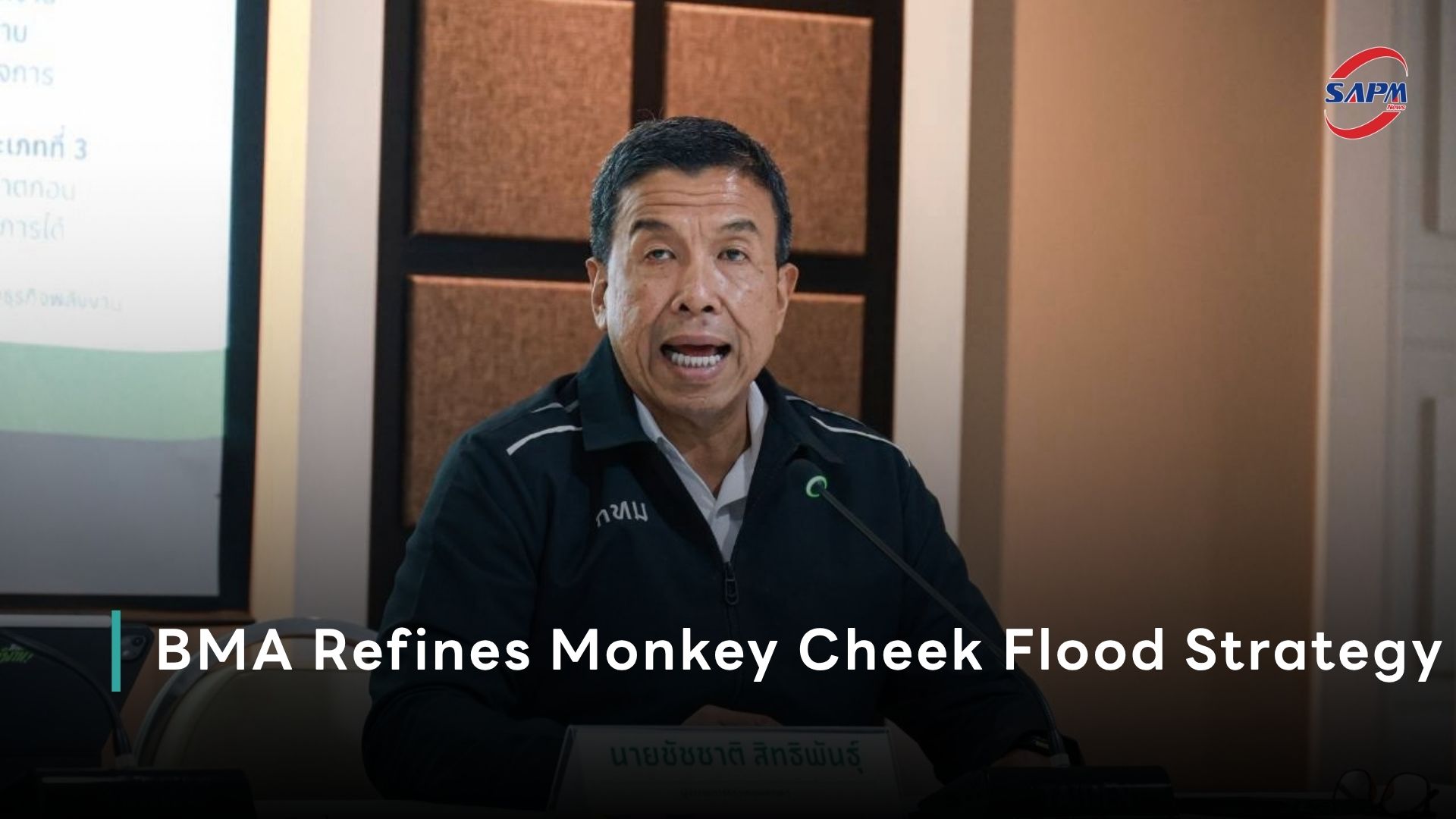
Today (1 October 2026), at 11:00 AM, at the Bangkok Flood Control Center (Department of Drainage and Sewerage), Bangkok Governor Chadchart Sittipunt, accompanied by BMA executives, clarified the city's water management strategy. He specifically addressed the “Monkey Cheek” (water retention area) projects and criticisms regarding water drawdown and the operation of floodgates. He stated that social media allegations claiming he opposes or has cancelled the Monkey Cheek projects are entirely false. He noted that he has watched the video of the Royal Address delivered on December 4, 1995, over ten times to thoroughly understand the theory and ensure decisions prioritize the overall public interest.
Mr. Chadchart stated that the Bangkok Metropolitan Administration (BMA) continuously applies the Royal Initiatives regarding water management. The Royal guidelines encompass various methods, including the construction of embankments and diversion channels, the improvement of waterways and flood barriers, and the creation of “Monkey Cheeks.” The fundamental principle of the monkey cheek is to temporarily store excess water during periods of high volume and release it once drainage conditions become favorable. The effectiveness of a "monkey cheek" (flood retention basin) project depends on three key factors: selecting a suitable site for the basin, ensuring convenient routes to channel water into the area, and maintaining the ability to drain water out continuously and efficiently. Therefore, site selection and project design must take into account both area suitability and technical data; not every location is suitable for an effective, large-scale retention basin.
Mr. Chadchart noted that regarding the retention basin projects studied following the major floods of 2011, proposals made in 2013 included both canal system improvements and the acquisition of six sites for retention basins to manage floodwaters entering Bangkok. For the Khu Bon and Bang Chan wetlands specifically, the estimated investment cost was approximately 11 billion baht, with private land expropriation costs accounting for over 5–6 billion baht of that total. Meanwhile, the Bangkok Metropolitan Administration (BMA) has reviewed alternative options, considering improvements to the north-south canal alignment stretching from Khlong Hok Wa Sai Lang to Khlong Prawet Burirom alongside drainage infrastructure upgrades, with an estimated investment of around 6.5 billion baht.
Mr. Chadchart explained that this review evaluated drainage efficiency, site suitability, and investment cost-effectiveness. The original project sites consisted largely of private land, requiring expropriation and the construction of water intake and discharge systems, whereas the alternative of improving canals and enhancing drainage efficiency required a smaller budget. However, the BMA has not abandoned the retention basin concept; it continues to develop such basins in suitable locations, prioritizing areas that allow for convenient water intake and drainage, and distributed across various areas of Bangkok.
Mr. Chadchart addressed the criticism circulating on social media, expressing concern that technical issues were being linked to a claim that the Bangkok Metropolitan Administration (BMA) was failing to act in accordance with the Royal Initiative. He firmly denied allegations that the BMA was opposing or cancelling the "monkey cheek" (water retention area) projects initiated by the King. He explained that he had personally reviewed the Royal speech delivered on December 4, 1995, regarding the monkey cheek concept multiple times to ensure a clear understanding of the principles. He noted that the core of the Royal Initiative lies in water management tailored to specific local conditions, while the selection of project sites and infrastructure designs requires engineering data and site-specific feasibility analysis. He emphasized that the BMA’s duty is to translate this concept into practical action, prioritizing public benefit, site suitability, drainage efficiency, and cost-effectiveness.
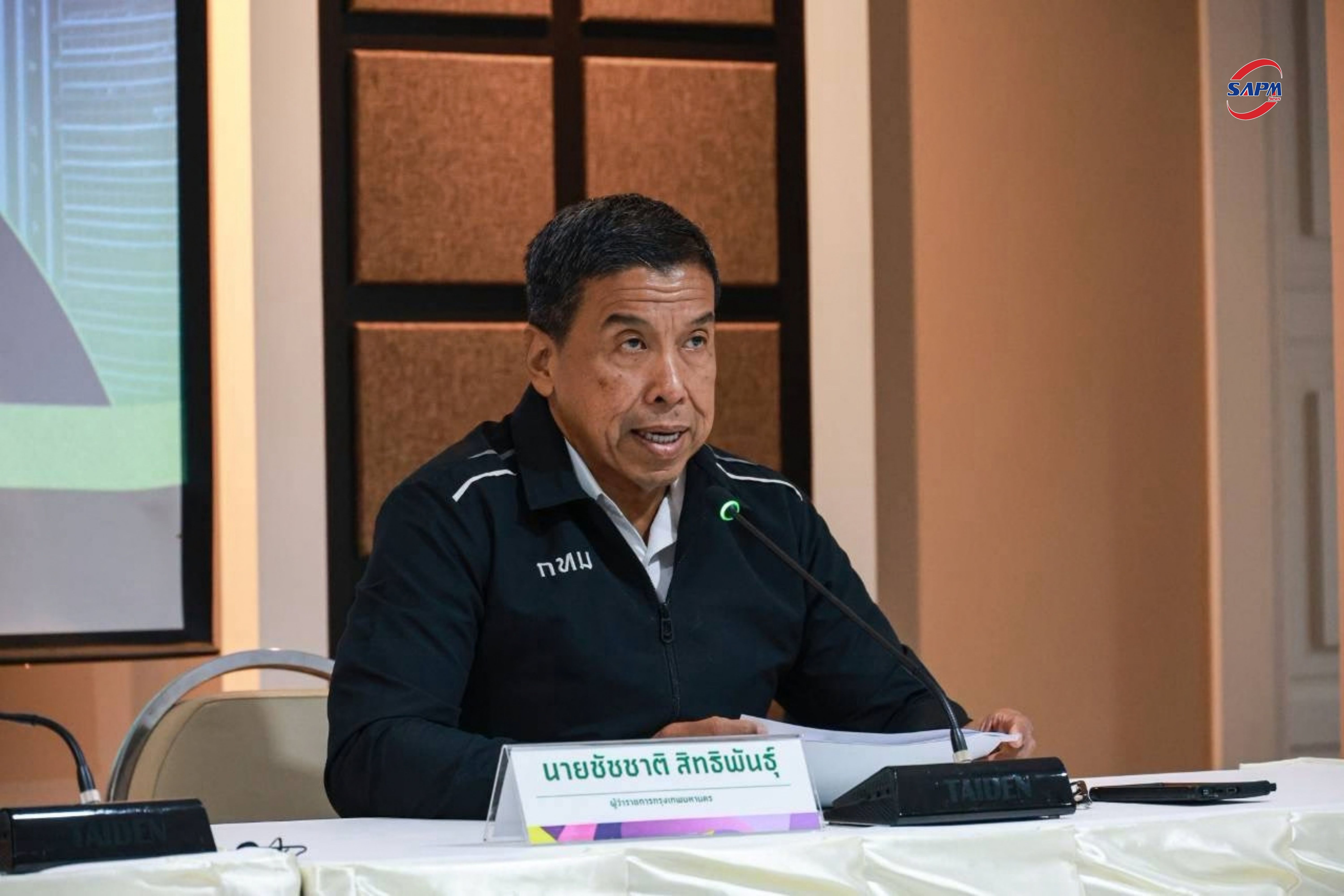
"If the debate concerns cost-effectiveness or technical reasons regarding whether or not to proceed, that is perfectly fine we can certainly discuss that. However, please do not link the issue to the Royal Initiative by claiming we are failing to honor it, because His Majesty provided the fundamental concept of the monkey cheek system." "As for the selection of locations, that was a matter decided by past consultants themselves," Mr. Chadchart said.
Mr. Chadchart stated that there are currently 38 "monkey cheek" (water retention) projects in Bangkok up from 34 in 2022 with plans to implement seven additional projects in the future. Completed projects include the Khlong Rahat to Khlong Khru retention area (capacity: 89,700 cubic meters); the Si Kan Lagoon (upgraded to a capacity of 150,000 cubic meters); the Lat Phrao 71 Public Lagoon (38,000 cubic meters); and the Bang Khen Roundabout Lagoon (6,000 cubic meters). Future plans include the Wat Phrom Rangsi Lagoon, an agricultural weir at Khlong Luang Pharaeng, the 60th Anniversary Park retention area, Phra Nakhon Park Lagoon, the Bang Na Government Complex retention area, a retention area near Amnuay Songkhram Road, and the expansion of the Bueng Krathiam Lagoon. A comparison between the 2022 plan and the operational plan for 2026–2027 reveals that the number of retention areas will increase from 36 to 45, while total water retention capacity will rise from approximately 13.70 million cubic meters to over 14 million cubic meters.
Regarding criticisms from Mr. Suchatvee Suwansawat (Dr. Ae) concerning water drawdown and the operation of floodgates, Mr. Chadchart stated that the Bangkok Metropolitan Administration (BMA) continuously lowers water levels in canals and lagoons prior to the onset of heavy rainfall. Water level data and drainage system management information are disseminated through the Department of Drainage and Sewerage’s channels. Periodic updates are provided regarding water levels at sluice gates and along the eastern flood barrier such as the report from June 27, 2026, which detailed water levels at the Khlong Song, Saen Saep, and Lat Krabang sluice gates, alongside the critical levels for each location. Additionally, the Bangkok Metropolitan Administration (BMA) also. A system is in place to display data on pumping stations and water levels at various locations for monitoring purposes.
Mr. Chadchart explained that water management requires a strategic approach; floodgates cannot all be opened simultaneously, as the direction and volume of water flow must be controlled. The principle involves gradually draining water from inner areas close to the main drainage system first, then drawing water from areas further back. This method regulates flow and prevents the drainage system from becoming overwhelmed by an excessive influx of water at once. Consequently, water drawdown and the operation of floodgates are managed systematically, based on water levels and drainage conditions specific to each area.
Mr. Chadchart added that the situation in many parts of Bangkok is improving, particularly in areas influenced by the Saen Saep, Lat Phrao, and Prem Prachakon canals. However, urgent action is still required in Lat Krabang, Saphan Sung, Nong Chok, and Min Buri. The Bangkok Metropolitan Administration (BMA) is continuously accelerating drainage efforts in these areas. The next phase involves managing water at the "capillary" level addressing smaller-scale drainage now that the main drainage systems have regained some capacity. This entails assisting with water removal from housing estates, communities, and low-lying areas, as well as mobilizing pumps and equipment from various agencies to support locations with standing water. Concurrently, the BMA has initiated post-flood recovery measures, focusing on the disposal of flood-related waste and bulky items along roadsides. Additionally, a "District Buddy" system is being implemented, where districts less affected by the flooding assist those more severely impacted, aiming to restore normalcy to all areas as quickly as possible.
Copywriter: Siam Associated Press (SAP) Editorial Department
Pictures: Some illustrations come from the Internet. If there is any infringement, please contact us to delete it.
Source of material: official media /online news
273/3 Ratchadaphisek Rd., Ratchadaphisek, Din Daeng, Bangkok, 10400
Email reporter@sapnewsth.com
Tel. 099 569 5964