



“Anutin” advances a disaster insurance scheme covering 30 million households; max coverage of 2 million baht; starts Oct 1, 2026
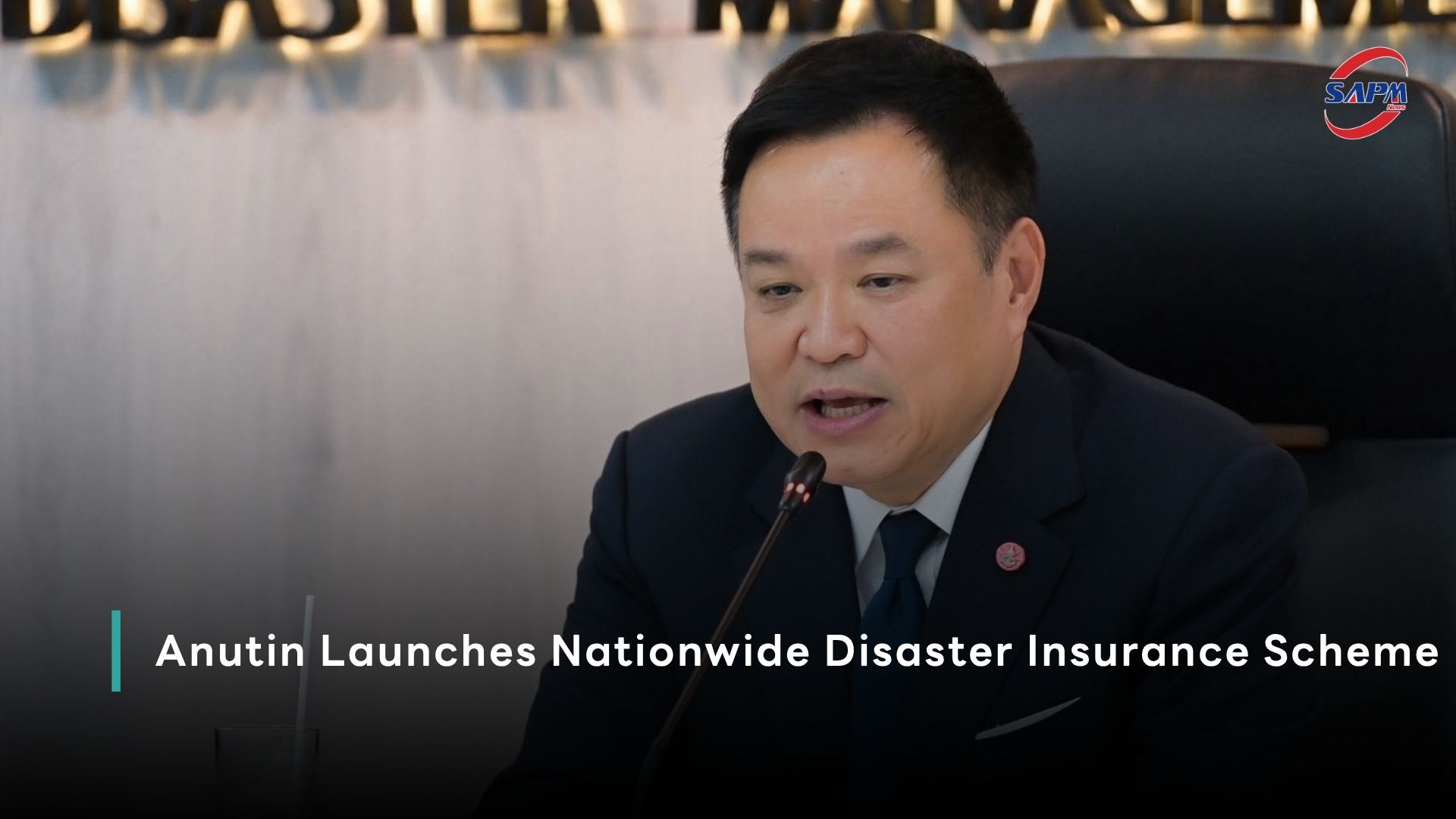
Today (1 October 2026), at the Department of Disaster Prevention and Mitigation (DDPM), Mr. Anutin Charnvirakul, Prime Minister and Minister of Interior, held an urgent video conference with district chiefs, district-level agency heads, local administrative organization executives, sub-district heads, village heads, assistant village heads, inspectors, and sub-district medical officers in Bang Sao Thong District, Samut Prakan Province. The meeting aimed to issue policy directives regarding the implementation of disaster insurance policies for every household.
The Prime Minister stated that the government has launched a disaster insurance scheme for the public, marking a significant step forward in enhancing the care and protection of citizens against disasters. The government recognizes that disasters can occur and directly impact people's lives, property, homes, and livelihoods. Therefore, the priority lies not only in providing post-incident assistance but also in ensuring preparedness and establishing a security system capable of addressing potential damage in advance. Consequently, the government has initiated this scheme for every household to strengthen the mechanism for public welfare, with the state acting as the provider of insurance coverage for the people to provide a safeguard against potential disaster-related damages.
The Prime Minister stated that this insurance policy covers three types of natural disasters: floods, windstorms, and earthquakes. Coverage extends to residential property damage, loss of life, and permanent total disability. For floods, the coverage includes an initial 10,000 baht payment, with additional coverage of up to 90,000 baht. For windstorms, there is an initial 5,000 baht payment, plus up to 95,000 baht in additional coverage. Similarly, for earthquakes, the coverage includes an initial 5,000 baht payment, with up to 95,000 baht in additional coverage. In cases where floodwaters surround a residence, preventing normal living conditions for more than seven consecutive days, compensation of 10,000 baht per household per incident will be provided. In the event of death resulting from a covered disaster, a benefit of 2 million baht per person will be paid. Coverage is set to begin on October 1, 2026, encompassing approximately 30 million households nationwide.
The Prime Minister further noted that this project represents more than just the provision of insurance coverage; it reflects a shift in the country's disaster management approach moving from post-disaster relief to systematic risk management and proactive safeguarding. When natural disasters occur, citizens will be entitled to clear coverage and can access the claims assessment and compensation process based on established conditions, thereby helping to mitigate impacts and support home repairs and to restore livelihoods to normal as quickly as possible.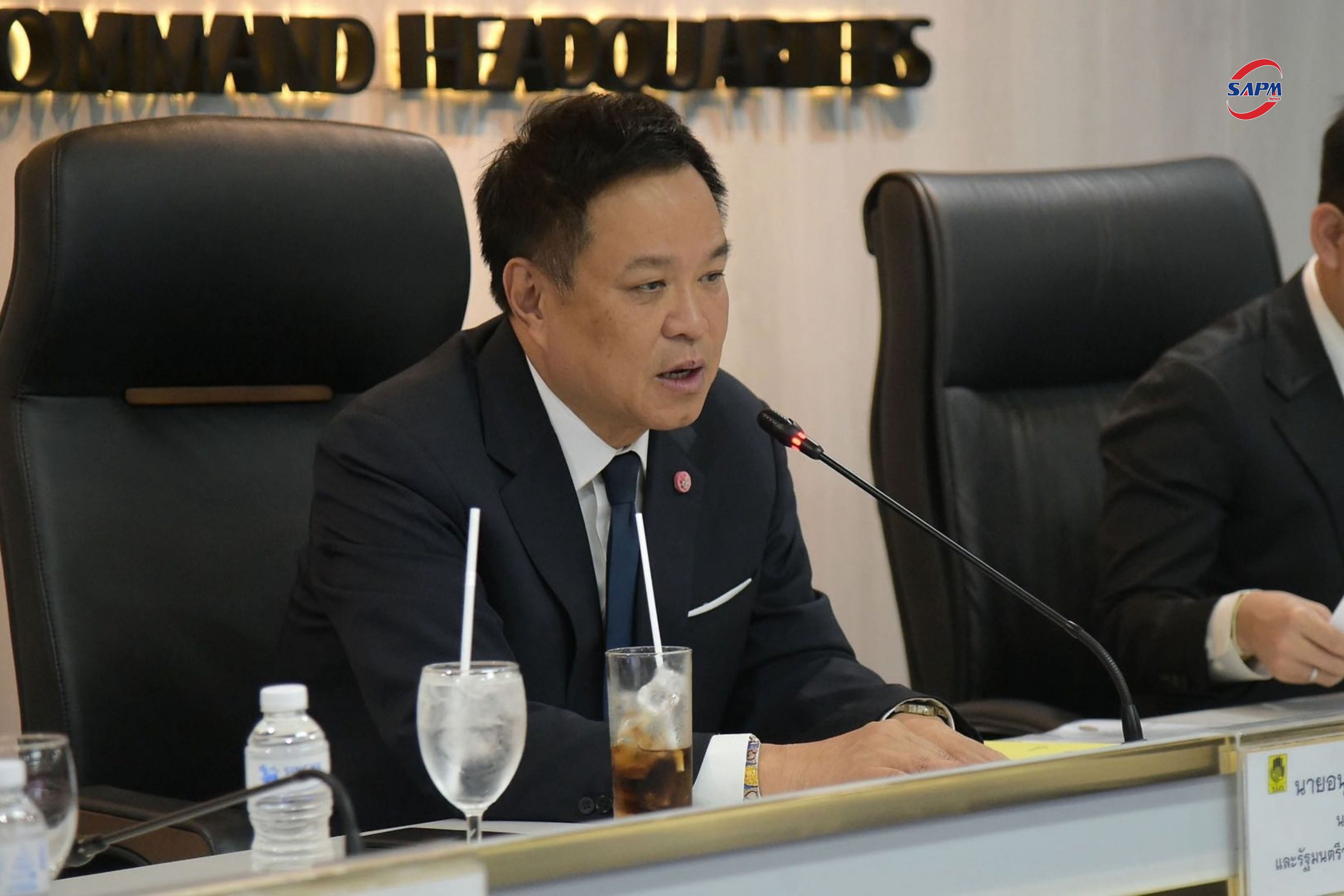
The Prime Minister further stated that this project incorporates insurance mechanisms and private sector participation to distribute risk. This enables the government to plan for disaster-related damages and manage national resources more systematically and efficiently. The government under his leadership as both Prime Minister and Minister of Interior aims for this disaster insurance scheme for the public to serve as a key mechanism facilitating rapid, clear, and systematic relief and assistance for disaster victims. It also seeks to enhance livelihood security, ensuring that citizens can recover from disaster impacts in a timely manner.
“Today, on behalf of the government, the relevant ministers, and Ministry of Interior executives, I am pleased to join in driving this nationwide disaster insurance project for the public. It serves as a vital safeguard against damages and marks another step in upgrading the country’s disaster management—shifting from merely providing aid after damage occurs to systematic preparedness and proactive risk management. I therefore urge everyone especially provincial governors, district chiefs, local administrative organization executives (PAOs, municipalities, and SAOs), sub-district heads (Kamnan), village heads, assistant village heads, sub-district doctors, and Kamnan inspectors—to help publicize the project details. This ensures that the public is fully informed of their rights and can fully access the benefits provided by this initiative,” the Prime Minister said.
The Prime Minister emphasized that these measures would alleviate public anxiety, assuring citizens that relief and assistance would be provided should any incident occur. This marks the first time that comprehensive, nationwide household-level coverage encompassing approximately 30 million households has been implemented to ensure that disaster-affected citizens receive thorough protection. Provincial governors and district chiefs are urged to study the policy conditions in detail so they can clearly explain the terms to the public such as the coverage amounts corresponding to different flood severity levels or the financial assistance provided for home repairs. In the event of a disaster, government agencies—including the Ministry of Interior, the Department of Provincial Administration, the Department of Local Administration, and the Department of Disaster Prevention and Mitigation (DDPM) will conduct on-site damage assessments and inform citizens of their rights to access insurance payouts.
“I assure you that we will ensure all citizens receive their entitlements comprehensively, with no one left out. I also wish to emphasize that while this policy operates on an annual basis—specifically from October 1, 2026, to October 1, 2027 it is not a one-off measure; it is designed to be renewed year after year. I ask everyone to have confidence in this initiative, assuring the public that they will receive protection through the disaster insurance scheme and gain rapid access to compensation,” the Prime Minister said.
Later, when asked whether areas flooded prior to October 1 and where flooding persists would qualify for the public disaster insurance scheme, the Prime Minister explained that such cases would be addressed through relief measures under the Department of Disaster Prevention and Mitigation (DDPM) Act. The public disaster insurance scheme, however, covers incidents occurring from October 1 onwards.
When asked if the coverage begins from the date the incident started, the Prime Minister stated that disasters are counted on an individual-event basis. For incidents occurring before October 1, the budget must be utilized in accordance with disaster prevention laws. However, the public disaster insurance scheme is considered superior as it provides coverage for specific incidents or events, subject to the conditions stipulated by DDPM regulations.

When asked about a post by Mr. Nattapong Ruengpanyawut, a party-list MP from the People's Party and Leader of the Opposition, showing Mr. Anutin inspecting a Bhumjaithai Party field kitchen and urging him to attend the parliamentary session currently debating the flood crisis, the Prime Minister said, "Enough of that; I'm leaving," and immediately walked away from the interview.
Meanwhile, Mr. Jeseth Thaiset, Deputy Minister of Interior, provided further comments on the public disaster insurance scheme, noting that ongoing flood events would not meet the insurance criteria. Eligibility for this insurance coverage begins at 00:01 on October 1, 2026. Verification relies on satellite imagery; specifically, the Geo-Informatics and Space Technology Development Agency (GISTDA) captured images on September 30, 2026, establishing the necessary boundaries. This insurance scheme offers faster and clearer protection; citizens will know precisely that they are entitled to 10,000 baht in compensation, allowing them to plan their finances accordingly. Regarding home repairs, a lump-sum payment method will be used, effective November 1. For instance, if the water level reaches 50 centimeters, the household receives 10,000 baht without the need for further damage assessments. Under the insurance criteria, if a province declares a disaster zone or an actual disaster occurs, eligibility is automatically triggered eliminating the need for photo evidence and payment is issued within 15 days.
Mr. Jeseth further noted that this public disaster insurance scheme covers situations where homes are surrounded by floodwaters a point that required extensive negotiation. Additionally, the scheme covers homes without official house registration numbers, unlike previous relief efforts that relied primarily on registered addresses. The insurance covers 30 million households with a maximum total payout of 75 billion baht; should claims exceed this amount, the government will provide compensation based on the same criteria used by the insurance plan.
When asked about the water situation and public concerns regarding potential further influxes into Bangkok, Mr. Jeseth discussed the Chao Phraya River basin. Water levels will certainly rise, particularly in the areas designated to receive water diverted from Bangkok before it flows into the Gulf of Thailand. However, we aim to manage a gradual rise in levels by coordinating with the Office of the National Water Resources (ONWR) to issue timely public alerts; the public is urged to closely monitor the situation and updates. While river levels are guaranteed to increase, the situation in areas currently affected by flash floods or inundation from rainfall is expected to improve within the next one to two days.
Copywriter: Siam Associated Press (SAP) Editorial Department
Pictures: Some illustrations come from the Internet. If there is any infringement, please contact us to delete it.
Source of material: official media /online news
273/3 Ratchadaphisek Rd., Ratchadaphisek, Din Daeng, Bangkok, 10400
Email reporter@sapnewsth.com
Tel. 099 569 5964