



“Natthaphong” slams “Anutin” as the most idle person in the country, dodging flood issues without attending parliament, urges appointing a mediator to oversee floodgates and pumps, and blames government failure for public suffering
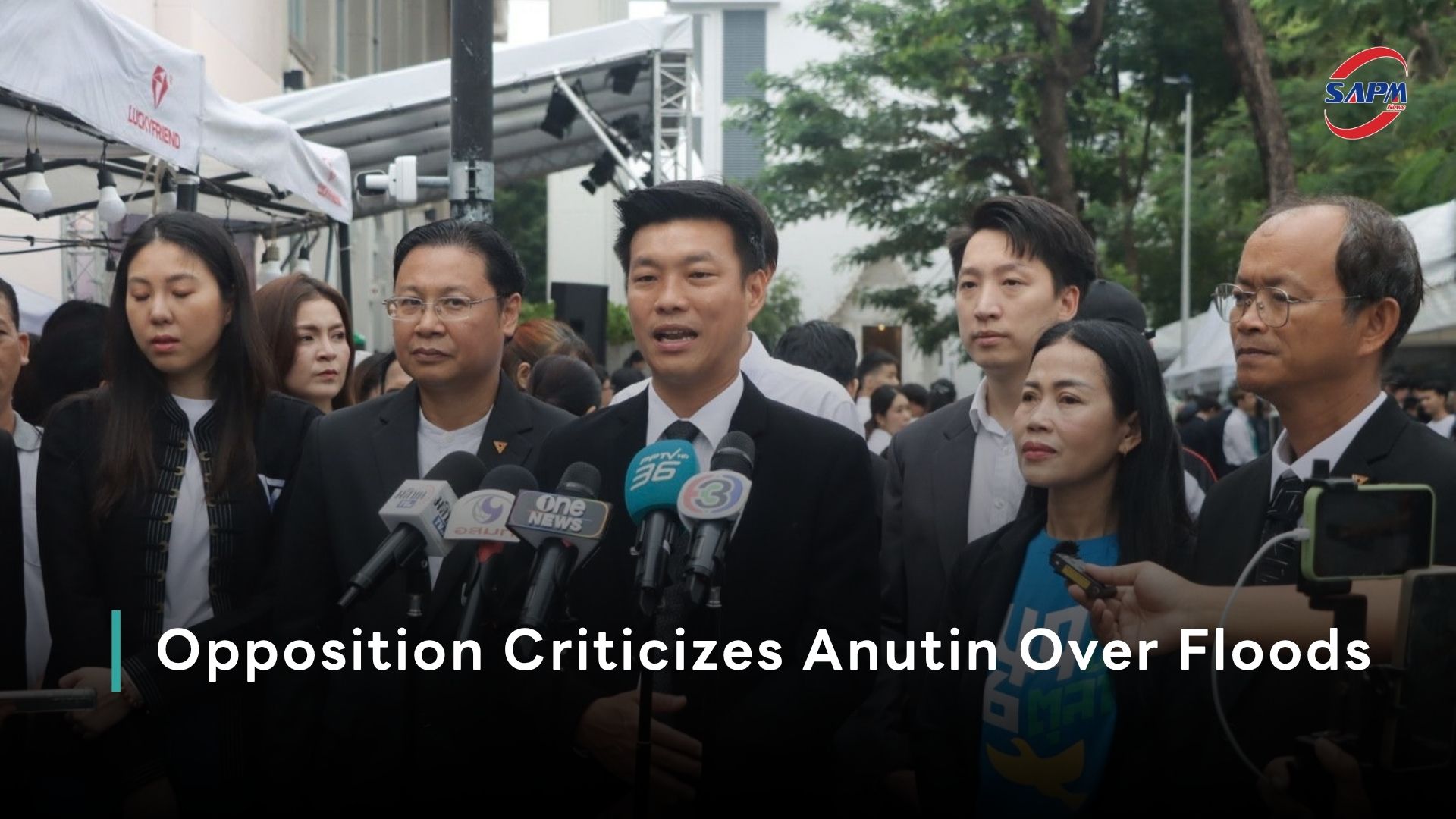
Today (Oct 6, 2026) at 10:30 a.m. at Thammasat University, Tha Prachan Campus, Mr. Natthaphong Ruengpanyawut, Leader of the Opposition in the House of Representatives and leader of the People’s Party, spoke on the flood situation. He stated that according to the latest monitoring, the situation in Chachoengsao and Prachinburi provinces remains quite critical. Meanwhile, in Bangkok and areas where water levels have begun to recede, residents are facing severe issues with garbage cleanup. Last night, the People’s Party team dispatched heavy machinery and equipment to assist citizens in clearing debris and waste from their homes. He stressed that the government must urgently manage the situation effectively and target the right areas.
When asked to evaluate the government's management performance—which has been criticized as idling, particularly among political figures and civil servants—Mr. Natthaphong stated that in his view, the most idle person in the country is none other than Prime Minister and Minister of Interior Anutin Charnvirakul, who has remained passive and detached from the problem, as clearly seen in news coverage of House sessions over the past week.
“Over the past week, we saw that the Prime Minister had a choice between entering parliament to clarify issues with the people’s representatives or visiting the Bhumjaithai Party’s field kitchen. The Prime Minister chose the latter. This is one thing that demonstrates how, when even the nation's leader avoids problems like this, we cannot expect him to command civil servants to perform their duties to the fullest,” Mr. Natthaphong said.

Mr. Natthaphong continued that he must continuously monitor the situation across all regions. Weather forecasts indicate that from around October 10 onward, there is a risk of prolonged heavy rainfall, alongside northern runoff gradually flowing down to replenish water levels. Having visited Pathum Thani Province himself, he found that the major issue in Bangkok and surrounding metropolitan areas is the persistent high waterlogging across multiple points, hindered by pumping bottlenecks toward the Gulf of Thailand and the Bang Pakong River. This stems from a lack of a central mediator or authority from the government to direct watergate operations or regulate pump functionality in a unified manner, leading to unresolved local disagreements.
Furthermore, the Royal Irrigation Department clearly explained to the House Committee on Disaster Prevention and Mitigation that under the current situation, authorities should not strictly adhere to the Memorandum of Understanding (MOU) agreed upon between Bangkok and neighboring provinces. Instead, what the Royal Irrigation Department and related agencies need most is a “mediator”—namely the Prime Minister or a government representative—to take the lead in commanding operations to reassure and provide clear direction to all involved agencies.
Regarding views that this might be “political water,” Mr. Natthaphong clarified that under current circumstances, he believes no one wants such a flood crisis to occur. However, the hardship citizens are suffering must be realistically acknowledged as partly stemming from the government's own failed management. Therefore, the duty of the Opposition right now, beyond providing immediate aid to the public, is to submit recommendations through parliamentary mechanisms. During this week's House sessions, additional proposals will be reflected and forwarded to the government for implementation.
Copywriter: Siam Associated Press (SAP) Editorial Department
Pictures: Some illustrations come from the Internet. If there is any infringement, please contact us to delete it.
Source of material: official media /online news
273/3 Ratchadaphisek Rd., Ratchadaphisek, Din Daeng, Bangkok, 10400
Email reporter@sapnewsth.com
Tel. 099 569 5964