



Prime Minister Announces Outcomes of Mobile Cabinet Meeting in Udon Thani, Highlighting 4 Strategies for Developing the Upper Northeastern Region
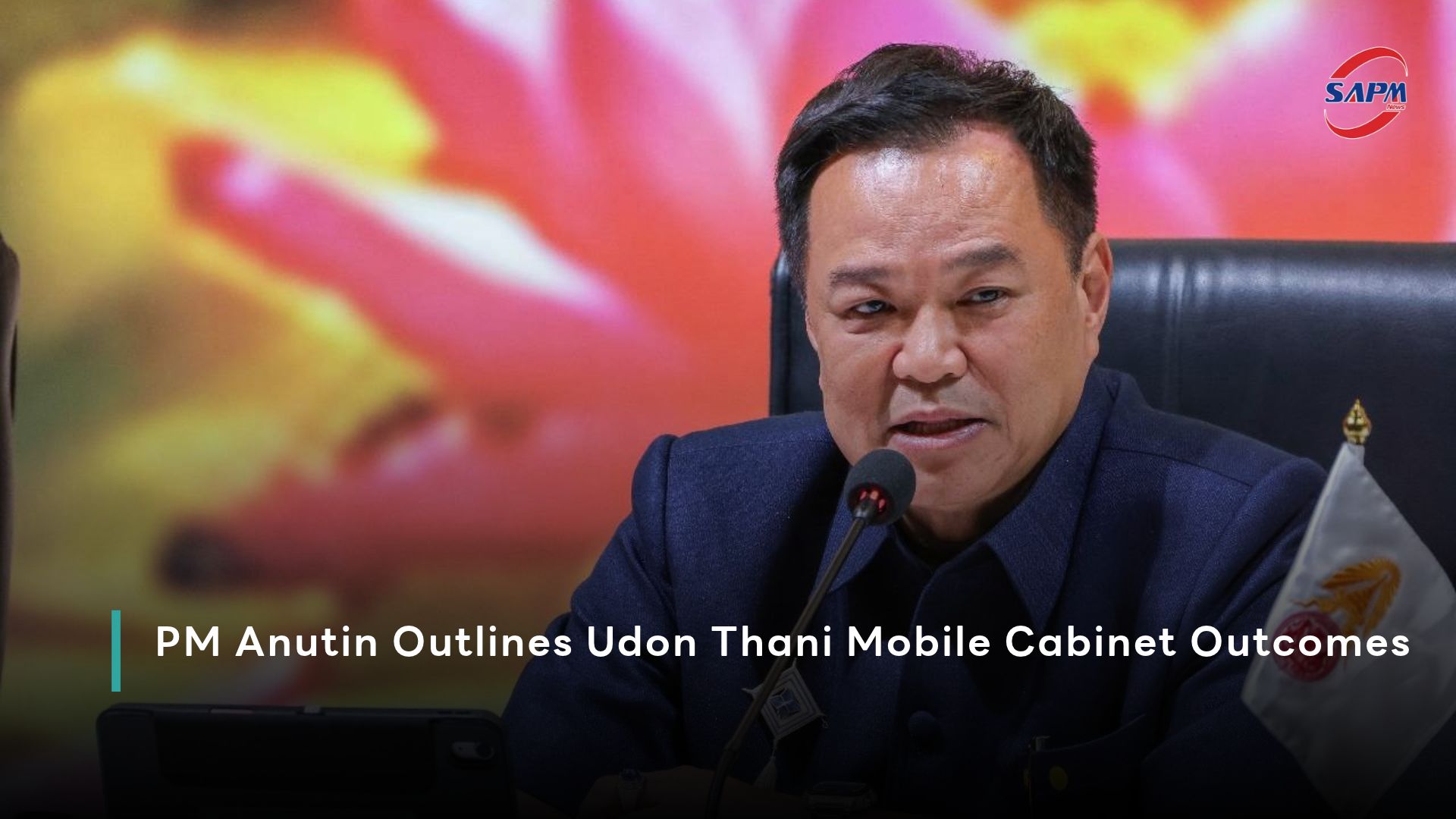
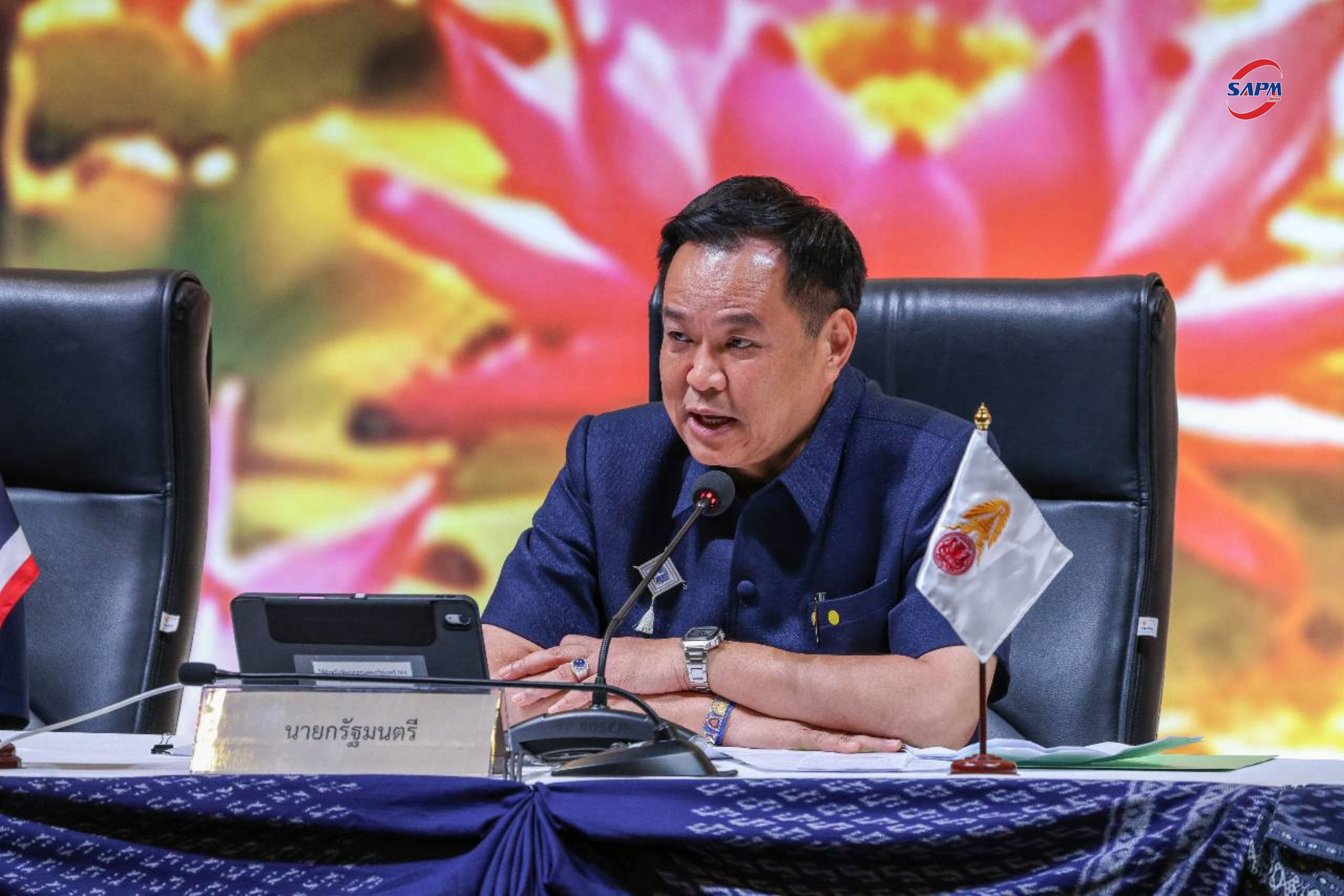
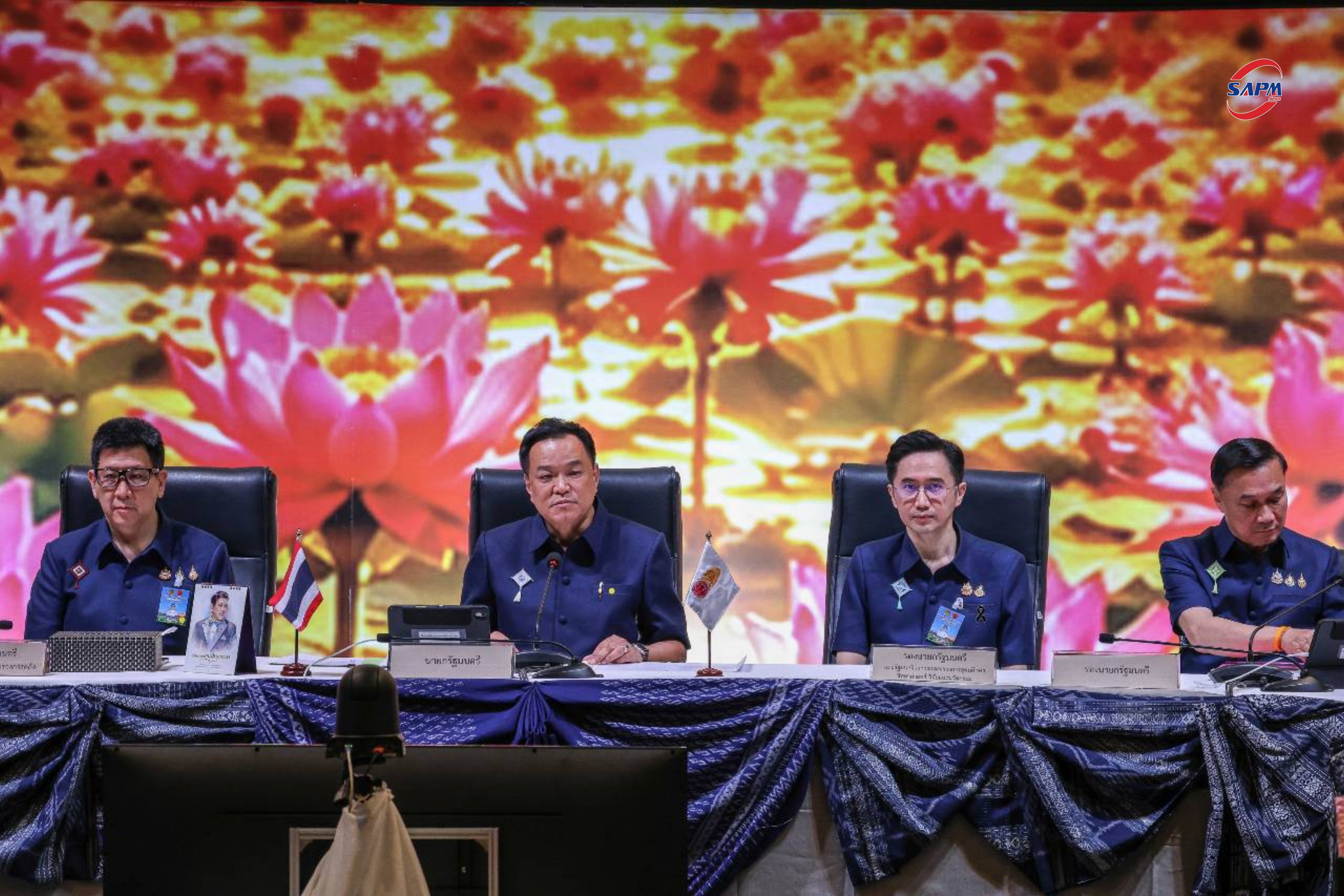
Today (3 November 2026) at 11:15 AM at Monthathip Hall International Convention Center, Udon Thani Province, Mr. Anutin Charnvirakul, Prime Minister and Minister of Interior, announced the results of the second mobile Cabinet meeting of 2026. He noted that the upper Northeastern provinces—Udon Thani, Bueng Kan, Loei, Nong Khai, and Nong Bua Lamphu—offer a unique opportunity during such Cabinet visits to highlight the specific characteristics of each area. These visits allow the government to gain a firsthand understanding of local challenges and opportunities, while also listening directly to the concerns of the public and local government officials. Furthermore, the subsequent media coverage helps connect people across the country, fostering a sense of familiarity and a closer bond with the communities being showcased.
Mr. Anutin added that, regarding the upper Northeastern region, the government is prioritizing development across four key dimensions: the production and trade of agricultural and food products, the advancement of commerce, the promotion of tourism, and a comprehensive, end-to-end strategy for tackling the drug problem.
First: Elevating the production and trade of agricultural and food products. The government is focused on raising the prices of agricultural products through new production models, while advancing toward the “future food” and bio-industry sectors. The Ministry of Higher Education, Science, Research and Innovation has been tasked with establishing innovation centers, facilities, and laboratories for food standard analysis. This initiative aims to enhance the competitiveness of Thai agricultural products and strengthen the nation’s food security. Furthermore, the government intends to promote the development of three key groups of economic crops, emphasizing value-added creation to transform the agricultural sector into a future source of both food and energy. These include:
“Rice”: The focus will be on improving quality, increasing value, and optimizing land use. This involves enhancing production efficiency, developing superior rice varieties that meet higher standards, and promoting environmentally friendly rice farming practices.
“Natural Rubber”: Efforts will be accelerated to process raw rubber into high-value, innovative products tailored for modern industries. Given the current significant rise in rubber prices, the government aims to sustain this price base by fostering innovation within the rubber-related agricultural sector, ensuring long-term price stability.
“Energy Crops”: This category includes oil palm, sugarcane, and cassava. The focus will be on producing bioenergy—specifically clean energy—to help support agricultural commodity prices and reduce reliance on energy imports.
Mr. Anutin stated that these initiatives will be carried out through the collaborative efforts of the Ministry of Agriculture and Cooperatives, the Ministry of Commerce, and the Ministry of Industry. The Ministry of Energy and the private sector are working together, guided by the principle of balancing the nation’s food security with its energy security. This approach aims to generate stable and sustainable income for Thai farmers, while also positioning the Northeastern region as a key global hub for the production of high-quality food.
Mr. Anutin further stated that regarding the development of border trade and regional economic integration, the government is prioritizing infrastructure, transport, logistics, and trade facilitation. The goal is to strengthen connections with countries in the Greater Mekong Subregion by developing the Northeast, including the establishment of special economic zones and other high-potential areas. In this regard, the government has tasked the Ministry of Interior and the Office of the National Economic and Social Development Council (NESDC) with conducting a feasibility study on designating Bueng Kan Province as an additional border special economic zone. This includes assessing the viability of developing an airport in Bueng Kan and identifying appropriate investment incentives to maximize benefits, as the objective is to elevate the area into a vital regional trade gateway.
Mr. Anutin added that, concerning the promotion of tourism, the government intends to leverage the unique strengths of each province to develop high-quality tourism offerings. These will be integrated into diverse travel routes designed to attract visitors throughout the year, with the Ministry of Tourism and Sports serving as the lead agency for coordinating tourism-stimulation initiatives. Finally, the government is committed to a serious and comprehensive approach to addressing the drug problem, focusing on suppression, prevention, and rehabilitation. The Royal Thai Police and the Ministry of Interior have been tasked with upgrading database systems and incorporating modern technology, alongside fostering cooperation with neighboring countries to further enhance the effectiveness of addressing the drug problem.
Mr. Anutin added that, regarding the treatment and rehabilitation of drug users, the government will build upon the “Udon Model Plus”—a comprehensive support program for drug users and those with substance dependencies, developed by the social rehabilitation center in Udon Thani Province. The government intends to involve the Ministry of Social Development and Human Security as part of a network dedicated to building a safe, resilient, and sustainable society. This will complement the healthcare and medical treatment services already provided by the Ministry of Public Health for individuals struggling with drug use and dependency.
Mr. Anutin further emphasized that this approach takes into account the unique characteristics of each locality, allowing for targeted problem-solving and the development of local potential for the benefit of the public. The Cabinet intends to extend this initiative to every region across Thailand. Once all regions have been visited, the government will focus on specific provinces identified as having the potential to effectively address the diverse needs of their local populations.
Photo : Yanawut Samphaothong
Copywriter: Siam Associated Press (SAP) Editorial Department
Pictures: Some illustrations come from the Internet. If there is any infringement, please contact us to delete it.
Source of material: official media /online news
273/3 Ratchadaphisek Rd., Ratchadaphisek, Din Daeng, Bangkok, 10400
Email reporter@sapnewsth.com
Tel. 099 569 5964