



Aid Trucks Re-enter Gaza as Israel Reopens Rafah Crossing Following Hostage Dispute Suspension
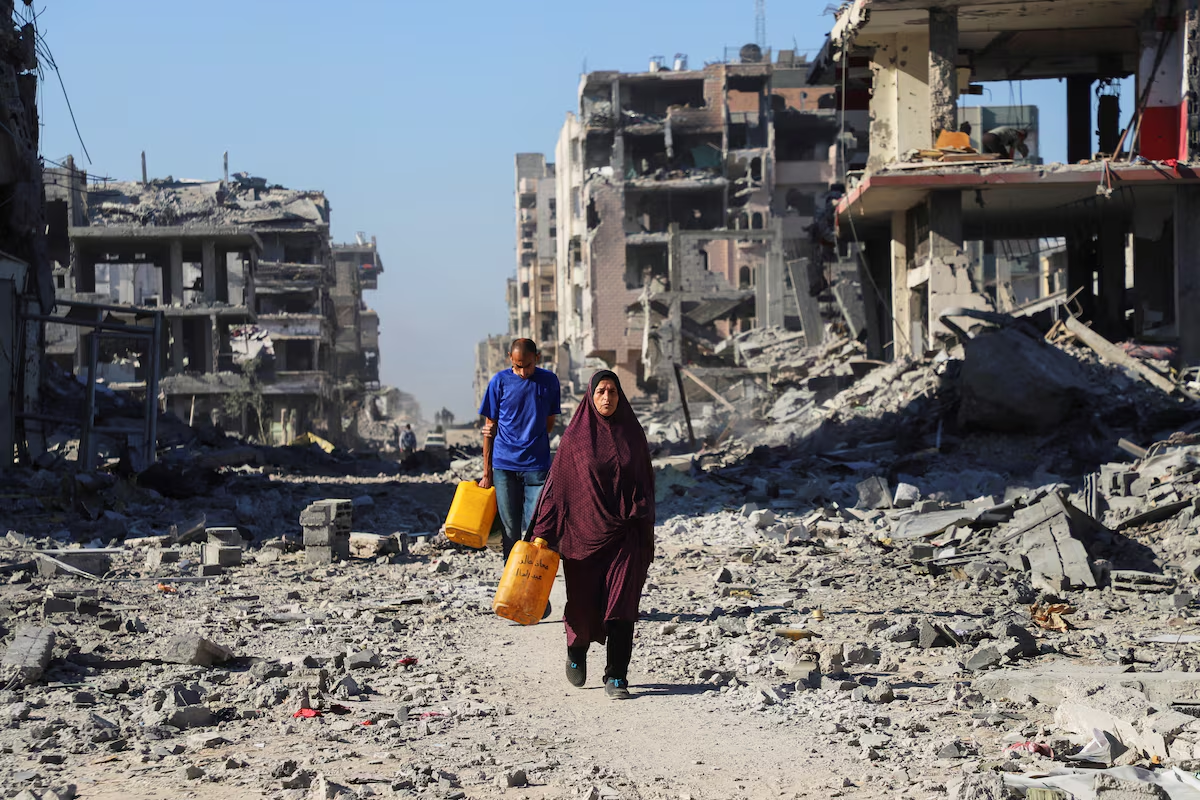
Palestinians walk past the rubble of destroyed buildings, amid a ceasefire between Israel and Hamas, in Gaza City, October 15, 2025. REUTERS/Ebrahim Hajjaj
On October 15, 2025, aid trucks began entering the Gaza Strip once again after Israel prepared to reopen the Rafah border crossing, following the temporary suspension of a dispute over the return of deceased hostages. The move helped prevent the fragile ceasefire which ended a two-year-long devastating war from collapsing, and marked a key step in the ongoing process that led to the release of all surviving hostages previously held by Hamas.
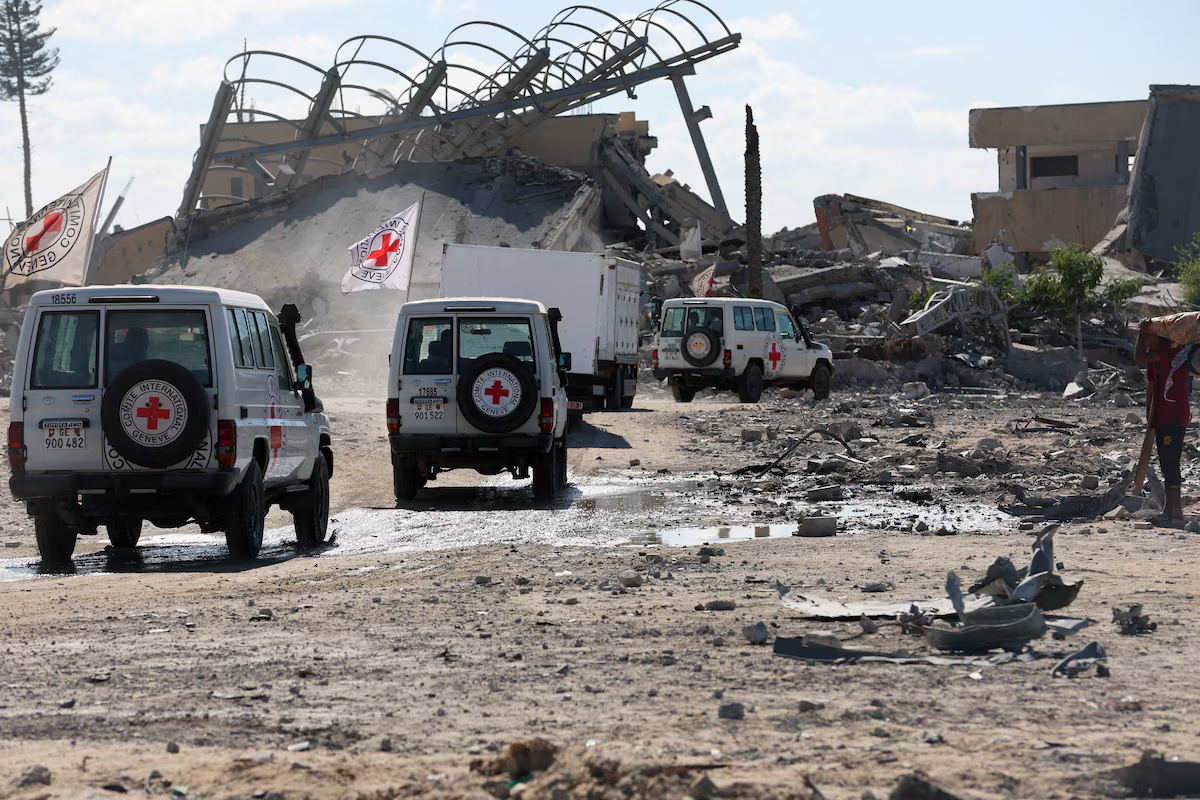
Red Cross vehicles escort a truck transporting the bodies of Palestinians who had been held in Israel during the war, amid a ceasefire between Israel and Hamas, in Khan Younis in the southern Gaza Strip, October 14, 2025. REUTERS/Ramadan Abed
Earlier, Israel had threatened to keep the Rafah crossing closed and reduce the flow of humanitarian aid, citing delays by Hamas in returning the bodies of the deceased hostages. Eventually, Hamas handed over the remains of eight hostages, four on Monday and another four on Tuesday night, although Israeli authorities said one of them was misidentified. Under the same agreement, Israel is required to return the bodies of 360 Palestinian fighters killed in combat. The first group of 45 bodies was handed over on Tuesday and is now being identified by Palestinian health officials.
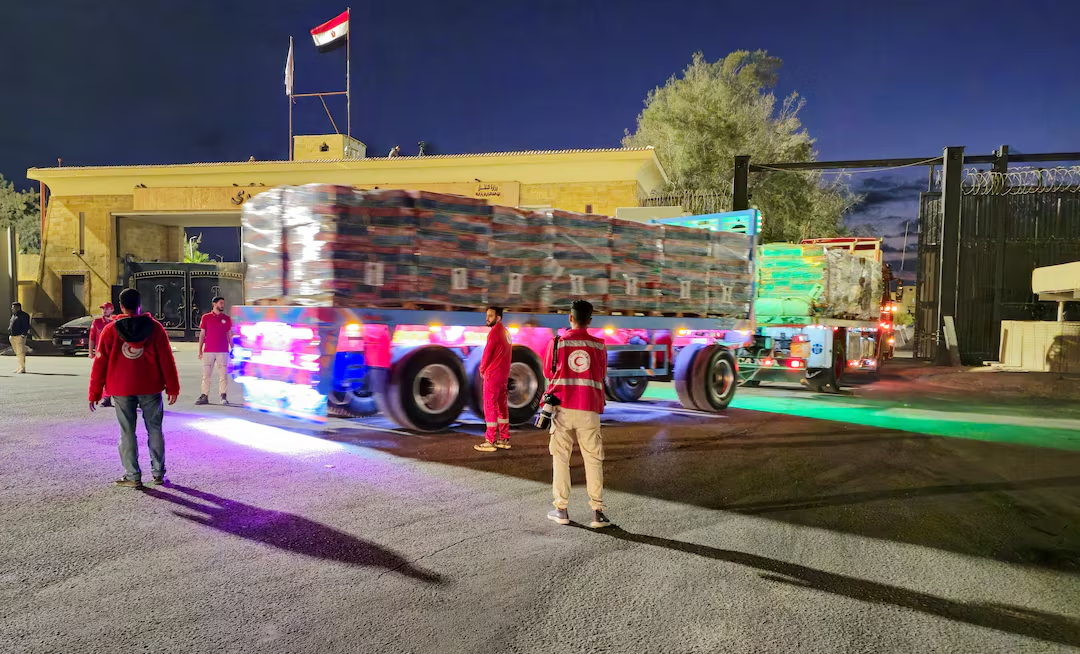
Trucks carrying aid bound for Gaza cross the border crossing between Egypt and the Gaza Strip, after a ceasefire between Israel and Hamas in Gaza went into effect, in Rafah, Egypt, October 12, 2025. REUTERS/Stringer/File Photo
Following the additional transfers on Tuesday night, Israeli security officials said preparations were underway to reopen Rafah for the movement of Gazan civilians. Around 600 aid trucks, the full quota under the ceasefire plan, were expected to enter Gaza on Wednesday. Picture showed convoys of fuel and relief supplies crossing from Egypt early that morning. Humanitarian aid also continues to flow through other checkpoints, including Kerem Shalom, after Israeli security inspections.
The prolonged conflict has left Gaza in deep humanitarian crisis, with nearly all residents displaced from their homes. Global hunger monitoring agencies report that famine conditions have already taken hold. The latest round of aid includes food, medicine, fuel, cooking gas, and materials to repair vital infrastructure. However, despite Rafah’s reopening, patients awaiting medical evacuation have not yet been notified by the World Health Organization to prepare for travel.

A drone view shows people gathering at Nasser hospital as they welcome freed Palestinian prisoners released by Israel as part of a hostages-prisoners swap and a ceasefire deal between Hamas and Israel, in Khan Younis in the southern Gaza Strip, October 13, 2025. REUTERS/Stringer TPX IMAGES OF THE DAY
Violence persists within Gaza, as Hamas launches internal security crackdowns, including public executions and clashes with local tribes seeking to reclaim control amid the chaos. The Popular Front for the Liberation of Palestine, which backs Hamas’ crackdown, described the targeted tribes as “centers of criminal activity.”
Politically, the renewed aid deliveries have sparked strong reactions. Israeli National Security Minister Itamar Ben-Gvir, a far-right figure and vocal opponent of the ceasefire, denounced the move on platform X as a “disgrace.” Meanwhile, Palestinian President Mahmoud Abbas condemned Hamas’ public executions as criminal acts and “a blatant violation of human rights.” Israeli forces have since withdrawn to the so-called “yellow line” outside Gaza’s main cities under the ceasefire terms.
Despite the apparent easing of tensions, unresolved disputes over the return of hostage remains continue to threaten the stability of the ceasefire. The next phase of the truce calls for Hamas to disarm and relinquish power, a demand the group firmly rejects. Uncertainty also remains over Gaza’s future governance, the potential deployment of international forces, and the long-term vision for Palestinian statehood. Currently, the remains of 21 hostages are still believed to be in Gaza, with an international task force expected to oversee their recovery efforts.
Source: Reuters
Copywriter: Siam Associated Press (SAP) Editorial Department
Pictures: Some illustrations come from the Internet. If there is any infringement, please contact us to delete it.
Source of material: official media /online news
Copywriter: Siam Associated Press (SAP) Editorial Department
Pictures: Some illustrations come from the Internet. If there is any infringement, please contact us to delete it.
Source of material: official media /online news
273/3 Ratchadaphisek Rd., Ratchadaphisek, Din Daeng, Bangkok, 10400
Email reporter@sapnewsth.com
Tel. 099 569 5964