



Trump Welcomes MBS to White House After 7 Years, Announcing Major Security and Economic Pacts
REUTERS/Kevin Lamarque
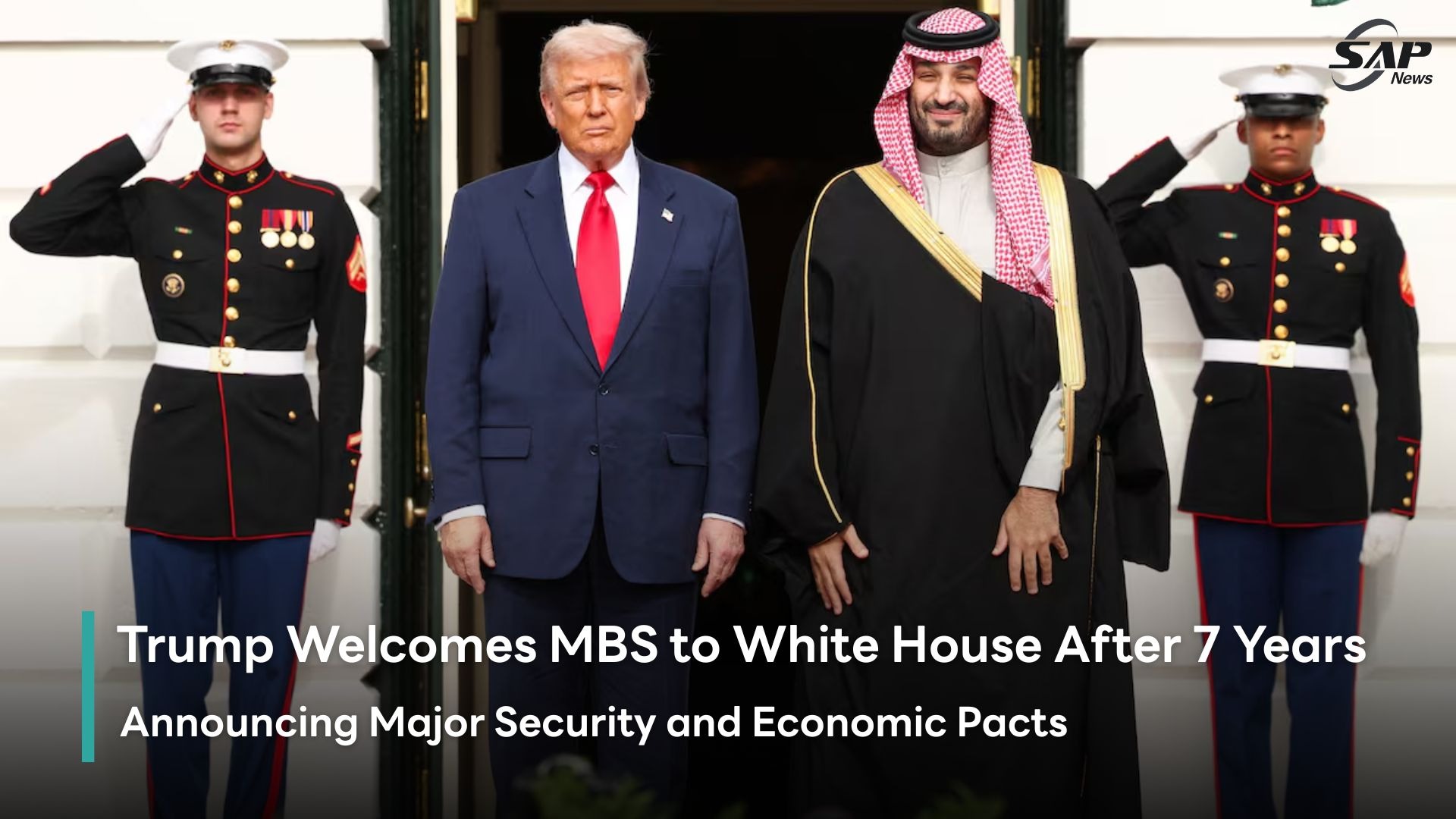
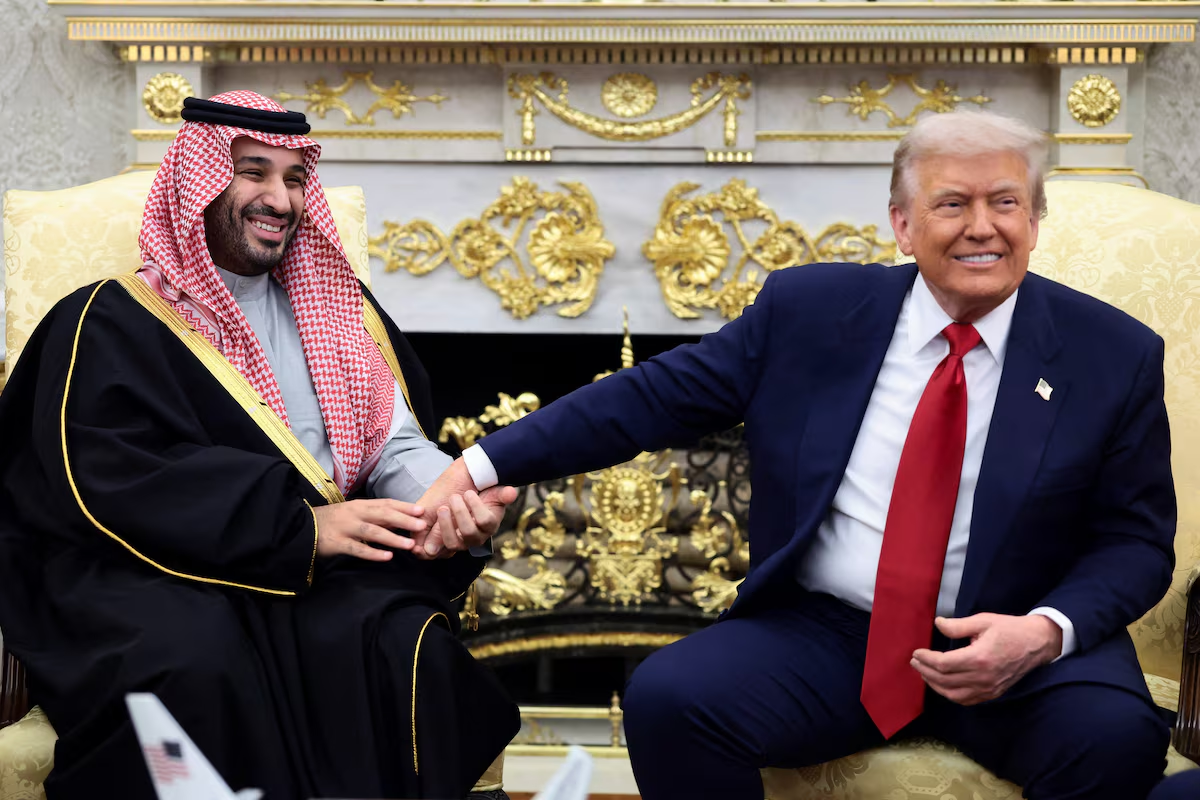
Washington, D.C. — On November 18, 2025, Saudi Arabia’s Crown Prince Mohammed bin Salman (MBS) made an official visit to the White House. It is his first in more than seven years, marking a pivotal moment as U.S.-Saudi relations moves toward renewed strategic cooperation. Both nations announced a series of agreements covering defense, economics, technology, and geopolitical issues, despite ongoing scrutiny over the murder of journalist Jamal Khashoggi.
During the White House meeting, President Donald Trump offered a firm defense of Bin Salman isting that the Crown Prince “had no knowledge” of the killing of Washington Post columnist Jamal Khashoggi, who was murdered by Saudi operatives in Istanbul in 2018.
Trump’s remarks directly contradicted U.S. intelligence assessments, which concluded that Bin Salman approved the operation to capture or kill Khashoggi inside the Saudi consulate.
Bin Salman described Khashoggi’s death as “painful” and a “major mistake,” accepting responsibility as the kingdom’s de facto ruler but maintaining that he did not issue any direct orders. Trump praised him for doing an “incredible job on human rights,” even as global rights groups continued to condemn Saudi Arabia’s record.
REUTERS/Evelyn Hockstein
At an official dinner the same evening, Trump announced the designation of Saudi Arabia as a Major Non-NATO Ally (MNNA), granting Riyadh expanded military and economic privileges without mutual defense obligations. Both nations also signed a strategic defense agreement aimed at strengthening deterrence in the region and easing the ability of U.S. defense firms to operate in Saudi Arabia.
In a significant policy shift, Trump approved the future delivery of F-35 fighter jets to Saudi Arabia, previously restricted to maintain Israel’s exclusive access to the advanced aircraft in the Middle East. Saudi Arabia also agreed to purchase an additional 300 U.S.-made tanks.
On economic cooperation, Bin Salman pledged to increase Saudi investment in the U.S. to $1 trillion, up from the previously stated goal of $600 billion. Although he did not specify timelines or project details, the commitment signals a long-term strategic partnership despite Saudi Arabia’s heavy domestic spending under its Vision 2030 plan.
Both nations also signed a Joint Civil Nuclear Declaration, establishing a legal framework for future cooperation. However, a key dispute remains unresolved: Saudi Arabia rejected the U.S. condition prohibiting uranium enrichment, a process that can be used to produce nuclear weapons. Additional cooperation agreements were signed on artificial intelligence (AI) and critical minerals, highlighting expanding technological ties.
Trump revealed that Bin Salman expressed a “positive attitude” toward normalizing relations with Israel and joining the Abraham Accords. However, the Crown Prince stressed that any progress depends on Israel providing a “clear path to a Palestinian state.” Addressing concerns about conflicts of interest, Trump firmly denied any business links between his family and Saudi Arabia, stating that he has divested from all enterprises to devote “100%” of his focus to governing.
Source: Reuters
Copywriter: Siam Associated Press (SAP) Editorial Department
Pictures: Some illustrations come from the Internet. If there is any infringement, please contact us to delete it.
Source of material: official media /online news
Copywriter: Siam Associated Press (SAP) Editorial Department
Pictures: Some illustrations come from the Internet. If there is any infringement, please contact us to delete it.
Source of material: official media /online news
273/3 Ratchadaphisek Rd., Ratchadaphisek, Din Daeng, Bangkok, 10400
Email reporter@sapnewsth.com
Tel. 099 569 5964