



Ramkhamhaeng University held a seminar titled "Why Do We Need a Military?" Lecturer refuted the image of wealthy generals, emphasizing that the military's role in politics and national security must operate within the law.
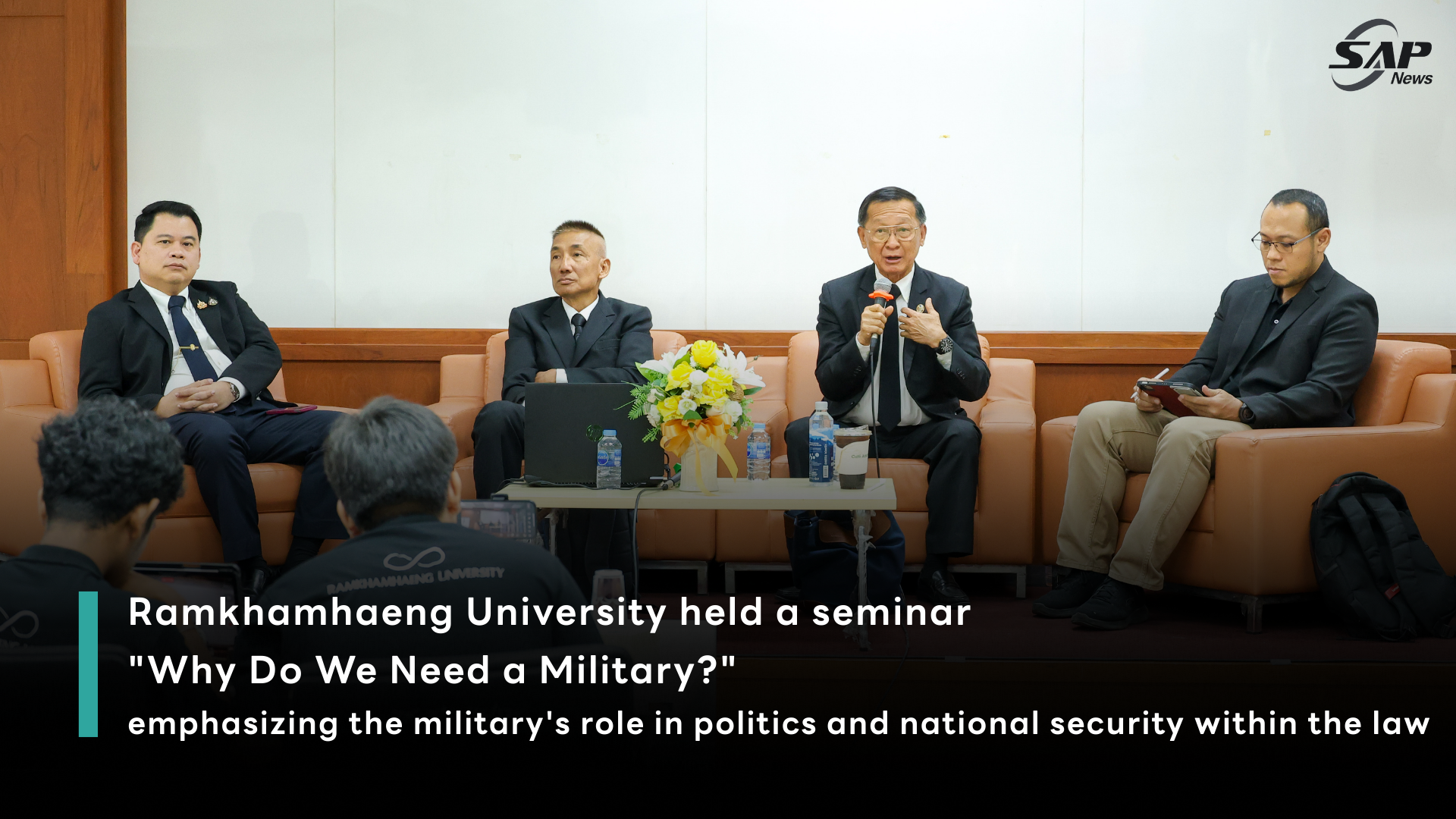
Today (Jan 28) 9:00 AM At Room 501, Sri Srattha Building, Faculty of Political Science, Ramkhamhaeng University. Reporters stated that Ramkhamhaeng University is holding an academic seminar on the topic "Why Do We Need a Military?": Analyzing the Election Campaign Policies Regarding the Military of Thai Political Parties.
The speakers included Lt. Gen. Dr. Nopanan Chanpradab, former Special Advisor to the Army; Lt. Gen. Kanok Netrakavelina, former Deputy Commander of the 2nd Army Area and Commander of the Suranaree Task Force; and Asst. Prof. Dr. Wanwichit Boonproong, a faculty member of the Faculty of Political Science, Rangsit University, and Advisor to the Minister of Defense.
Weeraphat Ratsameerueangrong via SAP NEWS
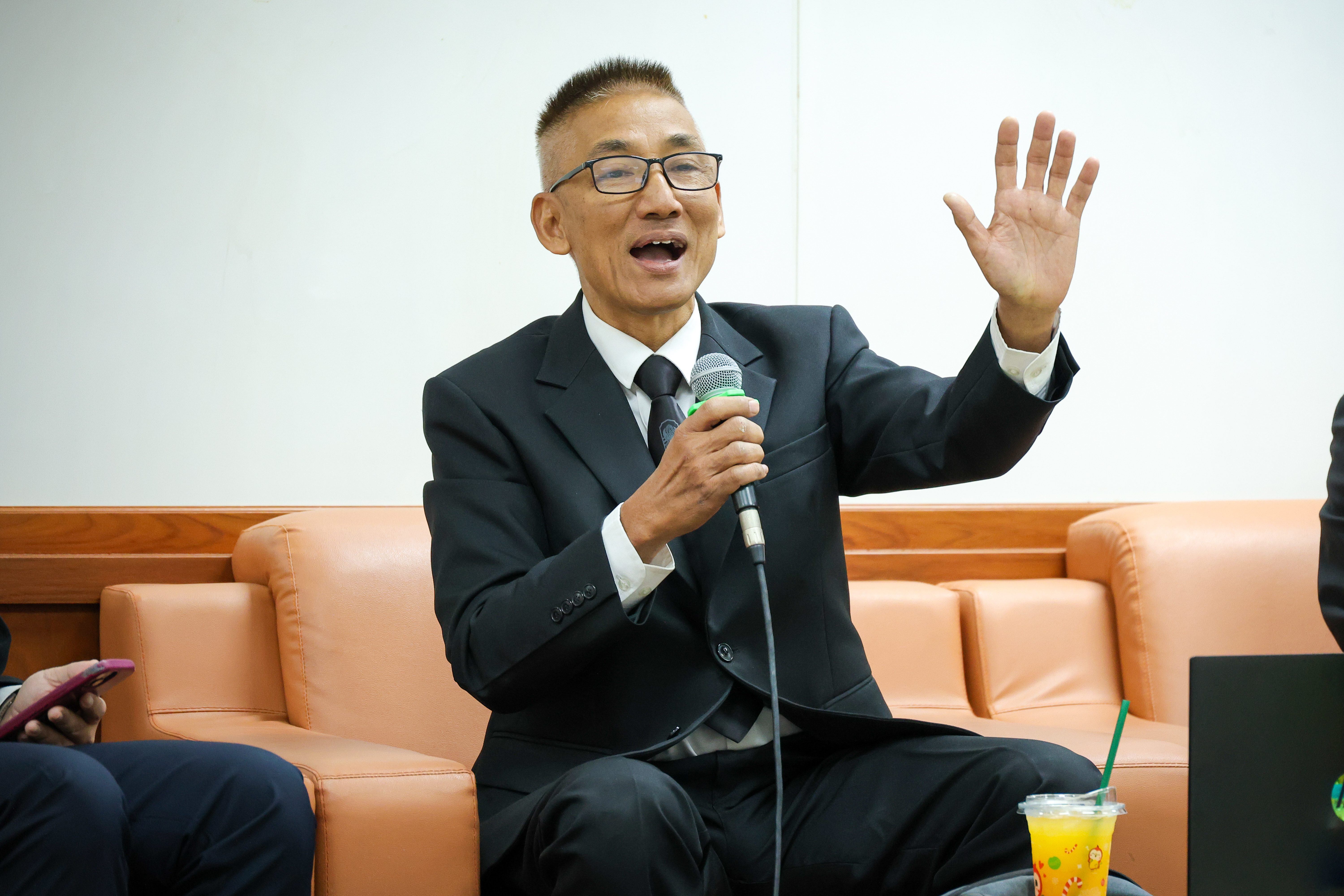
During one segment, Lt. Gen. Dr. Napanan Chanpradab, former Special Advisor to the Armed Forces, stated that he questioned the legitimacy of wealthy generals, noting that even after retirement, he doesn't own a house and, having dedicated his life to protecting the nation, only has 650,000 baht in savings upon retirement and no gold savings. He acknowledged that many things we hear are inaccurate, emphasizing the military's strong democratic principles. He affirmed his commitment to resolving all current social disputes with the military. Regarding the policy to dissolve the Internal Security Operations Command (ISOC), he questioned the legality of the security laws, stating that the military cannot function without them. He noted that international laws are necessary, and further understanding is needed before any proposals can be made. Concerning policies on the rights of military personnel, he expressed willingness to accept them, a long-held aspiration of the military, but questioned the lack of funding.
Weeraphat Ratsameerueangrong via SAP NEWS
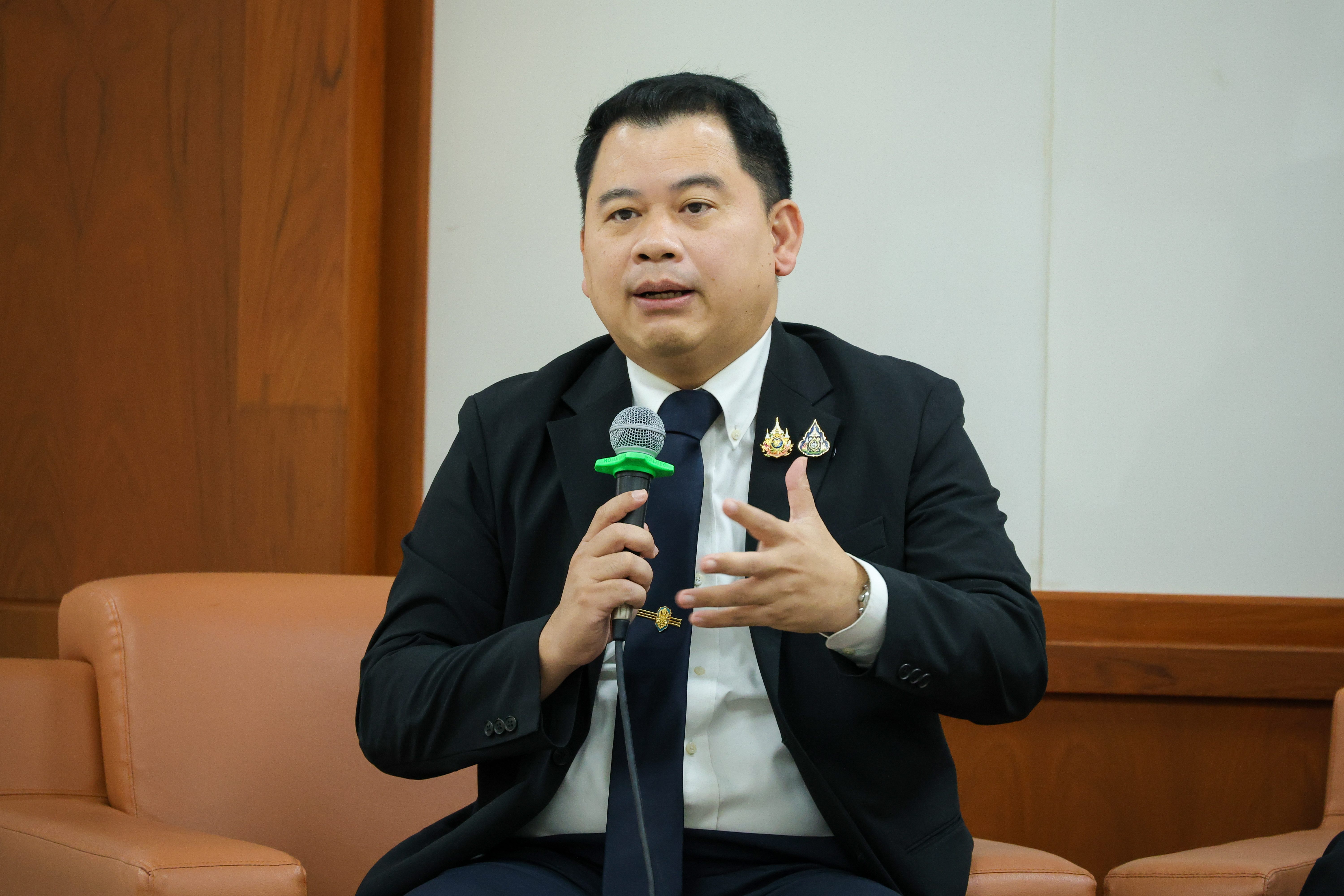
Meanwhile, Asst. Prof. Dr. Wanwichit Boonproong, a lecturer in the Faculty of Political Science at Rangsit University and advisor to the Minister of Defense, stated that the question of "what is the purpose of the military?" is, in his view, a rhetorical device and a question posed by society in both positive and negative contexts. He noted that over the past several years, the military has faced scrutiny from society in various aspects. He, as a civilian academic holding a political position, offered his perspective. Regarding the purpose of the military, he believes it predates patriotism. Therefore, the military profession arose alongside patriotism, which has existed for a long time. However, in the form of a salaried military, its relationship is tied to the pillars of the nation, to the core institutions. It lacks an ideology focused on protecting sovereignty. The military institution is inextricably linked to the monarchy; this connection has existed for hundreds of years.
Assoc. Prof. Dr. Wanwichit continued, "Everyone has heard the saying, 'Taking care of a soldier for 1,000 days but using them for only one day.' If we are prepared for fieldwork, real-world operations, war, and disaster relief, the military is the first agency to act, without waiting for orders from society or the government. This includes the flooding in Hat Yai, where people questioned the government's position, but the military had already taken action. We act both in times of conflict and peace. For example, the Thai-Malaysian border issue took over 40 years to resolve. The construction of the 110-kilometer border fence, jointly built by Thailand and Malaysia, took time to reach an understanding and the return of the land. Who initiated that process and resolved the problem?" The Ministry of Foreign Affairs and the government were only involved for a certain period, but the ones who spoke continuously, worked continuously, and conducted various secret negotiations were the military.
Assoc. Prof. Dr. Wanwichit stated that the question of the military's purpose is unclear. On one hand, some say the military interferes in politics, and the military itself felt unsuitable to govern the country at certain times in history. The military seized power through coups to end conflicts or to usurp power from the elite. However, in the changing social context, a line must be drawn: the military must remain in its position and obey the commands and policies of the political side without question, because the orders of superiors are sacred.
“Referring back to the first Thai-Cambodian conflict, many questioned why we didn't attack the Poipet side and expand the alliance. We didn't want to expand but to limit the scope of the conflict. At that time, the political side didn't give the military the green light to operate in the Sa Kaeo province area. I affirm that the military was ready and fully committed, but we had to limit the scope of the conflict. If we attacked first, the area at eye level would have no natural shelter or bunkers, endangering the civilian population, as the Cambodians would become more unruly.” "Associate Professor Dr. Wanwichit stated,
Associate Professor Dr. Wanwichit continued, "The ministers, including the military, can work together, but those on the outside may not know. Regarding the various political policies that would allow for a voluntary military service with higher salaries and better benefits, and whether the old system is still necessary, I believe the military helps develop human resources. In each company or military unit nationwide, the majority of conscripts, 90%, are individuals who have dropped out of compulsory education. Many companies even find positive results in urine tests. One concern is that while volunteers will certainly receive higher compensation, those who cannot enter through the system are not included in our efforts to develop their abilities—for example, those who cannot read or write, or those who are in questionable environments. We are trying to address these issues. The military cannot be blamed because it's a matter of societal structure. The military becomes aware of these issues and then works to eliminate them. Therefore, I have seen changes for the better. At the same time, the education system is crucial in raising public awareness."
Copywriter: Siam Associated Press (SAP) Editorial Department
Pictures: Some illustrations come from the Internet. If there is any infringement, please contact us to delete it.
Source of material: official media /online news
Copywriter: Siam Associated Press (SAP) Editorial Department
Pictures: Some illustrations come from the Internet. If there is any infringement, please contact us to delete it.
Source of material: official media /online news
273/3 Ratchadaphisek Rd., Ratchadaphisek, Din Daeng, Bangkok, 10400
Email reporter@sapnewsth.com
Tel. 099 569 5964