



"Supajee” Reveals Solution to Economic Crisis
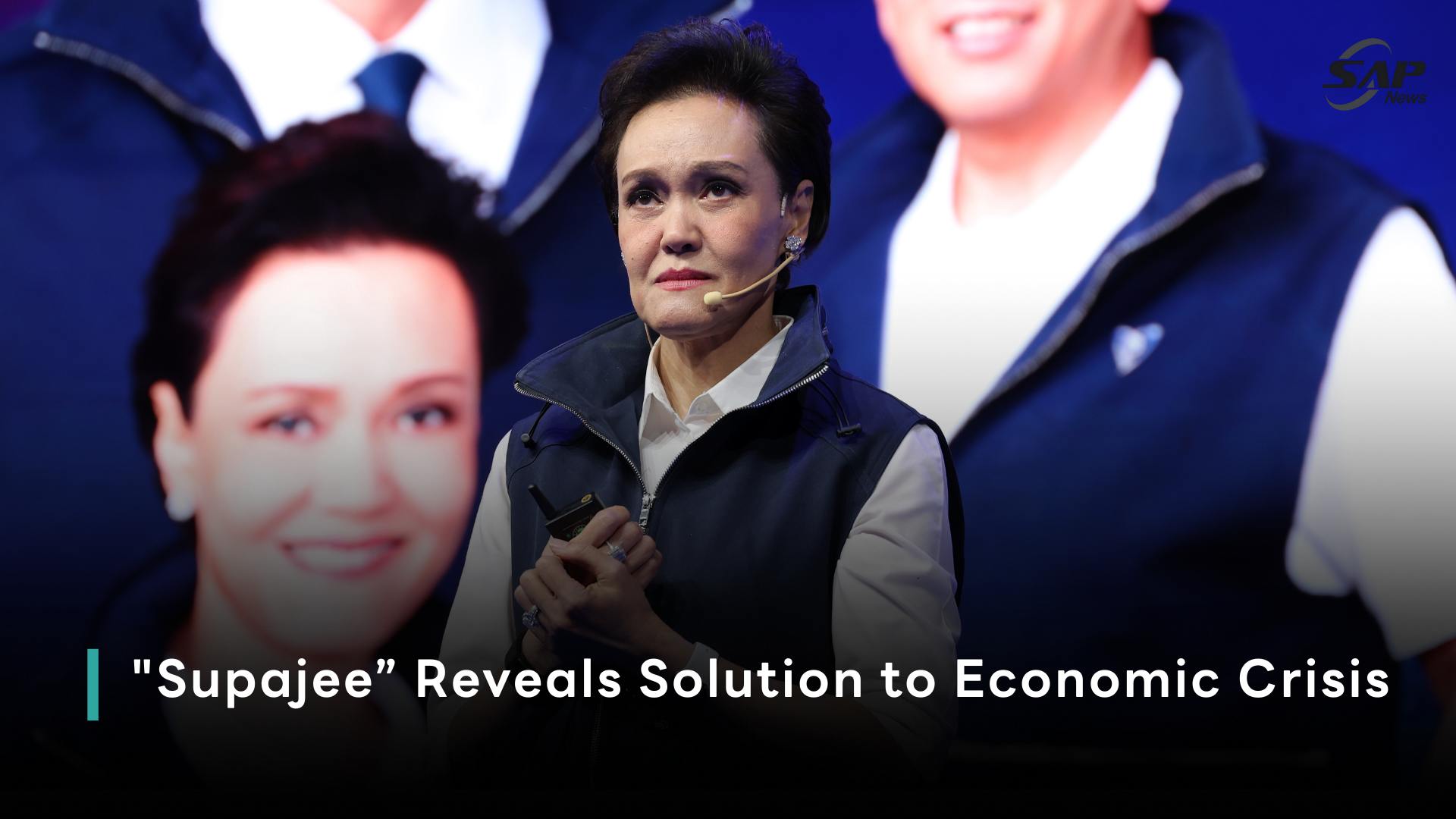
Today (6 Feb) 4:00 PM at the Queen Sirikit National Convention Center, the Bhumjaithai Party, led by Prime Minister and Minister of Interior Anutin Charnvirakul as the party leader, Minister of Foreign Affairs Sihasak Phuangketkaew as the Prime Minister candidate, Deputy Prime Minister and Minister of Finance Ekniti Nitithanpraphas as a campaign assistant, and Minister of Commerce Supajee Suthamphan as a campaign assistant, held a major rally to conclude their election campaign under the theme "Choose Bhumjaithai Party for Professionals, Transform the Economy, Overcome the Global Crisis."
In her speech, Supajee Suthamphan stated that... Today, standing here speaking once again, I am not a politician, but I am here for everyone, for all Thai people in this country. I am no different from Mr. Ekniti, who had friends, teachers, and professors who told him not to do this, but I asked everyone to come because I care about all of us. Our country is facing many storms from uncontrollable factors. This is what worries me. We have geopolitical problems because the world is in conflict, forcing us to choose sides, but in reality, we are not powerful enough to choose. Therefore, we must try to get along with everyone, but with dignity, because geopolitics surrounds us. Security, economics, and foreign policy are inseparable. We see the world pressuring us, and trade is the same. That's why the three of us (Mr. Sihasak, Mr. Ekniti, and Ms. Supajee), who shouldn't be standing here, are here. Because marketing, economics, trade, and security are all interconnected. We are in a terrifying storm, and our ship is sailing with difficulty and challenges. This is Thailand today, and the three of us have volunteered to steer this ship through this difficult and challenging sea towards a new sea of brightness and hope.
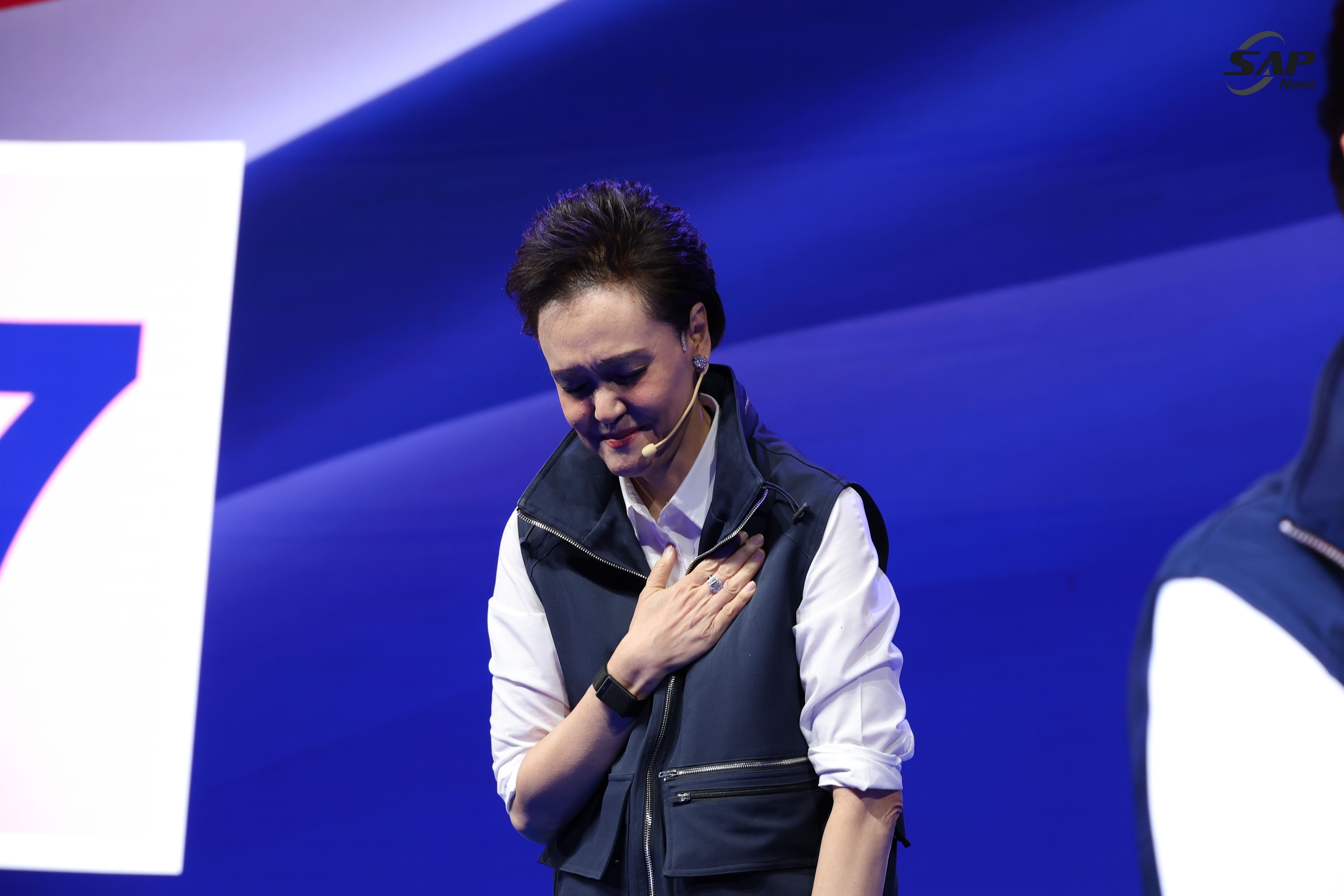
Ms. Supajee added that this is not the time to quarrel amongst ourselves internally, because conflict doesn't help anything. But we must be united, both the public and private sectors, as well as the general public. She then gave an example: "Before, we were the fifth Asian tiger, but today Thailand's GDP growth is very low. We are the sick man of Asia, no longer the fifth tiger. And this year, people are telling us that the IMF says Thailand's growth will only be 1.6%. So, are we going to accept that? We can't accept Thailand growing at only 1.6%. But we must acknowledge our situation." Mr. Ekniti then spoke about populism, saying that they don't have a lot of money, but they are committed to things that are beneficial and can be built upon by everyone in an equitable way. Therefore, they must use money wisely. To achieve greater growth, they need to coordinate and cooperate to help elevate the country. Mr. Ekniti has already shown us that in 73 days, he helped lift old cars out of the mud, resulting in Thailand's growth of 1.8% in the fourth quarter. Now that he says we will grow at 1.6%, everyone must trust Mr. Ekniti. But Mr. Ekniti alone cannot succeed; I must also participate. We need to discuss how to generate income. Our survival depends on finding ways to earn revenue.
Ms. Supajee further stated that the country's income comes from four major sources: 1. Purchasing power... "Our goal is to stimulate the country's GDP growth to reach all groups. Secondly, we aim to attract nearly 500 billion baht in foreign investment, coupled with skills development, which is our hope. We must support new industries such as AI, new automotive industries, and high-value tourism. We need to focus on investment industries and job creation. If we can achieve this, we believe we can grow beyond our estimates.

Ms. Supajee further stated, '3. Government spending: Thailand doesn't have a large income of 3 trillion baht, but expenditures are 4 trillion baht. Of this, the recurring budget is 3.1 trillion baht, with committed expenditures of approximately 400-500 billion baht, leaving only about 500 billion baht for actual spending—a very low amount. Therefore, we must spend precisely and effectively. That's why we implement targeted projects, not populist handouts. We must consider where to find the funds because Thailand's public debt ceiling is almost at 66-67%. Where will the 600-700 billion baht you mentioned for annual spending come from? Many other policies are ineffective. That's why the Bhumjaithai Party develops targeted policies. And to say we have no policies yet is unacceptable.'" Therefore, when I say that governing the country must be based on facts, with genuine intent, and precisely focused on the target, that's truly the case.
Ms. Supajee further stated that the fourth point is to make exports and imports more efficient. However, in the past, we've had a problem with Thailand's exports being concentrated in only the United States and China, accounting for one-third of the country's total exports. Therefore, relying on exports from countries in conflict is risky, so we need to find new markets. Regarding criticism that she belittles exports, she said she never belittles or disdains them but believes we can do even better. But if you don't see where the problems lie, and you think that what's good is enough, would the country be like this? Thailand has had economic problems in the past. In just three months, we've achieved this much. Those who have been involved in economics for years say there are no problems with exports; do they see the problems? Therefore, I don't deny that other regions are also experiencing growth, but my point is, should we continue to grow in the same risky way? So, what we need to do is find new markets and expand our base, which means selling more. Is that wrong?
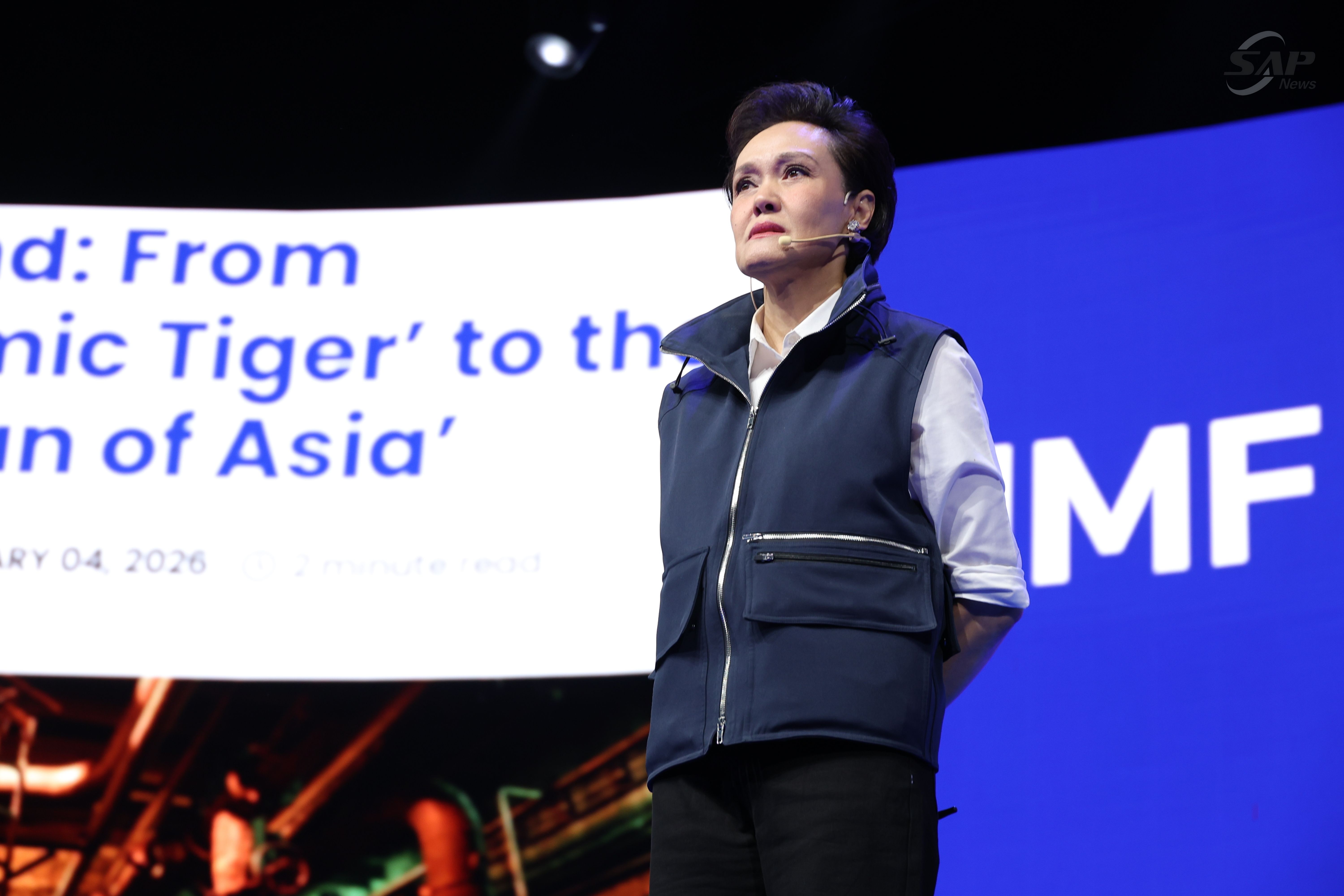
Ms. Supajee continued, “Therefore, we say Europe and the Middle East are growing, but is it enough? So, what we need to do next is figure out how to enter these new markets.”
We need to grow even more so that we can reduce our dependence on the countries we depend on, which accounts for one-third of our total. Therefore, our export strategy must maintain existing markets and be implemented strategically, coordinating security, foreign policy, and trade. And now, which party is more prepared to do this than the Bhumjaithai Party? So, we must maintain existing markets and develop new ones. I want to emphasize that because of the concentration of exports in countries with conflicts, we face high risks, so we need to grow more in other markets. Regarding the claim that exports are problematic, the first solution is to address this concentration. There are approximately 30,000 registered exporters in Thailand, of which about 7-8,000 are large companies, accounting for 74% of the market share. The rest are SMEs. Therefore, we must help this group by enhancing their skills to strengthen them. This includes projects to access funding, find markets, and protect SMEs from nominees, which has already been implemented. Why haven't those who have been involved in economics for many years addressed this issue? They've been in power for so many years and have only achieved this much. Therefore, we must ensure the continuous and significant growth of SMEs.
Furthermore, Ms. Supajee stated that the next solution to address concentration is related to goods. By 2025, we will export 11.1 million baht and import 11.4 million baht, exceeding exports. However, the concentration is due to the fact that our exports and imports are in the same product group, such as machinery, computer equipment, and automotive parts. Thailand is essentially in the middle of the supply chain. To solve this, we need to diversify our exports, rather than concentrating them solely on imported goods. And those who say we undervalue our exports—are they right? We need to promote Thai-made products, or "Made in Thailand." If we can do that, it will be beneficial, along with addressing counterfeit products and improving the export of processed agricultural products. Therefore, the role of this economic team is to help farmers increase their income.
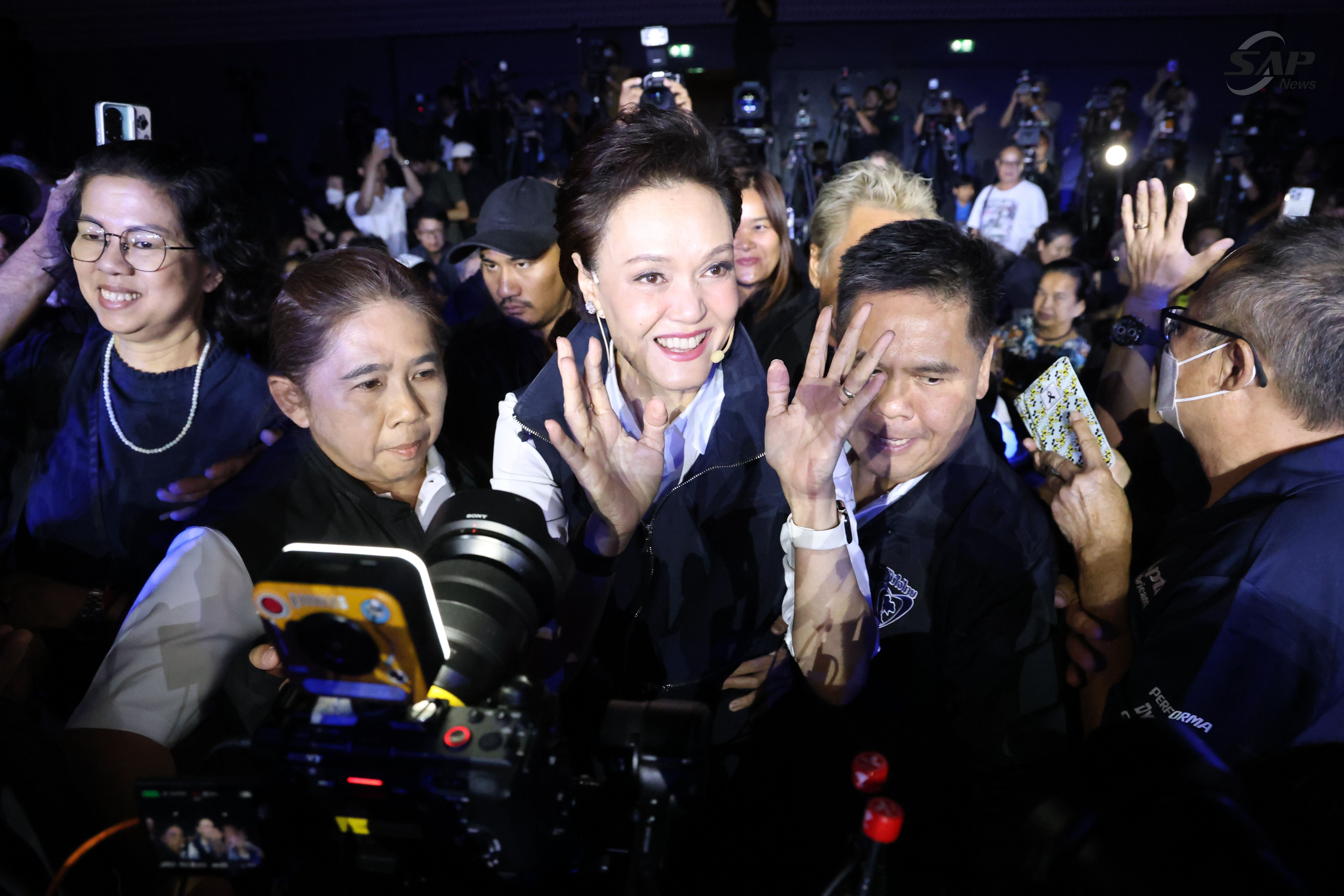
Ms. Supajee reiterated that, regarding agriculture, she has focused on three areas: precision agriculture, secure agriculture, and sustainable agriculture. After 73 days of work, she has successfully raised rice prices using market mechanisms, not just monetary incentives. This involved absorbing supply and selling it among ourselves within the government sector while also finding markets for it. Currently, we are addressing the issue of fragrant coconuts and Chinese middlemen; regulating their practices and opening new markets are crucial. We are also working on exporting durian. Therefore, we must compete in precision agriculture. For secure agriculture, we need to find export markets and utilize barter systems, not just buying and selling, to help farmers improve their livelihoods. This also includes promoting sustainable farming practices. By implementing pre-sales, if possible, farmers would not have to worry about finding markets.
Ms. Supajee emphasized that sustainable agriculture must focus on environmental protection, organic farming, and low-carbon agriculture. Therefore, if we ensure stable incomes for farmers, it will improve the incomes of a large number of people in the country. Thailand sells agricultural security. In today's world, if uncontrollable factors occur, food is what people need to eat. Therefore, if we can sell food security to others, it will increase the stability of farmers and help lift the economy out of its slump. Don't say that the current situation is good, but rather that we can't solve the problems because we don't see them. We must accept the reality of what needs to be fixed and what should be preserved. This is what the current economic cabinet will continue to work on regarding economic and trade security.
“The future is in everyone's hands. Will we continue sailing in a stormy sea, or will we take this ship out to explore new waterways? From everything I've explained, do you feel any hope? The future is in your hands; will you choose hope or conflict? Will you choose someone who will solve the problems or someone who will try to fix the system without understanding the problems?” "And I don't really know the full extent of the problem. I ask for a chance. Please don't let what I've intended to do for you be denied. I've done my best, 100%. I want to confirm that I'm not working for any political party because I'm not a politician, and I've never been here before. But I have a genuine intention, a very strong intention, to do something for everyone in this country, to help Thai people escape from this worrying and dangerous situation. I've volunteered to give us hope once again," Ms. Suphajee said.
Photo: Weeraphat Ratsameerueangrong via SAP NEWS
Copywriter: Siam Associated Press (SAP) Editorial Department
Pictures: Some illustrations come from the Internet. If there is any infringement, please contact us to delete it.
Source of material: official media /online news
273/3 Ratchadaphisek Rd., Ratchadaphisek, Din Daeng, Bangkok, 10400
Email reporter@sapnewsth.com
Tel. 099 569 5964