



“Abhisit” Submits Two Proposals to the Government to Resolve the Oil Crisis
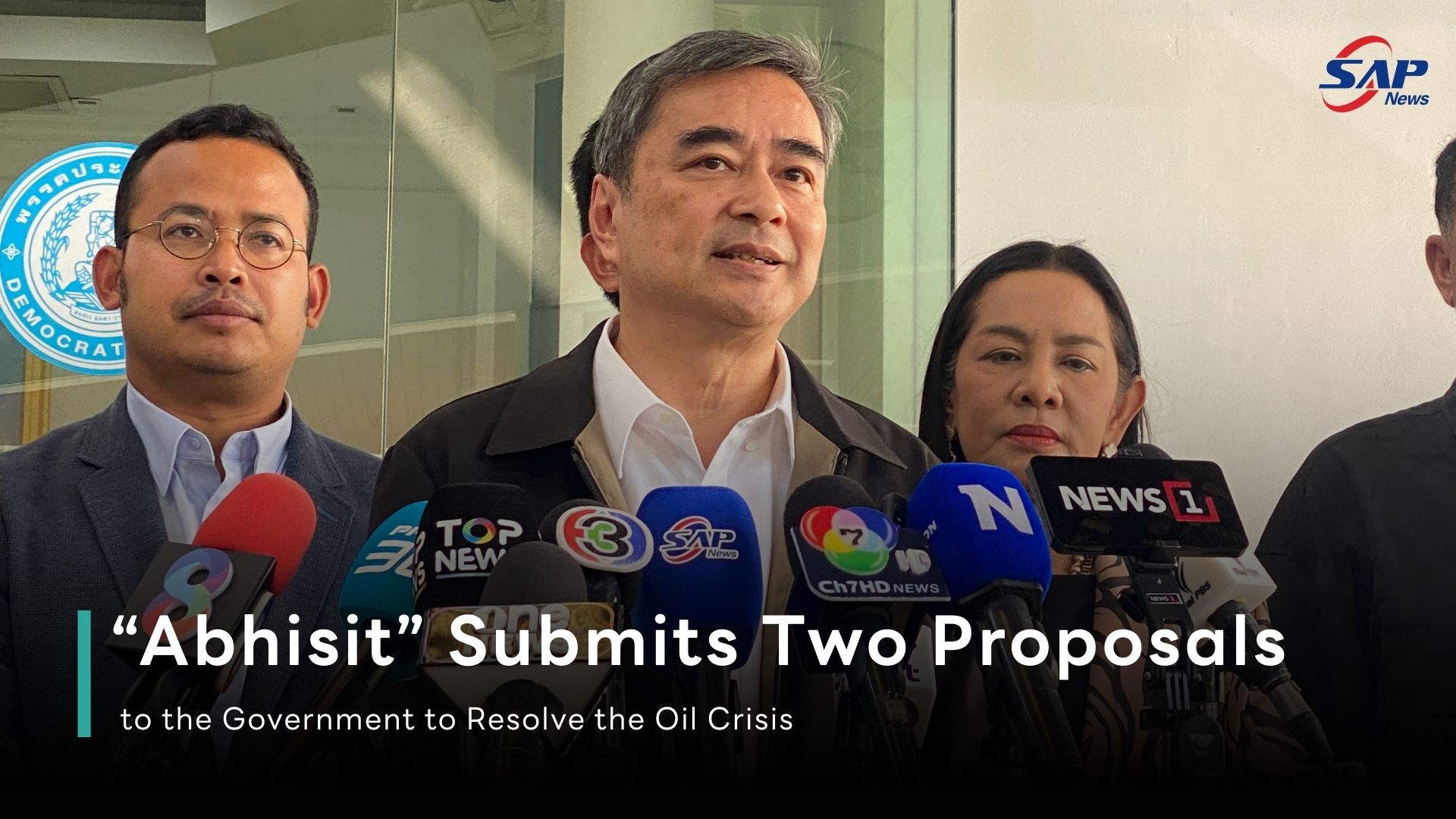
Today (18 March) 3:30 PM at the Democrat Party headquarters, Mr. Abhisit Vejjajiva stated regarding the solution to the oil shortage resulting from the fighting in the Middle East that the Democrat Party has concrete proposals on how to manage this issue for the benefit of the government, even if it is a caretaker government. He acknowledged that no one can deny that the cost of oil is affected by the war, something the government cannot control, and that the future trend and duration of the situation remain uncertain.
Mr. Abhisit further stated that, importantly, when the government aims to reduce the burden on the public, especially by freezing diesel prices, it needs a plan that allows all stakeholders the public, traders, and industries to act responsibly and avoid a situation like the one seen in the past. The serious problems of the past arose from the government's announcement of price freezes and the stipulation that the measure would end within a certain number of days. This caused consumers to worry about rising prices as the time limit approached, leading them to rush to fill up or stockpile fuel. Simultaneously, businesses were immediately incentivized to avoid rushing to sell their products, knowing that prices would soon rise. This highlights a crucial lesson for the government in managing the market: avoiding signals that create chaos or turmoil.
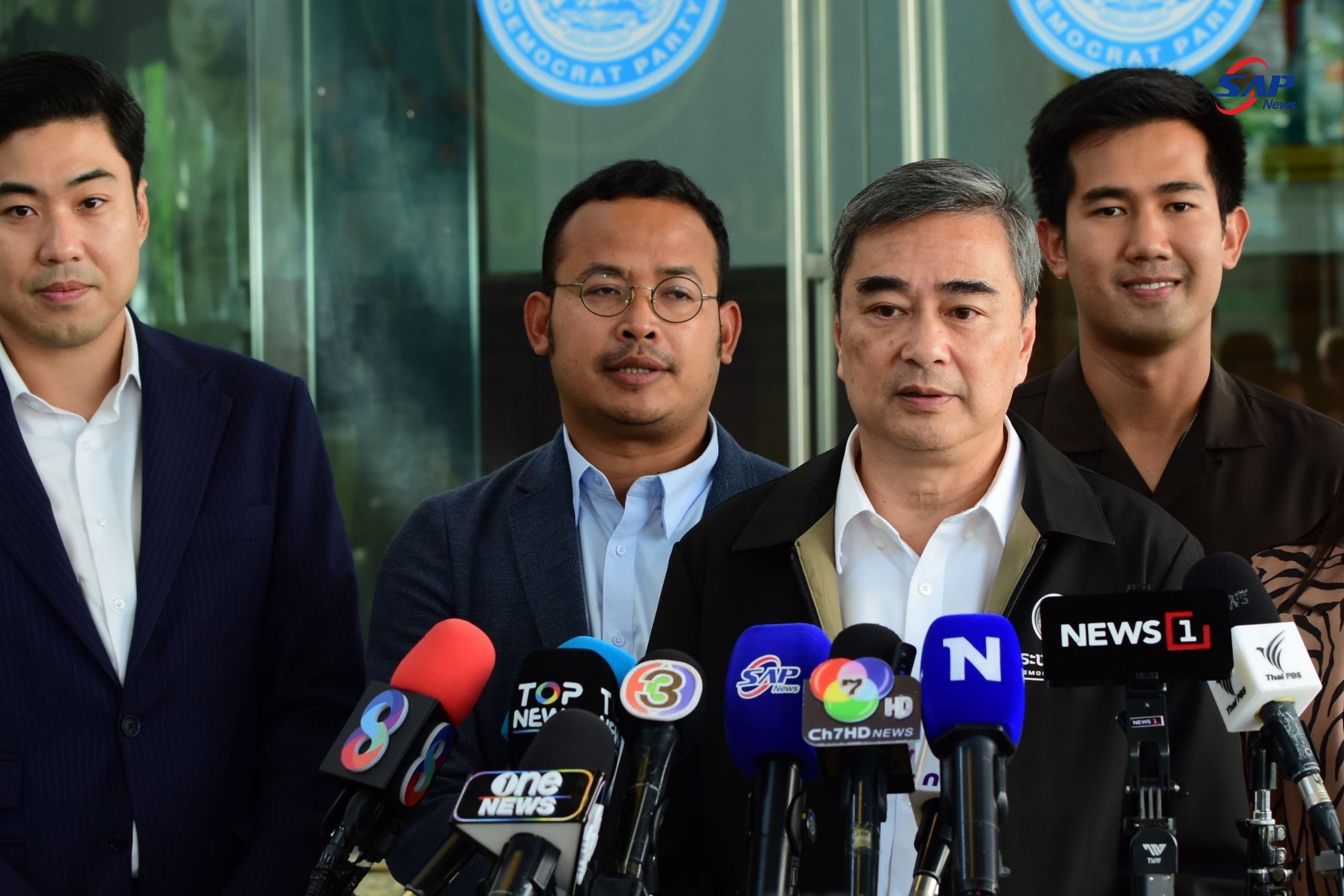
Mr. Abhisit added that another issue the government needs to review is the price difference between the fuel prices consumers pay at gas stations and the prices the industrial sector typically pays. This resulted in the industrial sector competing with consumers for fuel. The government needs measures to address this problem, and this is the most important thing now. What the Democrat Party wants to propose is that the government has expressed concern that the current fuel price freeze, which everyone knows is placing a significant burden on the Fuel Fund, has resulted in unprecedentedly high daily subsidies per liter. The government is also worried that if the Fuel Fund goes into deficit, it will have to consider borrowing more or providing guarantees. The Democrat Party wants to propose what it considers the most urgent measure: Currently, the burden of the increased fuel prices falls entirely on the consumers the public. In other words, the current price freeze draws money from the Fuel Fund. In the future, to rebuild the fund and avoid debt, the public will have to pay more for fuel when prices are falling.
Mr. Abhisit reiterated that the Democrat Party believes there are two other sectors that should help alleviate the burden. Firstly, the government itself, which currently collects an excise tax of approximately 6 baht per liter. In the past, the government has exempted excise taxes to reduce fuel costs. If this were done, the burden of managing fuel prices would not fall solely on the Fuel Fund, but the government would also share the burden. While the private sector's refining margin has increased from 2 baht to approximately 6 baht, it's true that this refining margin doesn't represent solely increased profits, and refineries don't set this amount directly. It's the difference between the gate price, which is referenced to Singapore prices, and the fluctuating crude oil price. However, in situations like this, many countries are implementing measures to encourage the private sector to contribute to alleviate the burden on the public. In the past 2-3 years, countries like the United Kingdom, Italy, and Spain have all done this. The Democrat Party proposes that the government should currently require refineries to contribute 3 baht per liter from their refining margin to the Oil Fund. Doing so would, in the long run, involve the government, businesses, the private sector, and the public, all sharing the burden and ensuring the Oil Fund has sufficient funds for management and its future stability. We are confident that this approach should allow the situation to be managed at least until after Songkran, at which point the situation may change.
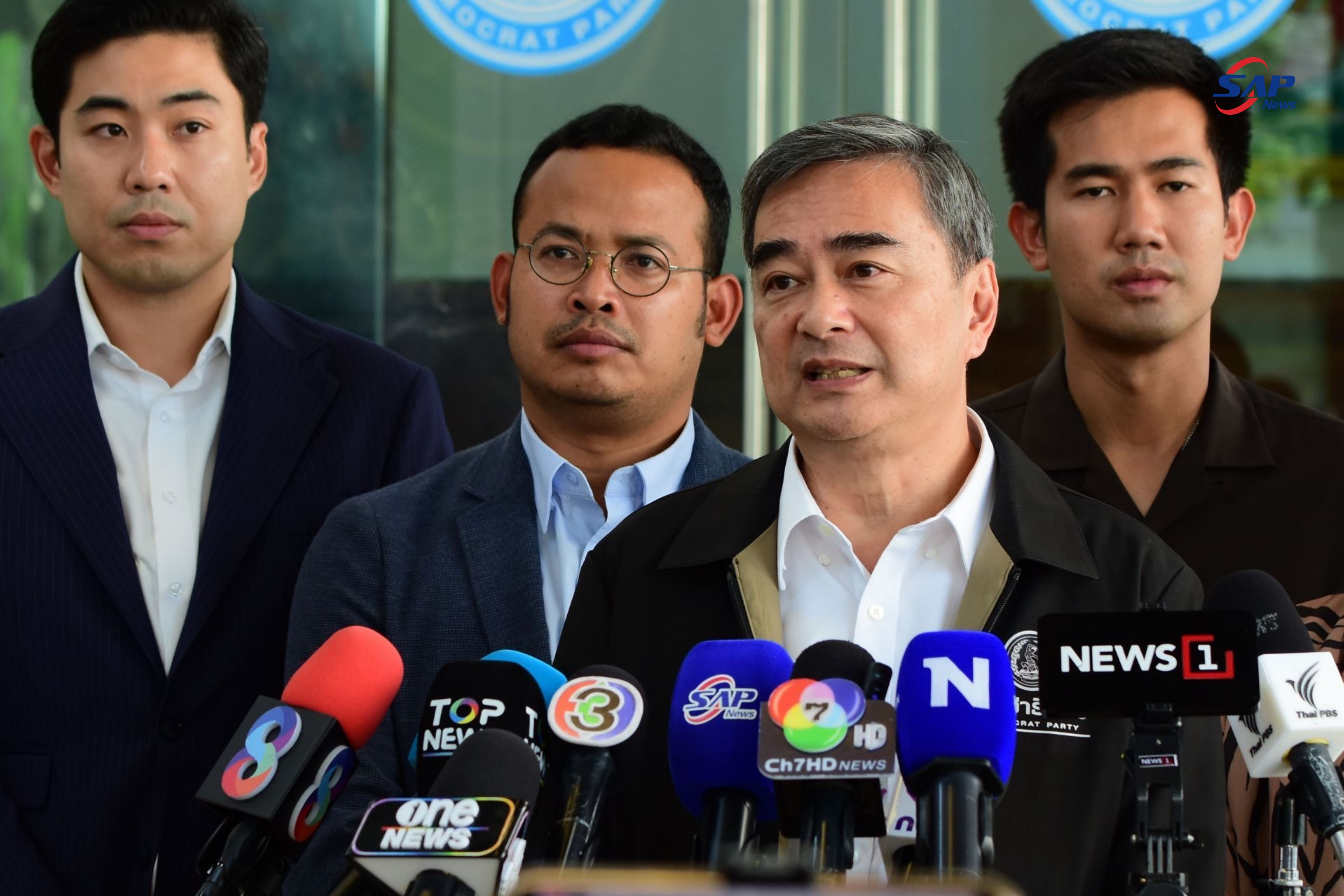
Mr. Abhisit further stated that the Democrat Party calls for The government should clearly illustrate to the public the structure of oil prices. Today, managing oil prices relies solely on the oil fund, placing a burden on the public. If this isn't the case now, it will be in the future. However, if three parties (the government, the public, and government agencies) work together to manage these issues, it will be easier. Furthermore, the two aforementioned problems, which create market volatility and price differentials, should be addressed and managed. This is just an initial proposal.
Mr. Abhisit added that he also wants the government to prepare in advance for the impact of plastic pellets and fertilizers on the agricultural and industrial sectors. Regarding whether a direct letter will be submitted to the government for communication, Mr. Abhisit said that they are currently waiting to see if the Speaker of the House of Representatives will convene a regular session after tomorrow's meeting to elect the Prime Minister. If so, the party will be able to use the parliamentary mechanism to address these issues This gives other political parties and fellow Members of Parliament the opportunity to present a wider range of issues to the government. Therefore, I want them to utilize the parliamentary mechanism effectively.
Mr. Abhisit added that regarding the ease or difficulty of having refinery businesses contribute to the oil fund, he explained that what he was discussing is essentially a windfall tax, given the current situation. However, there might be some procedural complexities. He recalled a similar situation 2-3 years ago, where the government summoned refinery operators and agreed to alleviate the burden by contributing additional funds to the oil fund. He stated that it's feasible now, albeit for a short period. He sees no reason why something that worked before shouldn't be possible again, as the figures clearly show what the appropriate approach is.
Copywriter: Siam Associated Press (SAP) Editorial Department
Pictures: Some illustrations come from the Internet. If there is any infringement, please contact us to delete it.
Source of material: official media /online news
273/3 Ratchadaphisek Rd., Ratchadaphisek, Din Daeng, Bangkok, 10400
Email reporter@sapnewsth.com
Tel. 099 569 5964