



“ECT Secretary-General” clarifies general election 2026 concerns, Reaffirms impartiality and transparent election.
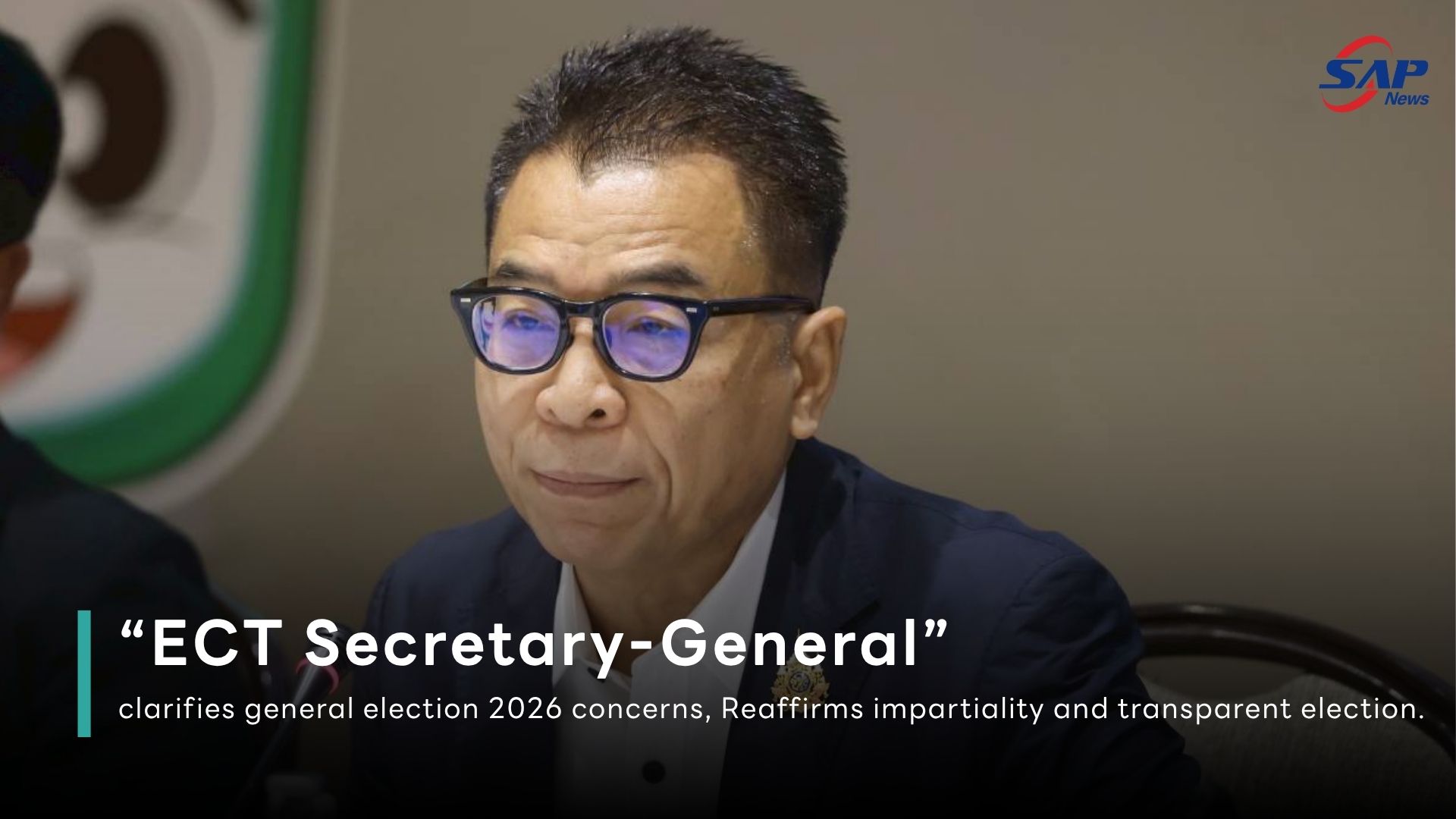
Today (March 20, 2026) at 10:00 a.m. at the Centara Life Government Complex, Bangkok. The Election Commission of Thailand (ECT) held a media relations event to summarize the overall picture of the general election for Members of Parliament (MPs) and referendum held on February 8, 2026. Mr. Saweang Boonmee, Secretary-General of the Election Commission, chaired the ceremony, together with Deputy Secretaries-General: Lt. Col. Phassakorn Siriphayaphon, Lt. Col. Chanit Noi Lek, Mr. Veera Yiprae, and Mr. Kriangrai Pandokmai.
Mr. Saweang indicated that the election was conducted by the people, with the Election Commission's role restricted to monitoring and announcing the results. He noted that, with the exception of the secret balloting process, the system was established for transparency among the 52 million eligible voters, MP candidates, and polling station committee members. This time, the voting method was designed to facilitate participation from the public and election monitors. However, this approach is intended to prevent fraud and ensure that each vote reflects the will of the people.
Regarding the issues of 60,000 and 300,000 ballots being "staggered," Mr. Saeng stated that the vote count report (Form 5/18) is at the heart of the voting process, containing the number of eligible voters, the number of voters who cast their ballots, the number of ballots, and the tally sheet. All results are provided via the “ECT REPORT “ system, which shows the public the trend of votes. The results may contain errors and inaccuracies because the Election Commission's participation is limited to collecting votes sent directly from polling stations into the system; vote counting is the duty of election observers in each district.
"I affirm that not any new votes were added. The ECT Report is essentially a system for showing the overview of voting results. We created the method to ensure that the people's will is reflected in the ballots and voting booths. I confirm that the vote counts are correct, with the exception of errors made by election observers, which we have already corrected," Mr. Saweang remarked.
Mr. Sawaeng further added, Election results are announced after many verification stages, including certification by election inspectors and validating the accuracy of the statistics at each polling station. As a result, the delay in reporting the results might be linked to these verification processes, which may include re-voting and recounting at some polling places. This is to ensure that every vote is adequately safeguarded and verifiable, as democracy is for all.
Finally, Mr. Sawaeng stated that the Election Commission will adhere to the legislative framework, upholding high standards and prioritizing every vote regardless of political affiliation. Because a few thousand officials cannot monitor all voting sites, citizen oversight is critical to ensuring a fair and transparent election.
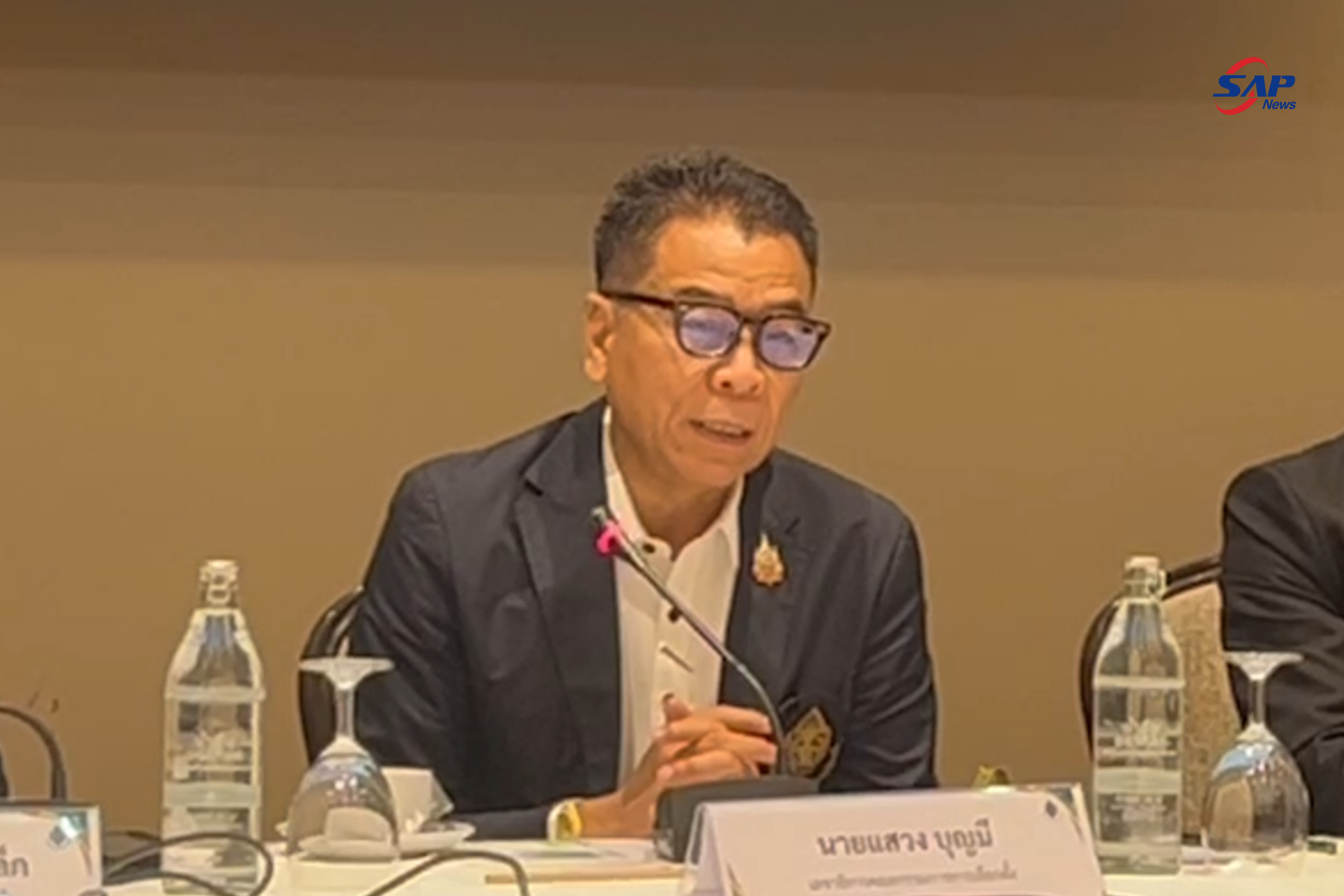
”Ballot Barcode Case: EC says all procedures follow legal“
Regarding case of the barcode/QR code on the ballot papers, which the Constitutional Court accepted for review, is a valid case at any court level. Mr. Sawaeng stated , we must wait for the Constitutional Court to clarify specific concerns and at what time. The Election Commission, on the other hand, maintains that it fulfilled its responsibility to ensure a fair and honest election, which was conducted directly and covertly. They have legal responsibilities, and when public concerns arise, it is necessary to clarify whether they acted in conformity with the Constitution. The court is now considering the matter, but they have yet to receive any documents or details.
When asked if a simulation of the election process using barcodes or QR codes would be required to prove that they cannot be traced back to the ballot stub, Mr. Sawaeng stated that they had fulfilled their legal obligations, which were to ensure secret voting and a smooth election. The election is currently being held directly and discreetly and they have done for duty. The Constitutional Court must assess the matters asked for clarification.
The occurrence may unintentionally lead to the tracking of ballot stubs or jeopardize secrecy; the Election Commission will address this as well. Regarding the likelihood of the election being annulled, Mr. Saeng indicated that it has not yet reached that point. He advised waiting until the procedure was completed and the election remained secret, underlining that everything rests with the court and that it is their responsibility to respond properly.
He further added that the ECT has the authority to vote, but their responsibility is to defend the election by ensuring it is performed directly and quietly. He explained that in the past, if there were any concerns about a ballot, it was submitted to the forensic science division for fingerprint verification. However, with technological improvements, fraud prevention solutions have become more user-friendly, reducing the necessity for fingerprint verification. He went on to say that they do not actually have the authority to check if a ballot can be scanned.
Further, when asked if barcodes/QR codes would be on ballots in future elections, particularly the Bangkok gubernatorial election, Mr. Sawaeng stated that they were already in use in 2023, but he couldn't say positively because it depended on the Election Commission.
Copywriter: Siam Associated Press (SAP) Editorial Department
Pictures: Some illustrations come from the Internet. If there is any infringement, please contact us to delete it.
Source of material: official media /online news
273/3 Ratchadaphisek Rd., Ratchadaphisek, Din Daeng, Bangkok, 10400
Email reporter@sapnewsth.com
Tel. 099 569 5964