



“Gulf of Thailand Task Force Trat Province” intensifies monitoring and decisions against smuggling vessels.
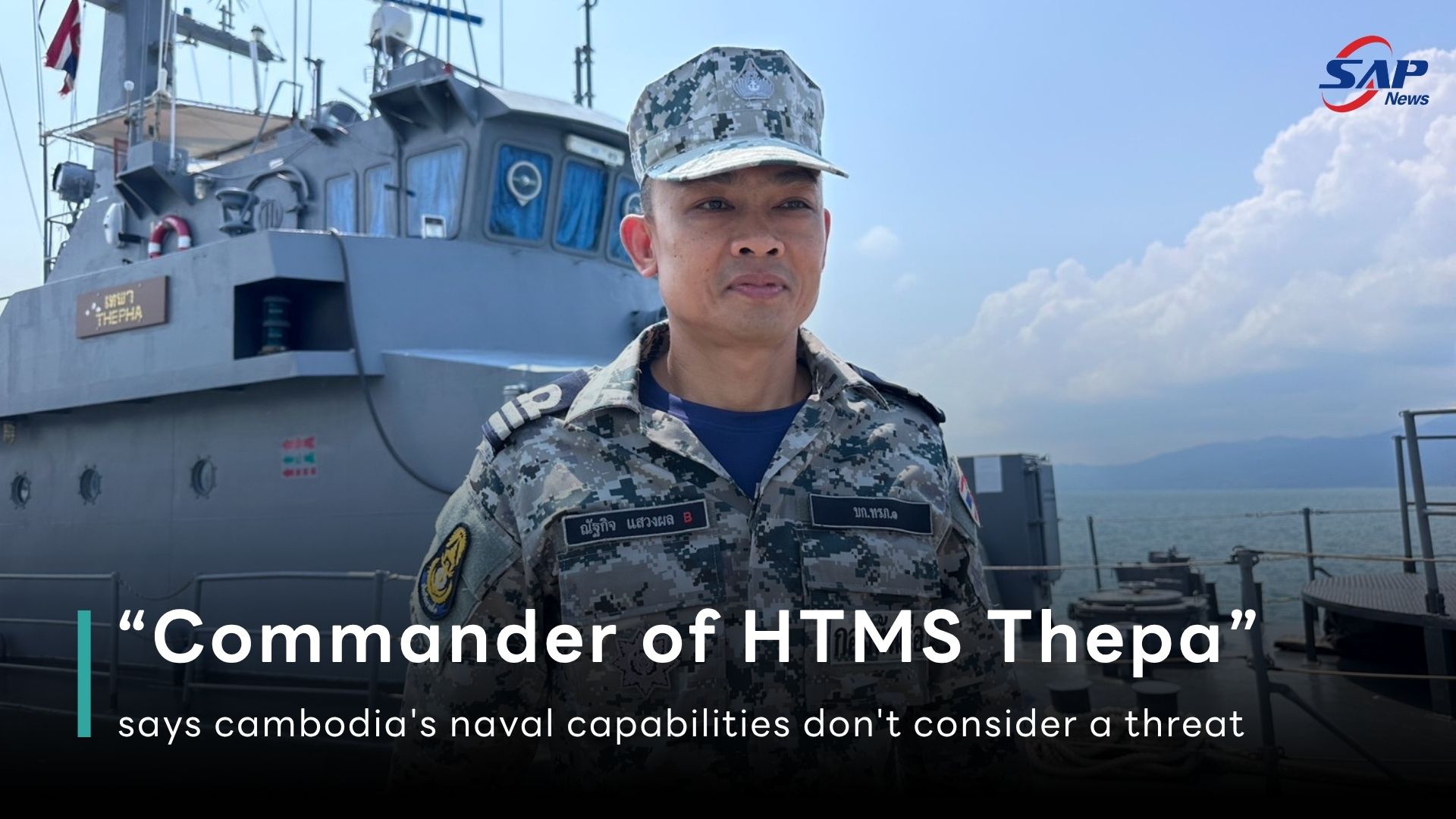
Today (27 March) 9:20 AM at the Chang Thamachat Conference Room, Trat Naval Base, Trat Province, Lieutenant Commander Natthakit Saengphol, an officer of the Gulf of Thailand Task Force, Trat Province, reported on the mission of monitoring the Thai-Cambodian border and detecting smuggling of illegal oil and other contraband. He stated that there have been no reports of oil smuggling to Cambodia in the area but acknowledged that there is intelligence being gathered, which is currently being investigated.
Lieutenant Commander Natthakit added that, in addition, the Royal Thai Navy Region 1, which is responsible for the area from Trat Province down to Prachuap Khiri Khan Province, arrested oil tankers without proper cargo documentation in Rayong and Samut Prakan last week and has already proceeded with legal action. Following orders from superiors, the unit has intensified its efforts to intercept smuggled oil, conducting daily patrols and utilizing local intelligence. The unit is not concerned about any links to local influential figures in the smuggling operation, assuring the public that any involvement will be dealt with immediately. Superiors have also emphasized the need to increase efforts to combat oil smuggling after the discovery of two such cases in Rayong and Samut Prakan provinces, as these impact the country's overall economy.

Lieutenant Commander Natthakit further stated that, regarding the Thai-Cambodian border in Trat province, land transport is predominantly via the Ban Hat Lek border crossing. However, the closure of this crossing necessitates increased vigilance against the smuggling of consumer goods by sea. It has been observed that smuggling methods have shifted from large vessels to smaller boats to evade detection, and the unit is continuously monitoring these activities. Following recent clashes along the Thai-Cambodian border, Thai cargo ships are prohibited from traveling to Cambodia, and Cambodian vessels are banned from entering Thailand. However, restrictions on other nationalities' vessels remain in effect.
Lieutenant Commander Natthakit added that current methods involve conducting thorough inspections of suspicious activity and utilizing technology for detection and surveillance through maritime traffic control points. Because general maritime movements involve reporting entry and exit according to international standards, smaller vessels that do not report their arrival or departure must be monitored visually. Furthermore, an assessment of the situation regarding Cambodian vessels, which have been moving in large numbers recently, indicates that military operations are conducted in accordance with the law and along the border line that Thailand adheres to internationally, specifically the Bearing Line 211, which ends at border marker 73 in Khlong Yai District, Trat Province.
Photo : Khanisorn Lorthongdaeng
Copywriter: Siam Associated Press (SAP) Editorial Department
Pictures: Some illustrations come from the Internet. If there is any infringement, please contact us to delete it.
Source of material: official media /online news
273/3 Ratchadaphisek Rd., Ratchadaphisek, Din Daeng, Bangkok, 10400
Email reporter@sapnewsth.com
Tel. 099 569 5964