



"Anutin" reveals results of discussions with "Wang Yi" says cambodia does not want to confront Thailand , China ready to help resolve conflict
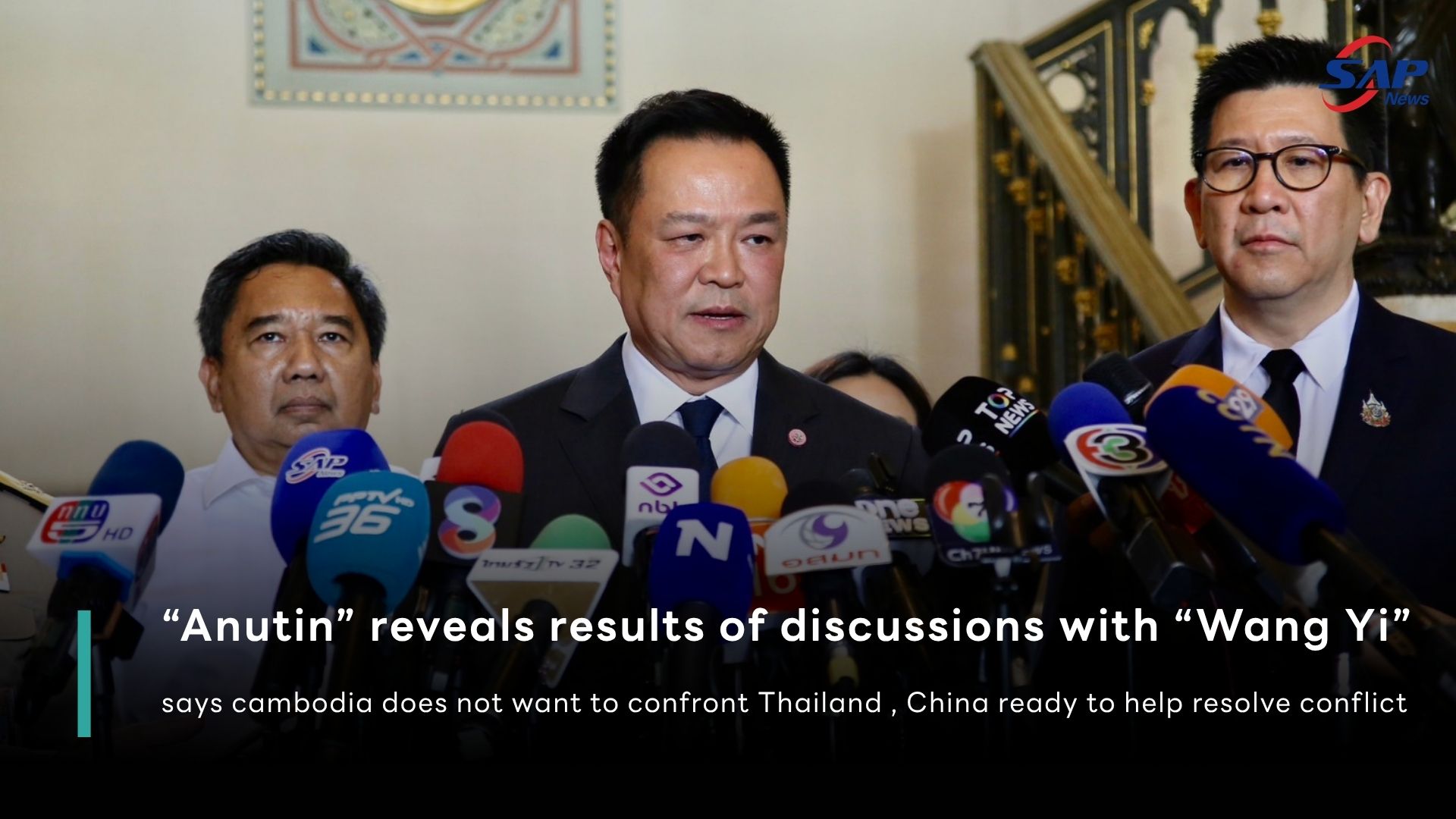
Today (April 24, 2026) at 2:08 PM at Government House, Prime Minister and Minister of Interior Anutin Charnvirakul gave an interview regarding the results of discussions with Mr. Wang Yi, member of the Politburo, director of the Central Committee for Foreign Affairs of the Communist Party of China, and Minister of Foreign Affairs of the People's Republic of China. He stated that the official discussions took place at the Ministry of Foreign Affairs. Mr. Wang Yi showed goodwill by visiting and paying respects to the Prime Minister of Thailand. Discussions confirmed the close relationship and mutual support between the two countries.
Regarding whether the issue of the joint energy crisis was discussed, Mr. Anutin said that everything was discussed, and Thailand requested China's assistance in negotiating the opening of the shipping strait. Regarding negotiations on the management of energy, crude oil, and gas supply, Mr. Anutin requested that Thailand be included in the context, as shipping routes from the Middle East to China often pass through Thailand. Mr. Wang Yi assured him of this, stating that there was no need to worry, as the relationship between Thailand and China is like that of siblings.
Mr. Anutin also mentioned the issue of fertilizer and stated that Thailand's oil supply is relatively stable, though not guaranteed to be permanent, given the uncertainty of the war's duration. He assured that there would be no shortages or problems with oil, confirming checks with PTT and its logistics. He reiterated that he and Mr. Wang Yi were confident of a stable oil supply.
Mr. Anutin further stated that there were two major issues where China's support would prevent significant negative impacts from the Middle East situation. Firstly, regarding fertilizer, he suggested that China consider supplying sufficient quantities to Thai farmers, given Thailand's dual industrial and agricultural sector. He mentioned this to Mr. Suriya Jungrungreangkit, Minister of Transport (Acting Minister of Agriculture and Cooperatives), who also negotiated with Russia. If China and Russia can secure fertilizer quotas to sell to Thailand, it will alleviate the problem.
Regarding the request for cooperation from China, Mr. Anutin stated that the Chinese side indicated, following their visit to Cambodia, their readiness to act as a mediator in resolving the conflict. They also reflected that Cambodia's current stance towards Thailand is not one of confrontation or escalation of the conflict. China communicated this information to the Thai side. The Thai side reiterated that it does not wish to have conflict with any neighboring country but that restoring relations requires a step-by-step process. This involves establishing a clear framework and guidelines for negotiations to build trust and confidence between the two countries. This is a time-consuming process that cannot be achieved in the short term, and it has been clearly communicated to the Chinese side.
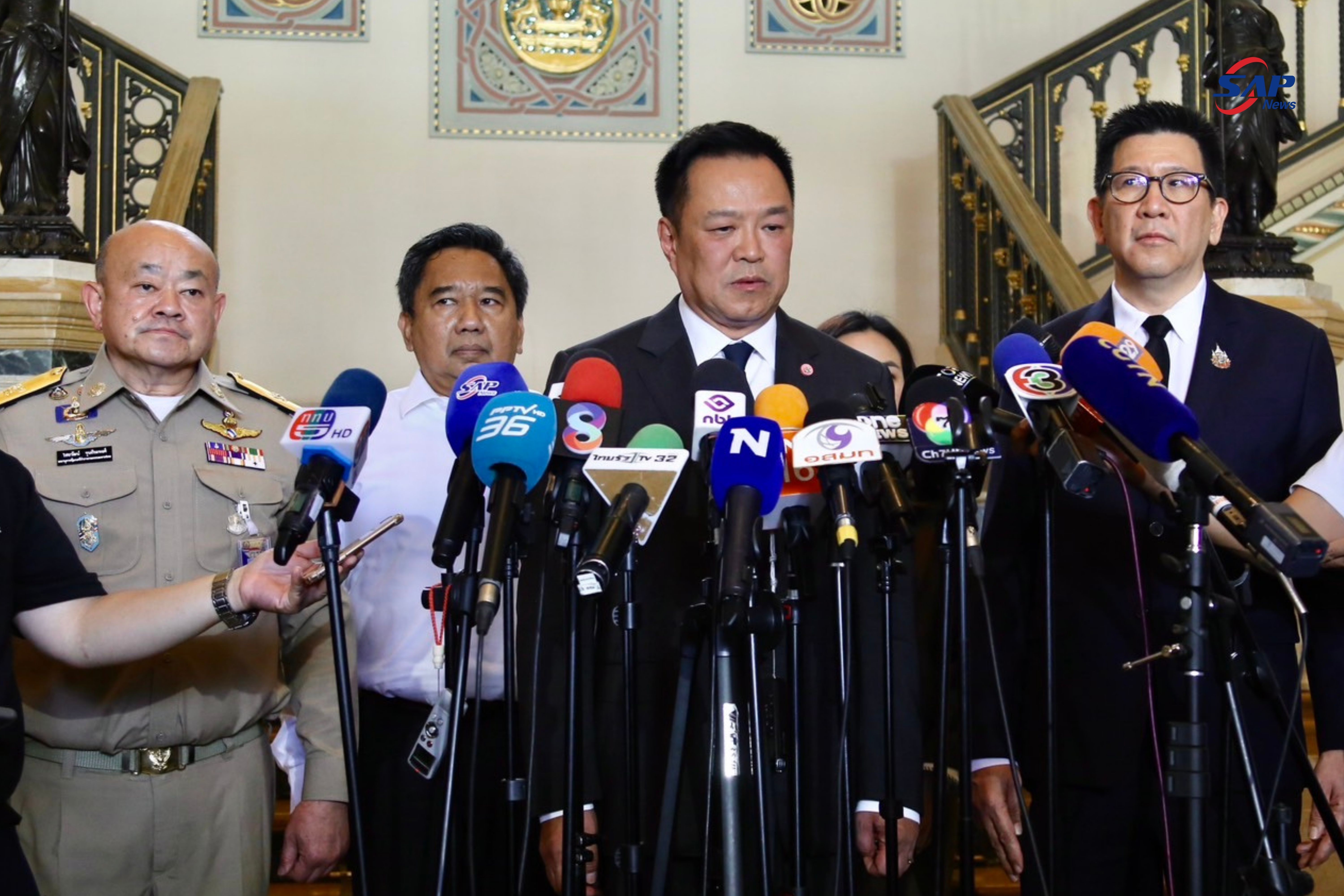
When asked if China understood the situation, Mr. Anutin replied that they understood well. They had in-depth discussions about the root causes of the problem and the appropriate solutions.
When asked further whether China had affirmed its neutrality, Mr. Anutin said, "We didn't say they came to confirm neutrality, but they said Thailand is a brotherly country. I also said that Thailand is a small country. They said that's not the case for China. Thailand is a large country in this region. Therefore, we don't need them to confirm whether they are neutral or not, but we must observe their stance."
Regarding discussions on cooperation in combating scammer gangs, Mr. Anutin said, "Yes, we have. Thailand has always cooperated seriously with China, as evidenced by the strict measures taken, resulting in the arrest of offenders ranging from major players to smaller networks and the extradition of many to China for prosecution. Most of these individuals are key figures in these networks. If Thailand hadn't taken decisive action, these offenders might still be active in the country. The Chinese side acknowledges and clearly sees Thailand's genuine intention to address transnational crime."
As for whether China had shown interest in investing in Thailand, Deputy Prime Minister and Minister of Finance Mr. Ekniti Nitithanprapas stated, "China continues to show significant interest in investing in Thailand, particularly in modern industries such as automotive, sensor technology, robotics, and artificial intelligence (AI). This reflects China's view of Thailand as a key investment hub in the region."
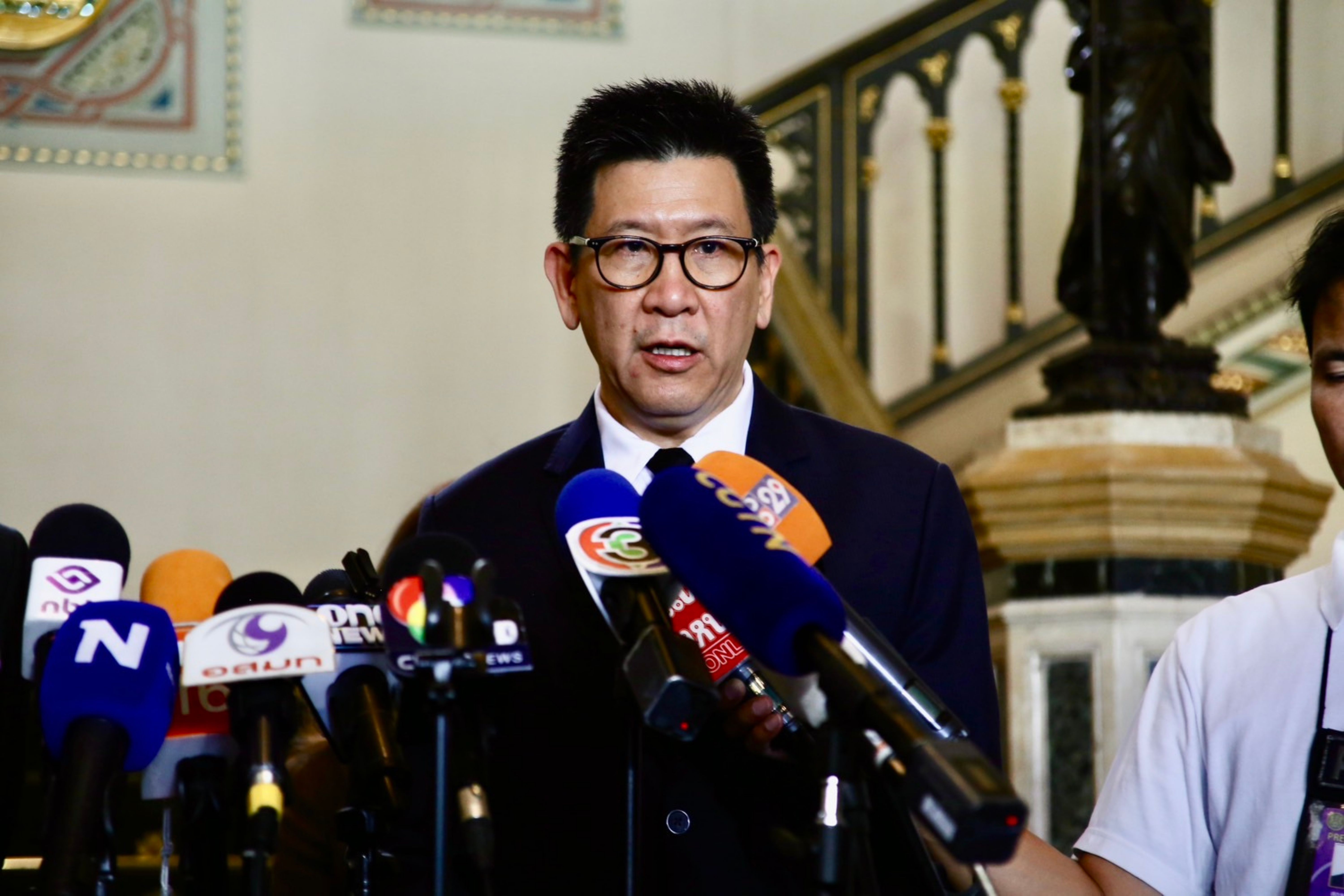
Regarding the discussions held earlier today with Mr. Wang Yi about potential further investment, Mr. Anutin stated that Thailand is open to foreign direct investment and is ready to support investors in all aspects according to their needs on a case-by-case basis.
Concerning the land bridge project, Mr. Anutin said that it was raised for discussion and that Thailand should seriously consider this project from now on, given the trend of countries in the region, such as Indonesia, beginning to focus on developing alternative routes instead of relying on the Strait of Malacca. Although the project may not materialize immediately, it is necessary for Thailand to prepare, as relying solely on routes through other countries' waters could cause significant damage in the event of unforeseen circumstances. Therefore, alternative infrastructure options should be considered concurrently.
Regarding whether the cancellation of the 2000 and 2001 MOUs was discussed, Mr. Anutin stated that this meeting was merely a courtesy call and therefore did not involve in-depth discussions on important issues, especially the 2000 and 2001 MOUs, which were not raised as they pertain to matters between the Kingdom of Thailand and the Kingdom of Cambodia and must be handled within the framework set by the Thai government.
Mr. Anutin clarified that the 2001 MOU was not canceled due to the current conflict but because of a long period of lack of progress. Given the changing global context and international relations, it is necessary to terminate agreements that are not beneficial to the country. While the 2000 MOU is still progressing and contains agreements on many issues, it can still proceed.
When asked again whether the Ministry of Foreign Affairs also agreed to the cancellation of the 2001 MOU, given the differing opinions of some academics, Mr. Anutin stated, “Whatever the outcome, it was discussed at the National Security Council yesterday, and the Council made a decision.”
Regarding China's suggestion that Cambodia seems unwilling to fight Thailand and that it is attempting to act as a mediator in the conflict between Thailand and Cambodia, Mr. Anutin said, “We shouldn't try to guess their intentions. We must consider what Thailand will gain from this stance and whether Thailand will be 100% safe. Thailand will not be at a disadvantage in any way; our sovereignty and territory remain the same. Therefore, any decision the government makes must prioritize Thailand's interests. We haven't even discussed that yet. There's no need to talk about that.”
Regarding China's statement that Cambodia does not want to fight Thailand, yet this stance contradicts the current border situation with ongoing provocations, Mr. Anutin said, "We don't know the level or reasons for the provocations. But it's not provocation ordered by the government. As long as they provoke within their own territory and don't encroach on our land, we must be patient, calm, and composed. Then we don't need to retaliate. We should just remain calm. Just know that crossing this line is unacceptable, and that should be alright."
Photo : Khanisorn Lorthongdaeng
Copywriter: Siam Associated Press (SAP) Editorial Department
Pictures: Some illustrations come from the Internet. If there is any infringement, please contact us to delete it.
Source of material: official media /online news
273/3 Ratchadaphisek Rd., Ratchadaphisek, Din Daeng, Bangkok, 10400
Email reporter@sapnewsth.com
Tel. 099 569 5964