



“Anutin” reclaims EEC oversight, insists no rift with “Piphat,” denies connection to the 3-airport high-speed rail contract amendment issue
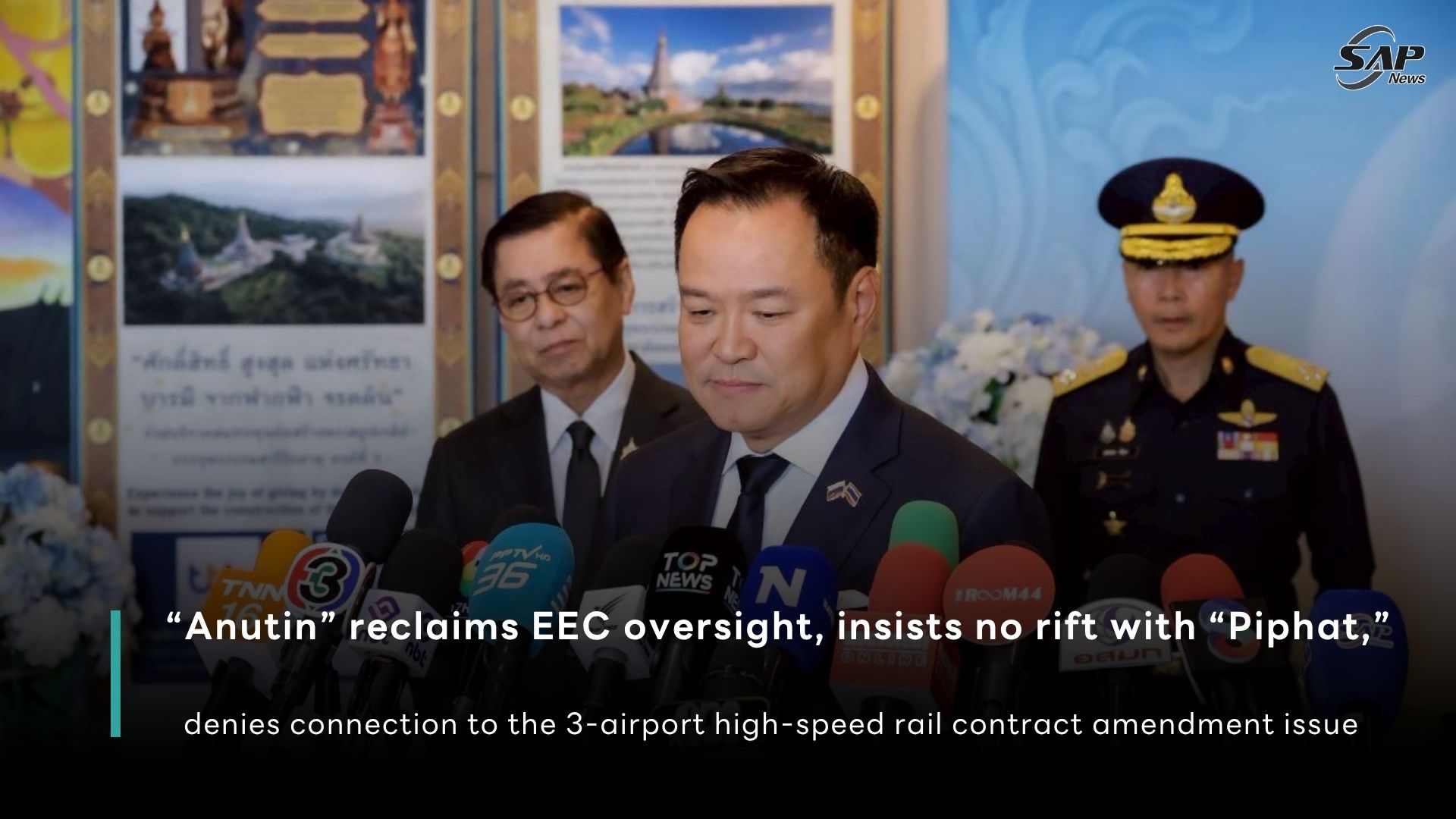
Today (19 June 2026) at 8:15 AM at Military Airport 2, Wing 6, Mr. Anutin Charnvirakul, Prime Minister and Minister of Interior, gave an interview regarding the reclaiming of oversight of the Eastern Economic Corridor (EEC) Office from Mr. Piphat Ratchakitprakarn, Deputy Prime Minister and Minister of Transport, to manage it himself. He stated that this move aligns with the appropriate sequence of steps and the current situation, as the initial phase of infrastructure development has already passed. The focus has now shifted to building confidence among both domestic and international investors to attract maximum investment into the country and utilize Thailand as a primary production base. Thailand's infrastructure is considered relatively comprehensive; although the high-speed rail component is still lacking, it does not pose a problem because the country possesses multiple alternative options in logistics and transportation, including airports, the planned expansion of Laem Chabang Port, as well as robust land and air transport systems that can connect with high-speed and dual-track railways.
The Prime Minister further stated that the current mission has transitioned from the infrastructure phase to marketing efforts, so there are no causes for concern. Previously, Mr. Piphat had discussed and expressed a consistent intention to hand the project back. Initially, he had intended to assign the oversight to Mr. Ekniti Nitithanprapas, Deputy Prime Minister and Minister of Finance, but given his own frequent travel schedule and extensive meetings with the private sector both domestically and internationally during this period, he decided to take back the oversight himself to accelerate the pace of operations.
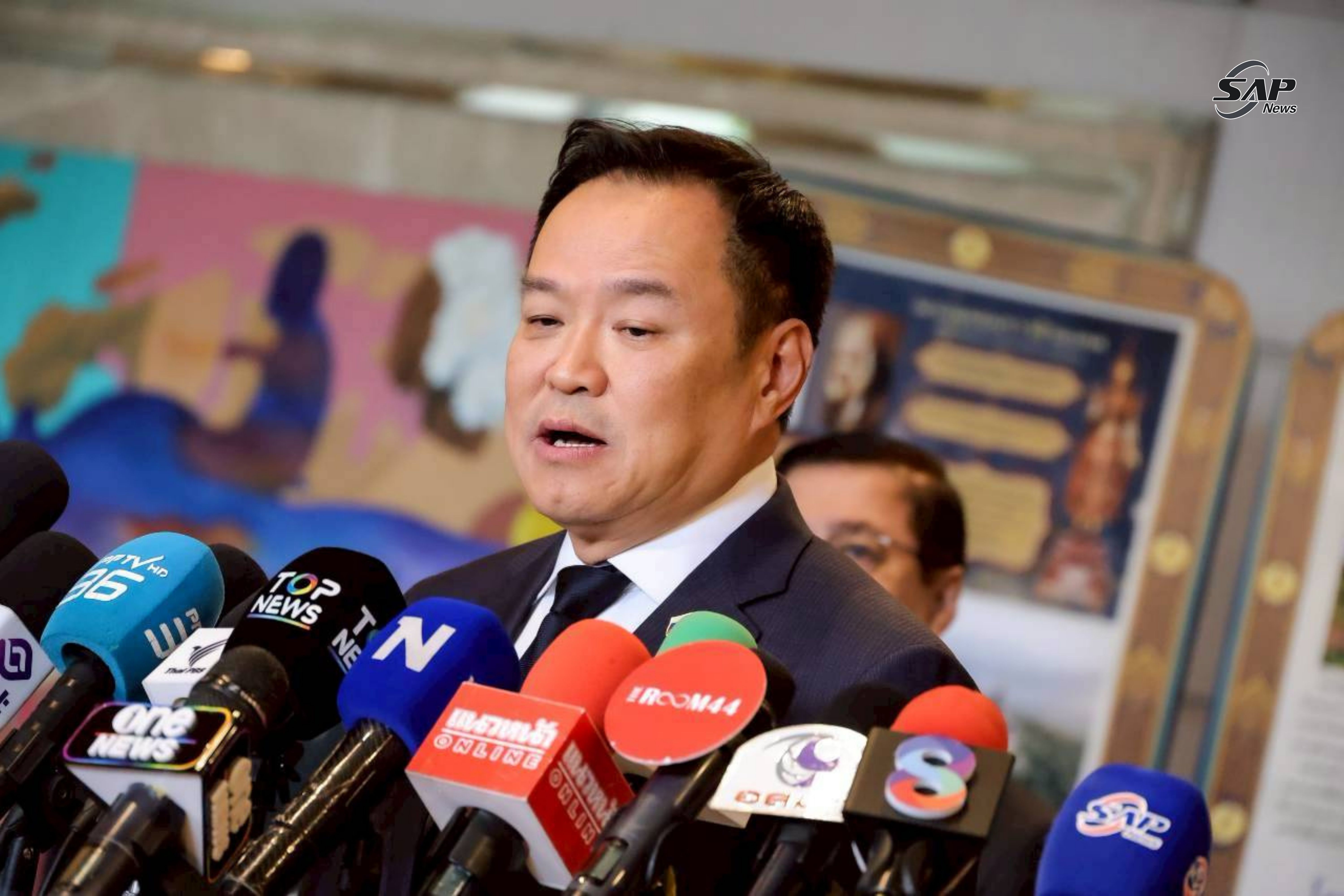
When asked about internal conflict, the Prime Minister confirmed that there is absolutely no conflict and emphasized that this matter is completely unrelated to the contract of the high-speed rail project linking three airports. He urged against linking the two issues as they are entirely separate. Regarding the three-airport link project, the government must consider the terms according to the contract and ensure fairness to all parties. He admitted straightforwardly that amending a contract is not an easy task; if contracts could be amended easily, any future party contracting with the state that encounters issues regarding land handover, project delays, global crises, or crude oil price fluctuations would request contract amendments, and the government would not have the budget to support such circumstances. Therefore, whatever is specified in the contract must be adhered to as much as possible. Furthermore, the amendment of state project contracts never concludes easily and must take into account fairness toward other bidders who did not win the auction. If they had known in advance that the contract could be amended later, they might have proposed a different pricing structure, which would disrupt the system endlessly. Consequently, the best approach is to move forward by complying with the agreements specified in the contract at the time it was made or when the terms and conditions within the contract were signed and acknowledged.
Photo : Yanawut Samphaothong
Copywriter: Siam Associated Press (SAP) Editorial Department
Pictures: Some illustrations come from the Internet. If there is any infringement, please contact us to delete it.
Source of material: official media /online news
273/3 Ratchadaphisek Rd., Ratchadaphisek, Din Daeng, Bangkok, 10400
Email reporter@sapnewsth.com
Tel. 099 569 5964