



“Anutin” slams rumors claiming “flood relief funds ran out”, confirms additional approval of 10.5 billion baht from central budget, accelerates procedures with “first-come, first-served” basis, and reveals over 600,000 households paid

Today (20 October 2026) at 1:05 PM at Government House, Mr. Anutin Charnvirakul, Prime Minister and Minister of Interior, gave an interview regarding the progress of flood relief budget approvals. He confirmed that the approval has been completed and refuted accusations claiming the government failed to plan or ran out of money, stating that such claims come from those who do not understand the actual procedures. Under the process, a disaster must occur first before damages can be surveyed, verified, and submitted to the Cabinet. Furthermore, this money is not a regular budgetary expenditure but comes from the Prime Minister's central budget. If the amount exceeds 100 million baht, it must be submitted to the Cabinet for approval. Therefore, claims that the budget has run out are definitely untrue, as relief funds have always been allocated from the central budget under every administration.
Regarding claims that the first batch of relief funds worth 4.7 billion baht was exhausted, Mr. Anutin explained that the amount was the remaining central budget from fiscal year 2026, which according to principles would have been returned to the Ministry of Finance. However, when floods occurred during the last week of September, he saw the necessity of using it for public relief, so it was retained and established as a relief fund. This enabled rapid payouts to citizens, reflecting operational efficiency. Today, the Bureau of the Budget estimated the number of eligible households and submitted a request for an additional 10.5 billion baht from the central budget to the Cabinet specifically for flood relief. This does not mean the money ran out, and giving such misinformation to the public is malicious, as he believes those who spoke out already knew the truth but intended to slander the government.
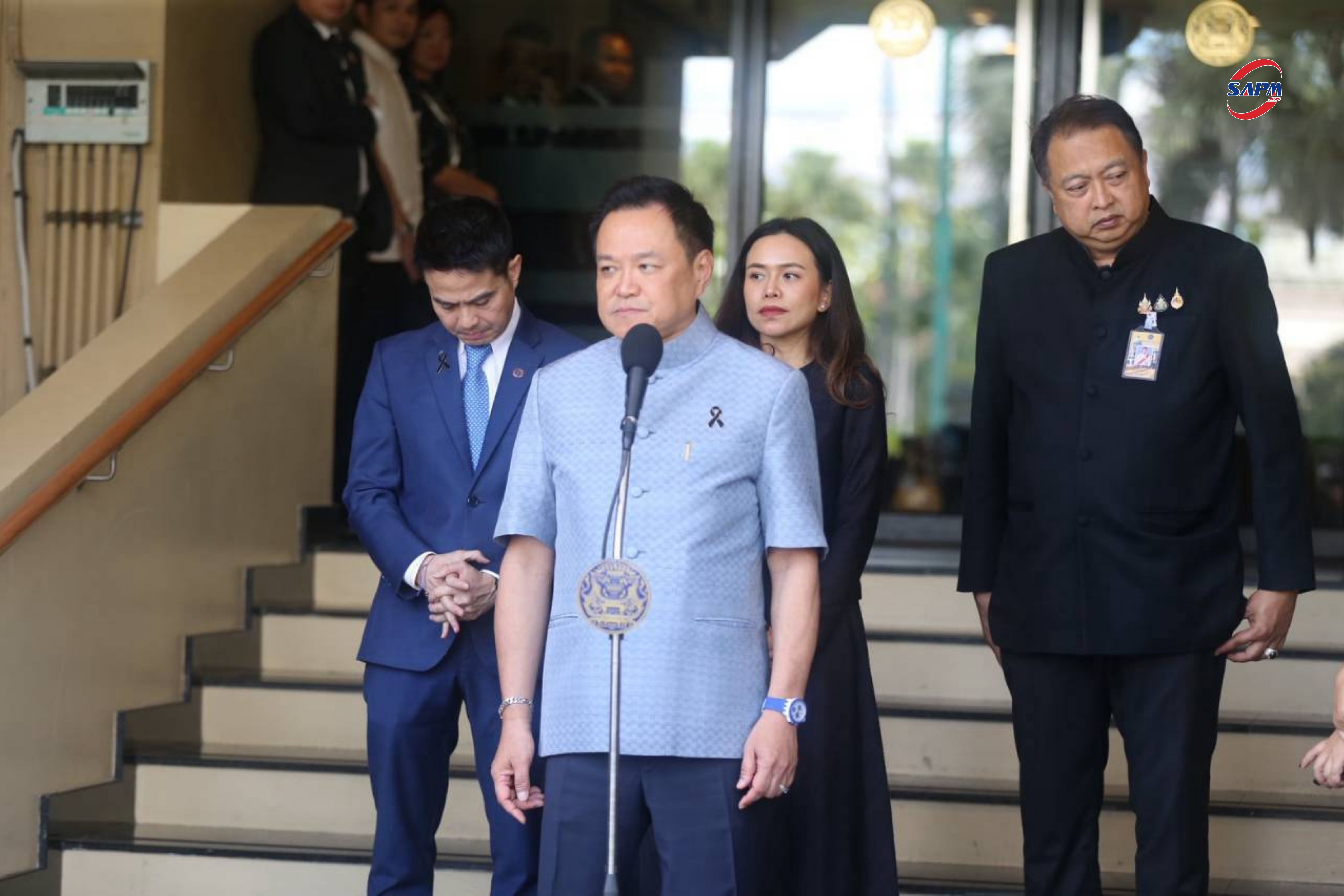
When asked about citizens gathering in front of district offices to wait for relief funds and whether it was connected to movements by the aforementioned MP, Mr. Anutin stated that he did not know the cause, but reaffirmed the government's clear stance. In previous administrations, surveys took a long time due to multiple committees. However, during his tenure as Minister of Interior, he viewed certain committees as redundant and causing delays, since civil registration data ultimately must be verified through the Department of Local Administration and the Department of Disaster Prevention and Mitigation anyway. Therefore, redundant steps were removed, allowing prepared budgets to be allocated and disbursed much faster. Instead of waiting for a disaster to completely end before making payout rosters, the system was changed to “first come, first served,” with instructions only to ensure data accuracy to avoid errors or duplications. Once a claim enters the system, transfers are made immediately, with payouts already distributed to over 600,000 households.
Mr. Anutin added that regarding the insurance system, coverage will begin from October 1 onwards, while damages currently taking place stem from events prior to October which will gradually conclude. However, the next step for next year is to accelerate building flood prevention and response systems to maximum efficiency. If severe flooding occurs again like this, insurance companies might reconsider continuing coverage or increase premiums. Therefore, the budget saved from using the central budget for relief must be urgently invested in flood protection systems, such as constructing floodgates and improving drainage systems, to build confidence for insurers if insurance systems are to be utilized in subsequent years.
Photo : Weeraphat Ratsameerueangrong
Copywriter: Siam Associated Press (SAP) Editorial Department
Pictures: Some illustrations come from the Internet. If there is any infringement, please contact us to delete it.
Source of material: official media /online news
273/3 Ratchadaphisek Rd., Ratchadaphisek, Din Daeng, Bangkok, 10400
Email reporter@sapnewsth.com
Tel. 099 569 5964