



Government highlights the charm of Udon Thani “Mi Khit” fabric for cabinet mobile meeting attire
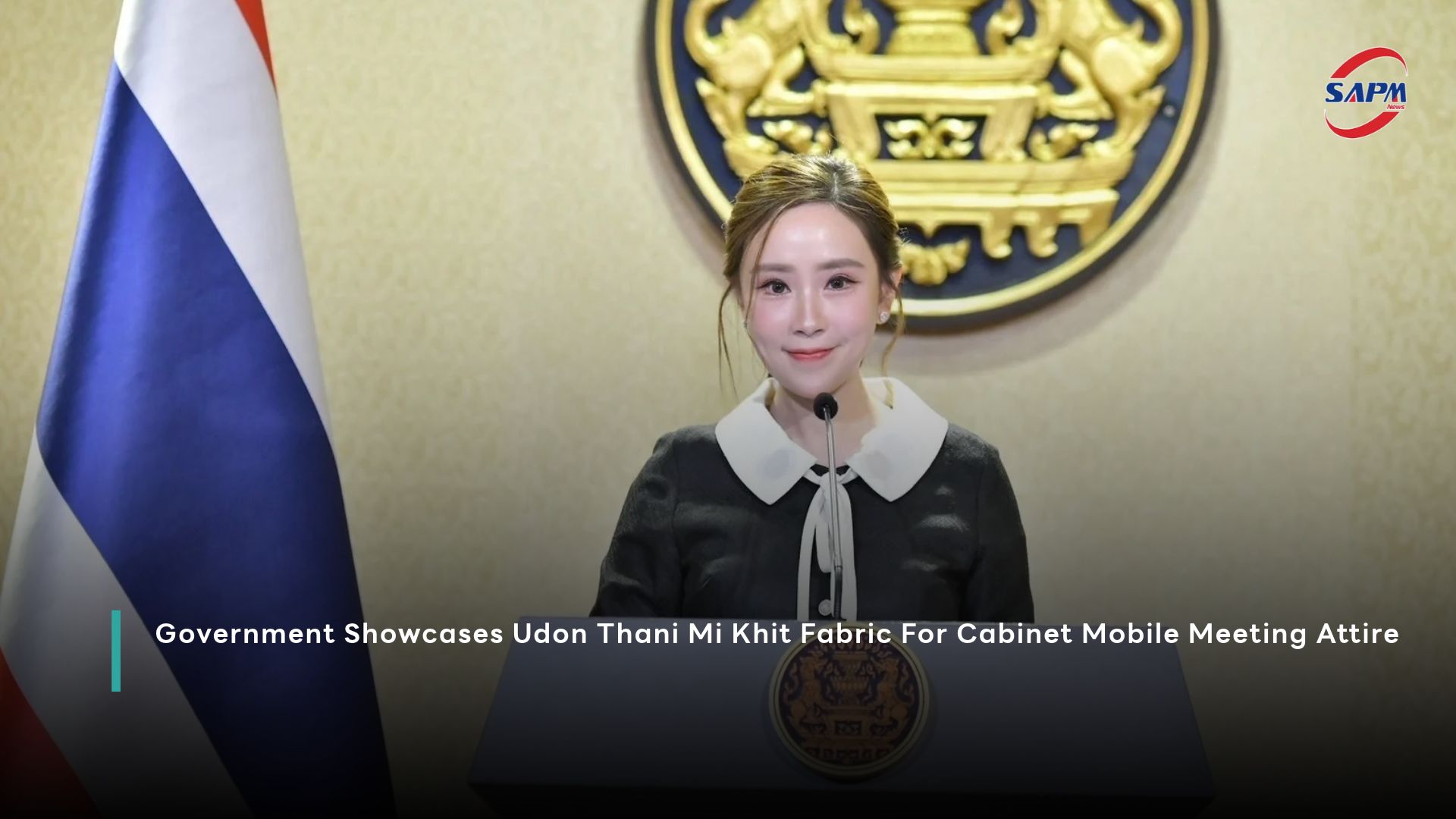
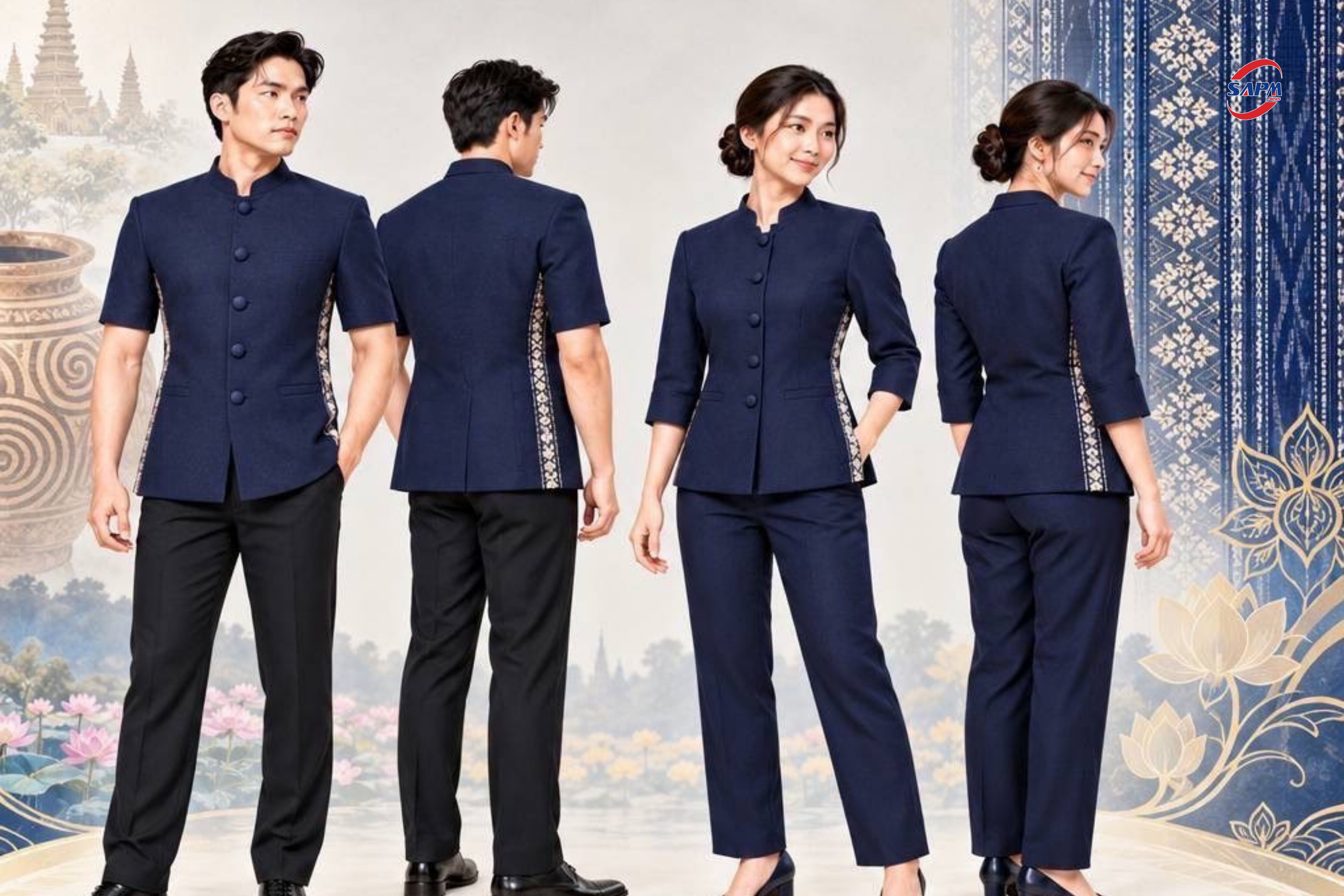
Today (28 October 2026), at Government House, Dr. Patdarasam Thongsaluaykorn, Deputy Spokesperson for the Prime Minister’s Office, announced that for the second mobile Cabinet meeting of 2026, to be held in Udon Thani province from November 2–3, 2026, Cabinet members will wear garments crafted from Udon Thani’s signature “Mi Khit” fabric. The patterns woven into the textile tell a local story, reflecting the value of Thai wisdom which is not only beautiful but also conveys the history, natural surroundings, and way of life of the community. The garments are tailored from a deep-blue, naturally indigo-dyed base fabric, woven using a four-harness technique that creates a distinctive, multi-dimensional “luk kaew” pattern. The fabric was sourced from the Dong Yang–Phon Phibun Indigo-Dyed Mudmee (tie-dye/ikat) Weaving Community Enterprise in Phibun Rak District a hub for learning the art of indigo-dyed weaving, a craft passed down through generations. The garments are embellished with mee khit (patterned, tie-dyed, and supplementary-weft woven) fabric, which incorporates significant local motifs of the province, each carrying its own meaningful symbolism.
Dr. Patdarasam further explained that two prominent patterns highlight the roots and beauty of Udon Thani. The first is the "Ban Chiang Pottery" motif, which connects to the Ban Chiang World Heritage Site a reflection of the historical value and cultural legacy for which Udon Thani is renowned. The second is the "Lotus" motif, representing abundance, natural beauty, and local identity inspired, in particular, by the "Red Lotus Sea" in Kumphawapi District, a major tourist attraction where nature and the local way of life are intrinsically linked. The distinctiveness of this mee khit fabric lies in its intricate weaving process, which employs a technique known as kep khit or kep dok utilizing 58 pattern-forming rods interspersed with mat mee (tie-dye) elements and colored with natural indigo. The fabric is crafted by the Ban Non Kok Ancient Weaving Group in Nong Na Kham Subdistrict, Mueang Udon Thani District a hub for learning and producing hand-woven textiles on traditional looms, as well as a repository for indigenous fabrics sourced from artisans across the province. By combining indigo-dyed base fabric with these uniquely patterned *mee khit* textiles, the resulting garments reflect both exquisite craftsmanship and the story of the local homeland; the motifs themselves also convey themes of prosperity, sustainability, and peaceful well-being. Beauty Passed Down Through Generations
Dr. Patdarasam noted that Udon Thani possesses a long-standing heritage of hand-woven textiles. The Ban Na Kha community began organizing formal weaving groups for *mat mi* (ikat) and *khit* (supplementary-weft) fabrics in 1974. This tradition became so integral to the province’s identity that it is even reflected in its official motto "Thani Pha Mi Khit" (The City of *Mi Khit* Textiles). Later, between 1991 and 1995, a historic *mi khit* textile was created to commemorate the 99th anniversary of the founding of Udon Thani. Weavers from 150 groups across the province collaborated to produce a single piece of fabric measuring 1,199 meters in length and 60 centimeters in width, featuring over 600 distinct patterns. It is currently on display at the Creative Design and Textile Center at Udon Thani Rajabhat University. The design of the *mi khit* garments for this mobile cabinet meeting is the result of a collaboration between Udon Thani Province and the Creative Design and Textile Center at Udon Thani Rajabhat University. By adapting cultural assets for contemporary use, this initiative provides a broader platform for local products and allows the public to better appreciate the craftsmanship of the province’s weaving communities.
Dr. Patdarasam added that incorporating *mi khit* textiles into the mobile Cabinet meeting does more than just showcase the identity of the host province; it also serves as an opportunity to highlight the value of local wisdom and the exceptional skill of Thai weavers to a wider audience. Preserving traditional local textiles is not merely about maintaining patterns from the past; it is about building upon cultural capital to create contemporary value, while fostering opportunities for community products to thrive alongside sustainable regional development.
Dr. Patdarasam added that, in preparation for the mobile Cabinet meeting in Udon Thani province, Mr. Anutin Charnvirakul Prime Minister and Minister of Interior has instructed Cabinet ministers to prioritize the well-being of farmers both in the Northeastern region and across the country. Development project proposals for the area will focus on five key areas: agriculture, food, addressing the drug problem, developing border trade, and tourism.
Copywriter: Siam Associated Press (SAP) Editorial Department
Pictures: Some illustrations come from the Internet. If there is any infringement, please contact us to delete it.
Source of material: official media /online news
273/3 Ratchadaphisek Rd., Ratchadaphisek, Din Daeng, Bangkok, 10400
Email reporter@sapnewsth.com
Tel. 099 569 5964