



People's Party demands government cancel 50-billion-baht solar panel project after discovering over 60 companies sharing addresses and 120 with overlapping directors, suspecting spec-rigging and kickbacks favoring Chinese capital and brokers
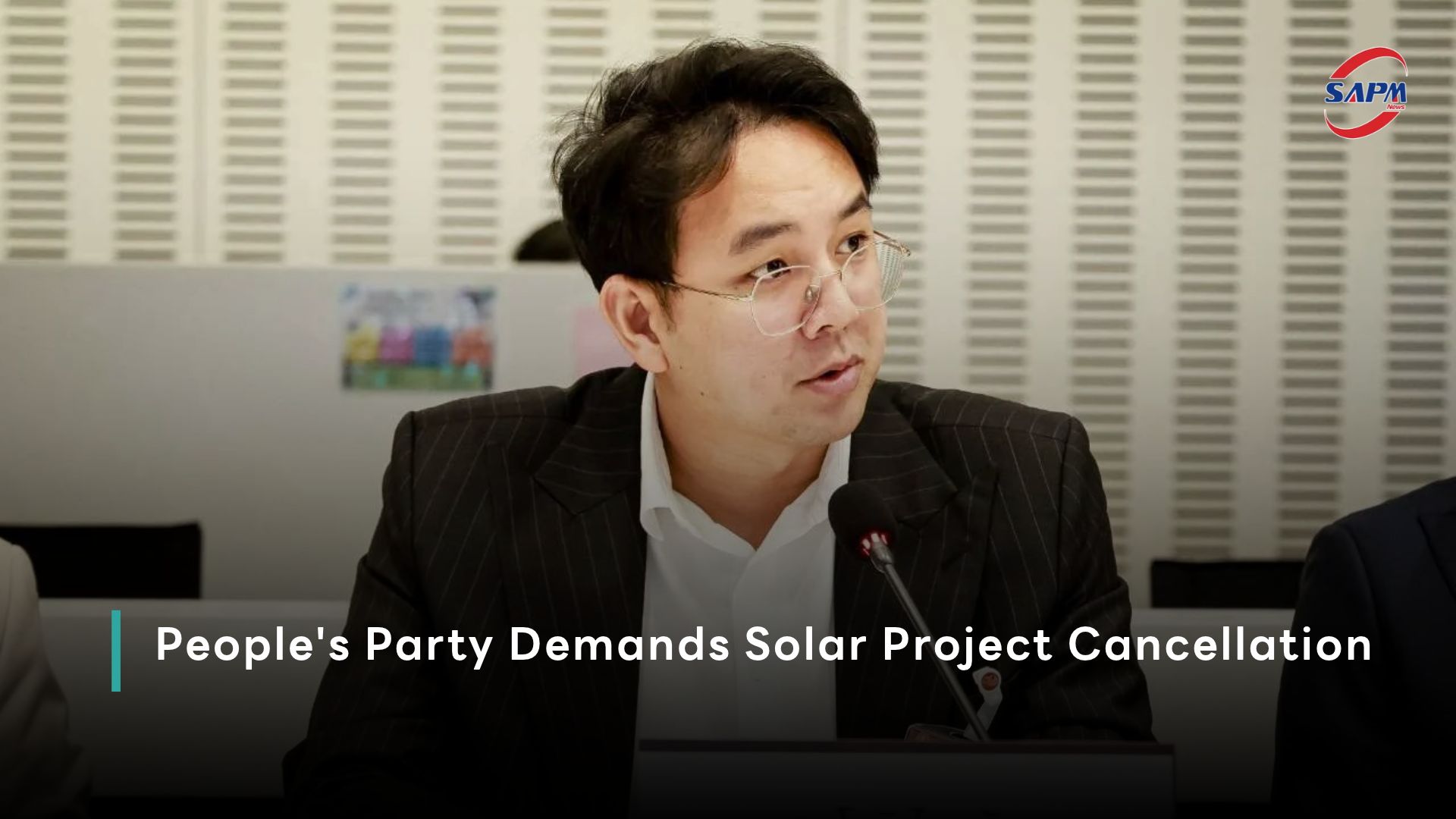
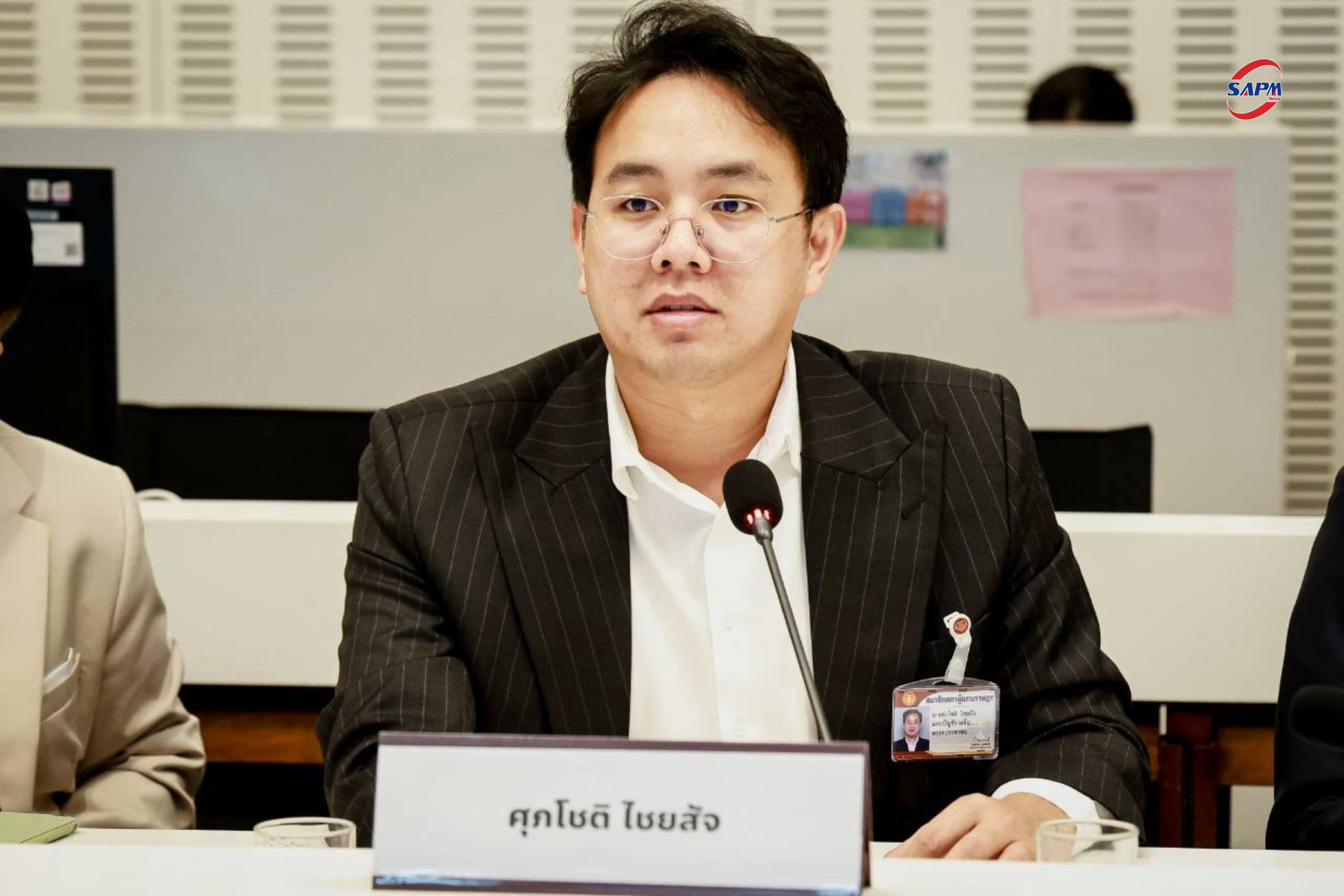
Today (2 November 2026) at 10:00 AM at Parliament, Supachot Chaisat, Party-List MP from the People's Party, announced the outcome of the shadow cabinet meeting, expressing deep concern over the spending of the 50-billion-baht public solar project. The initiative aims to provide 50,000 baht per household for 1 million households. He pointed out that this flagship government project might end up lining the pockets of just a few select groups. Although the government declared that citizens would have the freedom to choose installers without any quota lock-in, the reality proved otherwise. Companies were required to register prior to taking on work, with an initial 600 interested firms recorded by the Provincial Electricity Authority. However, the government subsequently imposed a condition demanding a performance bond of over 60,000 baht per household, forcing small operators to withdraw due to unmanageable financial risks and leaving only 30%—just over 100 companies—capable of proceeding.
Upon investigating the remaining companies, the People's Party uncovered several suspicious anomalies. Over 60 companies shared the exact same address, suggesting they were split into subsidiaries to artificially inflate vendor numbers. Furthermore, more than 120 companies had overlapping directors or shareholders, effectively multiplying their chances of securing contracts. Compounded by terms that exclude small players and reports of kickbacks reaching nearly 30,000 baht per household, serious fears have arisen that the 50-billion-baht loan will be siphoned into corporate networks. If the government cannot clear public doubts proving that the money was not lost along the way, the People's Party demands the cancellation of the project. He urged Ekniti Nitithanprapas, Deputy Prime Minister and Minister of Finance overseeing the loan, to stop acting as a helper for the Bhumjaithai Party network and stop using citizens as a front. Without spec-rigging for big capitalists, citizens could potentially benefit from up to 2,000,000 solar household installations—double the government's target.
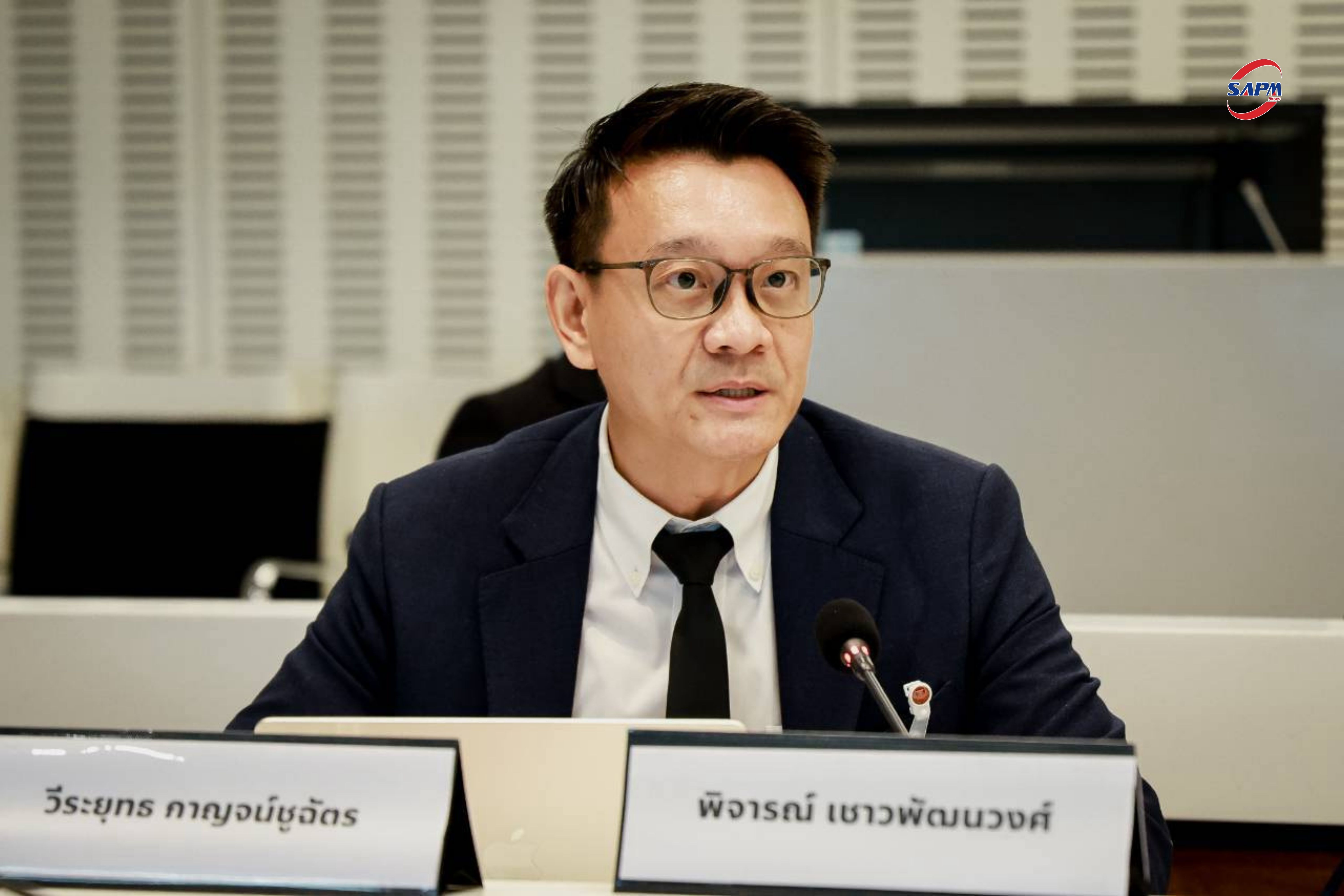
Waerayuth Kanjanchuchat, Party-List MP and Deputy Leader of the People's Party, added that the Bhumjaithai-led government pays only lip service to supporting Thai entrepreneurs and technological development. Yet when it comes to borrowing funds, it merely helps Chinese capital and Thai brokers collect kickbacks, echoing the high-budget, questionable procurement seen in the TH-AI Passport project. While every policy yields some benefit to the public, the nation's tightening fiscal limits demand strict questioning of cost-effectiveness and efficiency. This is not merely a management issue, but a flawed vision and mindset from the very start, borrowing hundreds of billions without considering the domestic economy. Key figures like Mr. Ekniti and Yoschanan Wongsawat, Deputy Prime Minister and Minister of Higher Education, Science, Research and Innovation, frequently talk about domestic technology and helping local businesses, yet allow kickbacks to thrive during energy transitions. Crucially, the Emergency Decree loan terms mandate that all funds be spent by December 2027, creating a tight deadline that stifles growth for domestic suppliers. He directed these observations toward both the Bhumjaithai and Pheu Thai parties.
When asked about empirical evidence regarding kickbacks that could halt the project, Supachot stated that such information is widely accessible from contractors outside the project. Solar installations of identical specs and brands typically cost around 100,000 baht, yet the government set the reference price through state enterprises like the electricity authority at 140,000 baht. This raises the question of where the 30,000 to 40,000 baht margin went and why joining a state program results in higher prices for the public. After deducting the 50,000-baht government subsidy, the remaining cost is 90,000 baht, a sum the government could use to directly subcontract suppliers. Therefore, the government must clarify who is pocketing these funds.
Regarding whether failure to clarify these issues would lead to a no-confidence debate, Supachot confirmed that the party is monitoring the situation continuously and is ready to use every parliamentary avenue for scrutiny. Waerayuth added his observation that the government is trying to delay the no-confidence debate to buy time to resolve the exposed irregularities and stir up political distractions. Asked if the government could justify proceeding by claiming public benefit, Waerayuth concluded that hiding behind the public is a tactic Bhumjaithai excels at, and it is precisely why Thailand has failed to progress for 50 years. No matter how terrible a policy is, someone always benefits. However, in the modern era, especially regarding borrowed funds rather than regular budgets, cost-effectiveness and efficiency must be scrutinized even more rigorously, rather than letting money stimulate the Chinese economy and enrich brokering middlemen.
Photo : Weeraphat Ratsameerueangrong
Copywriter: Siam Associated Press (SAP) Editorial Department
Pictures: Some illustrations come from the Internet. If there is any infringement, please contact us to delete it.
Source of material: official media /online news
273/3 Ratchadaphisek Rd., Ratchadaphisek, Din Daeng, Bangkok, 10400
Email reporter@sapnewsth.com
Tel. 099 569 5964