



“Rangsiman Rome” Claps Back at Bhumjaithai, Blasts “Blue Regime” for Blocking Scrutiny, Tells House Speaker Not to Hide Behind Civil Servants, and Warns Officials Against “Rowing the Boat for Thieves”
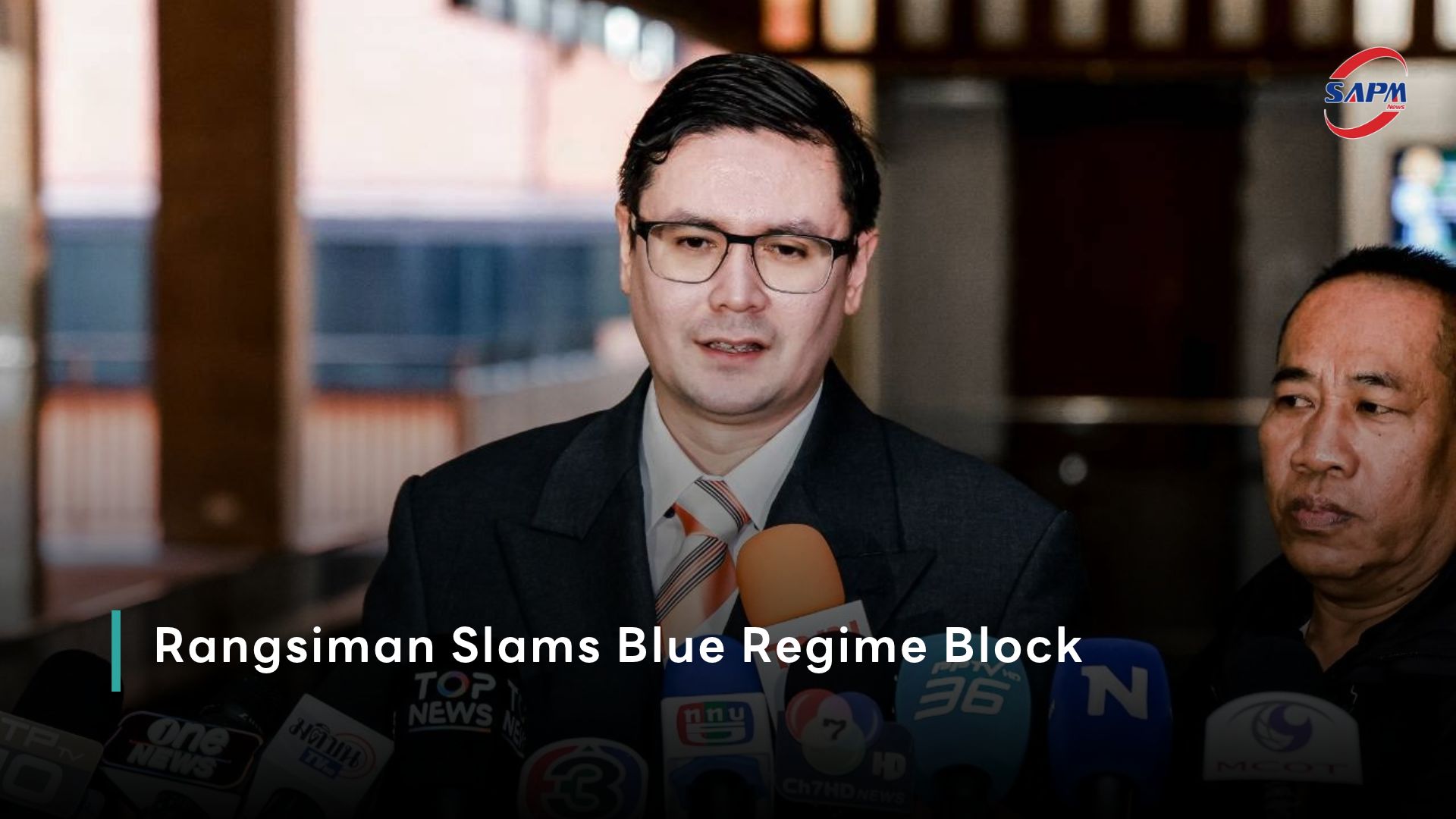
Today (5 November 2026) at 09:30 AM at Parliament, Rangsiman Rome, a party-list MP of the People’s Party in his capacity as Chair of the House Committee on Law, Justice, and Human Rights, gave an interview regarding comments by Suphachai Jaismut, a Bhumjaithai Party-list MP and committee member. Suphachai had indicated he would submit a new motion following his objection to yesterday’s (4 November) committee resolution, which rejected the operational guidelines proposed for the 35 House committees and resolved to summon House Speaker Sophon Saram to clarify the matter—alleging that such actions were inappropriate and brazen. Rangsiman countered by asking whether the issue was a matter of being “disliked or simply not to their liking.”
Rangsiman stated that there was no personal dislike, but rather that the outcome was simply not to their liking. He noted that previously, when individuals were invited to clarify matters, it was insisted that a formal resolution be passed. This time, a proper resolution was made to summon Sophon, yet it was again claimed that it could not be done and was labeled as brazen. He argued that such accusations were not grounded in the rules of procedure and served as proof that the “Blue Regime” was intended to prohibit scrutiny. Whenever scrutiny takes place, dissatisfaction arises, leading to various excuses, even though he affirmed that all actions complied fully with the Constitution and the rules of procedure.
Regarding the powers of the opposition and the committee—specifically the power to summon individuals—Rangsiman noted that these powers are already limited, with complex and multi-layered procedures. Despite working diligently within these constraints, attempts were still being made to claim they lacked authority and were acting illegally, which he asserted was untrue. He reiterated that the committee’s actions were entirely lawful and proper.
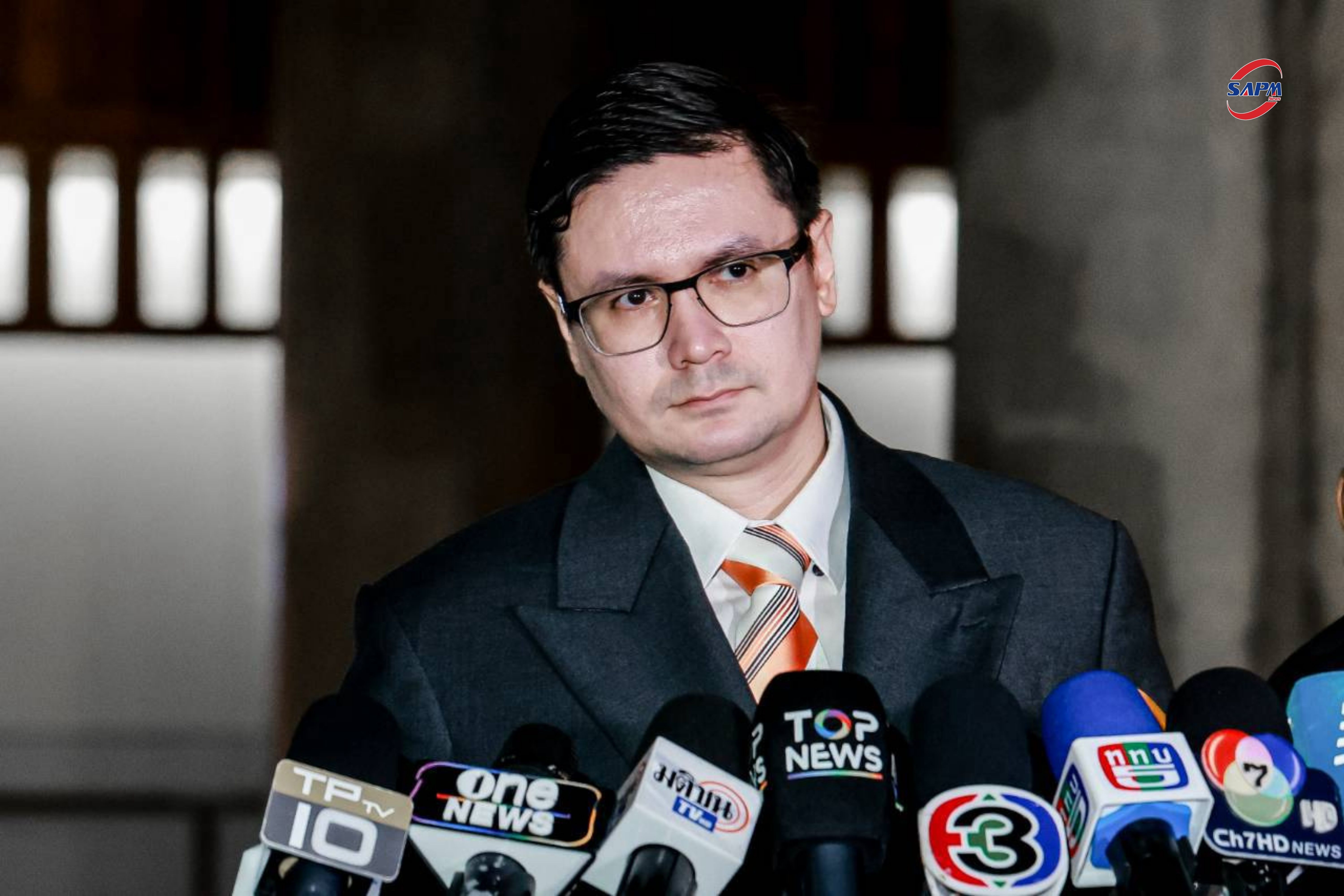
Rangsiman further explained that during the vote on 4 November to reject the guidelines, all eight committee members present voted unanimously against the proposed framework. As for summoning Sophon to provide clarification, it was necessary to investigate the facts thoroughly. This followed advice from the House Secretariat indicating that the guidelines were not law, did not constitute formal regulations, and held no binding force, yet had been issued in a manner that impacted, conflicted with, or contradicted the Constitution and parliamentary regulations—making their implementation unlawful in his view. Therefore, a factual inquiry was required, as unlawful acts could not be allowed to take place within the very venue and authority responsible for enacting laws. As Chair of the Committee on Law, Justice, and Human Rights, he emphasized that he could not allow the matter to pass without action.
He expressed hope that in the coming week, Sophon would set an example for other members and the public by cooperating with the committee to answer questions and provide clarity. He warned that if even the head of the legislature refused to appear, future invitees might cite the Speaker’s absence as a precedent to decline invitations—a situation that should be avoided. He expected Sophon’s cooperation to clarify the origins of the directive and avoid accusations of hiding behind civil servants and pushing them into conflict with the opposition, which he described as inappropriate behavior.
Addressing statements by Nattachanon Srikorkuer, a Songkhla MP from the Bhumjaithai Party, who claimed he had misunderstood the vote and intended to request a review of the resolution, Rangsiman said he could not speak for Nattachanon. However, he explained that eight committee members were present during the vote, which was conducted by a show of hands, with the secretariat explicitly verifying who approved, disapproved, or abstained to prevent any misunderstanding. Thus, proper procedures were followed, leaving no ground to claim the vote was illegal. Furthermore, even if Nattachanon were absent, withdrew, or chose not to participate, the current quorum for the Law Committee stands at 7 members out of 14, meaning a valid quorum was maintained and the resolution remains legally sound.
Responding to Suphachai’s assertion that rejecting the guidelines was brazen and disrespectful of the law and the Constitution, Rangsiman clarified that the decision was not made by him alone, but was a collective resolution of the committee meeting, which met the required quorum of at least 7 members. He questioned who was truly being brazen by making malicious accusations that everyone in the meeting disrespected the rules, while citing a meeting of the 35 committee chairs that had yielded no formal resolution.
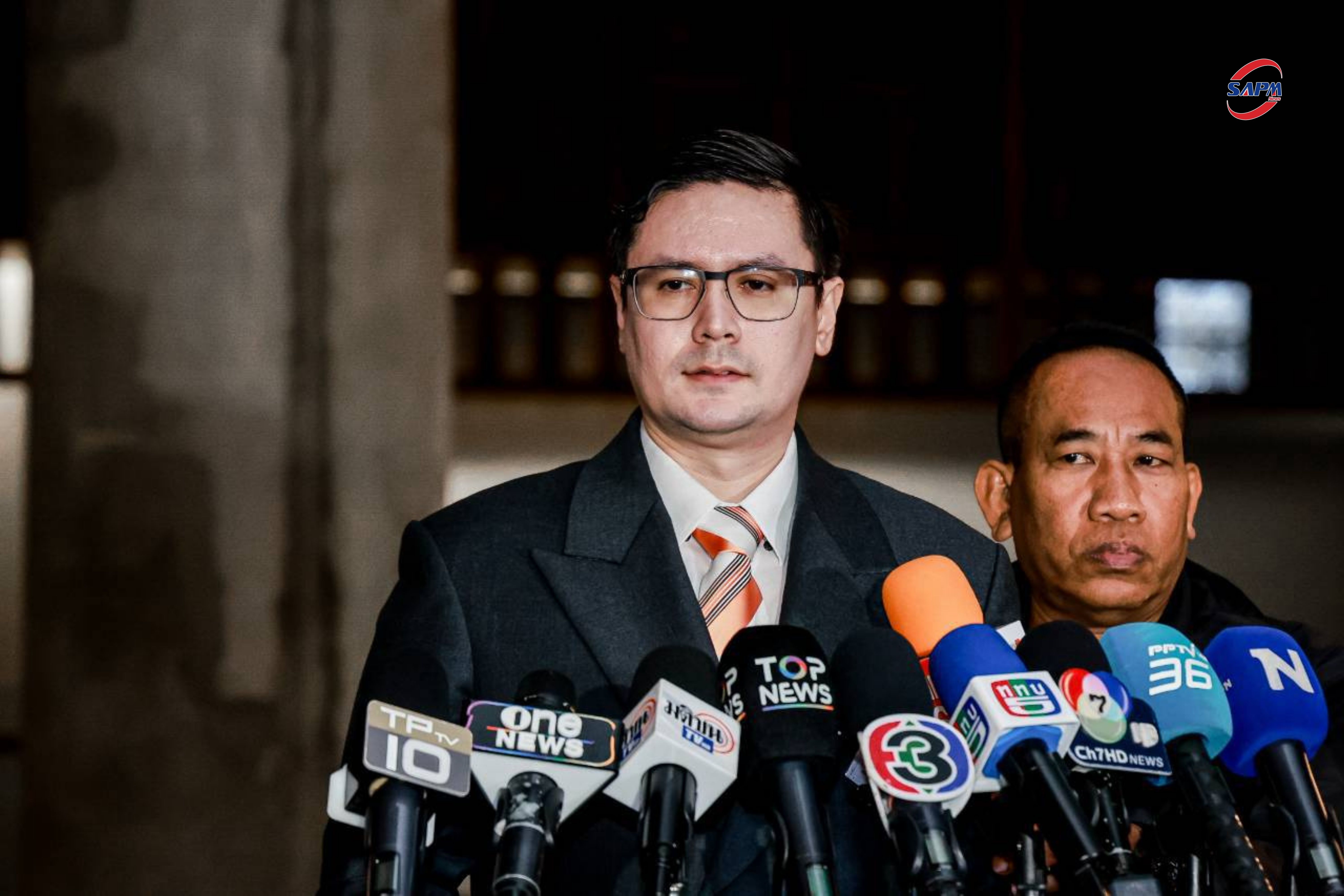
Rangsiman added that many participants in that meeting—likely outnumbering those in favor—expressed opposition to changes that would restrict the powers of committee chairs. He questioned the basis for citing a meeting that produced no resolution or final summary, noting that the House Speaker himself had framed it as merely a discussion. Claiming that the discussion led to binding guidelines was a false assertion, equivalent to delivering false documentation to the committee that contradicted the Constitution and procedural rules. He criticized the process for relying on false documents, false statements, and unlawful actions.
He further stressed that committee chairs and members are not subordinates of the House Speaker, and that the Speaker does not operate like a cabinet minister overseeing department heads. Each entity has distinct boundaries defined by law. Matters falling under the jurisdiction of the Law Committee may be considered by the committee, while matters under the Speaker’s authority may be handled by the Speaker. However, the Speaker holds no authority to order transfers or exercise command over the committee unless explicitly empowered by law. The relationship is not top-down, but one governed by clearly defined legal boundaries.
Regarding comments by Korrawee Prissananantakul, Chief Government Whip, who asserted that the meeting of the 35 committee chairs and the resulting guidelines complied with the Constitution, Rangsiman responded, “That’s completely baseless.” He addressed Korrawee’s claim that the Law Committee was the only one causing issues, suggesting he look closely to see who within the committee was actually creating friction. Rangsiman noted that the committee generally works normally with all members, pointing out that government MPs had participated in the vote and discussions on 4 November. While agreement on every issue is not expected, many members expressed reasonable and respectable opinions. He accused some figures of attempting to create chaos instead, urging Korrawee to investigate whether false leave requests were submitted, noting that while a boycott was initially announced, claims were later made about attending other meetings—facts supported by digital footprints.
Rangsiman reiterated that the committee’s actions did not violate the law and were conducted transparently in accordance with the Constitution and procedural rules. He emphasized that the committee was well aware of the challenges ahead and remained committed to executing its duties strictly.
Responding to clarifications from Pol. Maj. Gen. Wichai Sangprapai, advisor to the House Speaker, who stated that the circular sent to the 35 committee chairs was issued by the Secretary-General of the House of Representatives rather than the Speaker, Rangsiman remarked that such explanations amounted to hiding behind civil servants and shifting blame onto the Secretary-General and permanent staff. He observed a pattern where, whenever legal issues or complications arise that might affect figures within the “Blue Regime,” the burden is quickly shifted to civil servants without anyone standing up to defend them. He issued a warning to permanent officials to remain vigilant, as they risk taking the fall for those in power when problems arise.
Rangsiman concluded by affirming that the People’s Party does not oppose scrutiny of political groups or individuals connected to the “Blue Regime,” including through committee mechanisms, but maintained that all investigations must be grounded in evidence rather than political harassment. He called on the “Blue Regime” not to drag permanent civil servants into political disputes or use them as human shields or proxies to face opposition scrutiny. He noted that such tactics reflect an inability to confront the facts directly. Comparing the situation to “rowing a boat for thieves,” he warned that anyone assisting in potentially unlawful acts risks being pushed overboard to take sole responsibility once trouble arises. He urged permanent officials to take this as a lesson to uphold legal integrity and refrain from participating in actions that may violate the law.
Photo : Weeraphat Ratsameerueangrong
Copywriter: Siam Associated Press (SAP) Editorial Department
Pictures: Some illustrations come from the Internet. If there is any infringement, please contact us to delete it.
Source of material: official media /online news
273/3 Ratchadaphisek Rd., Ratchadaphisek, Din Daeng, Bangkok, 10400
Email reporter@sapnewsth.com
Tel. 099 569 5964