



IFD Poll Reveals Growing Public Distrust in Thailand’s Major Political Parties: “Romance of the Three Kingdoms”
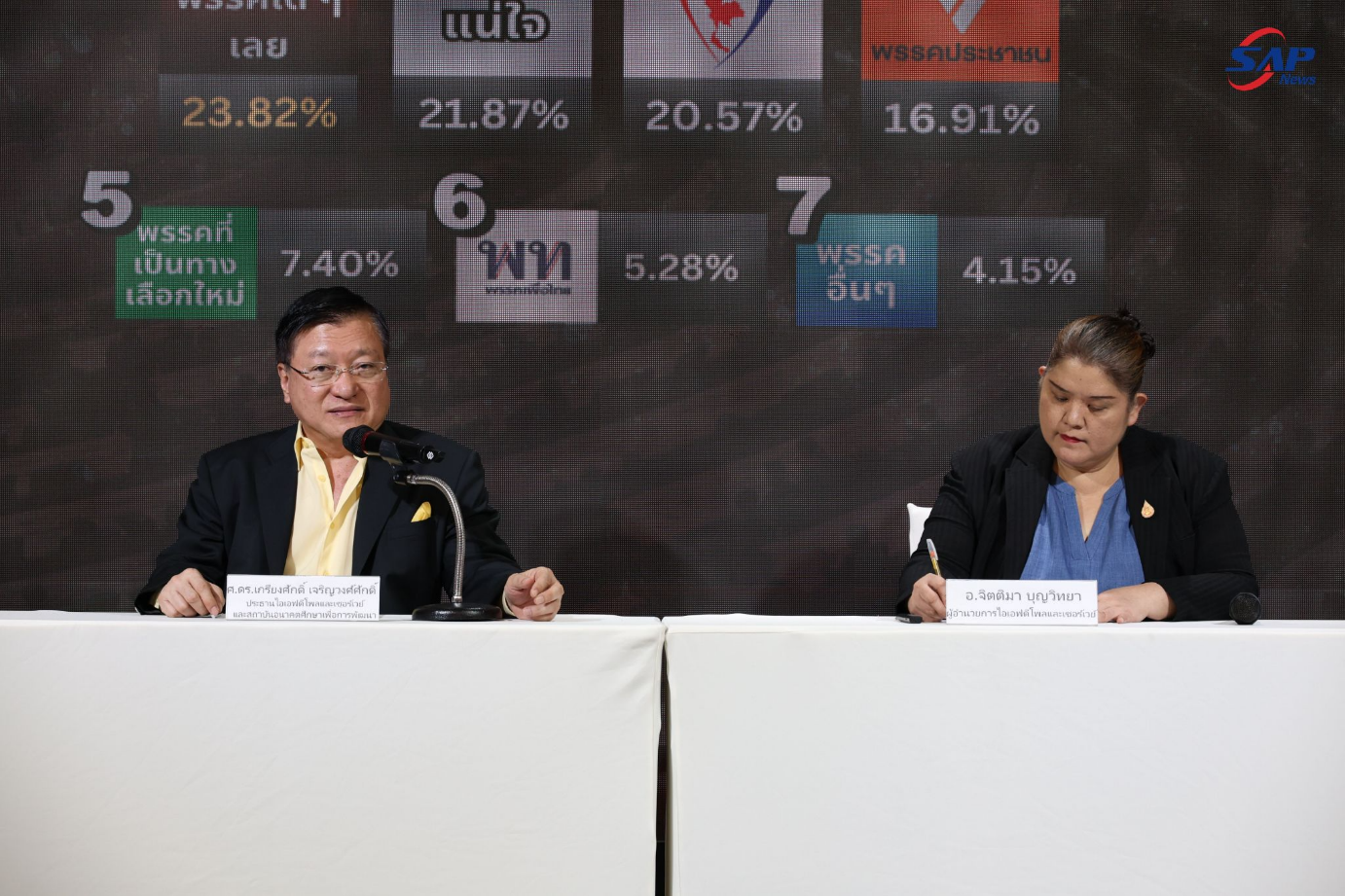
Photo: Chayanan Deekaew via SAP News
On October 6, 2025, at 1.13 p.m., Professor Dr. Kriengsak Chareonwongsak, President of the Nation-Building Institute, IFD Poll & Survey, and the Institute of Future Studies for Development, together with Ms. Jittima Boonwithaya, Director of IFD Poll & Survey, held a press conference at the Cambridge Room, 2nd floor, Kompass Building, Nation-Building Institute, to announce the findings of the poll titled “Which political party do Thais want or not want to lead the next government?”
The survey, conducted between October 3-5, 2025, gathered opinions from 1,230 respondents nationwide, with a margin of error of about 3% and a 95% confidence level.
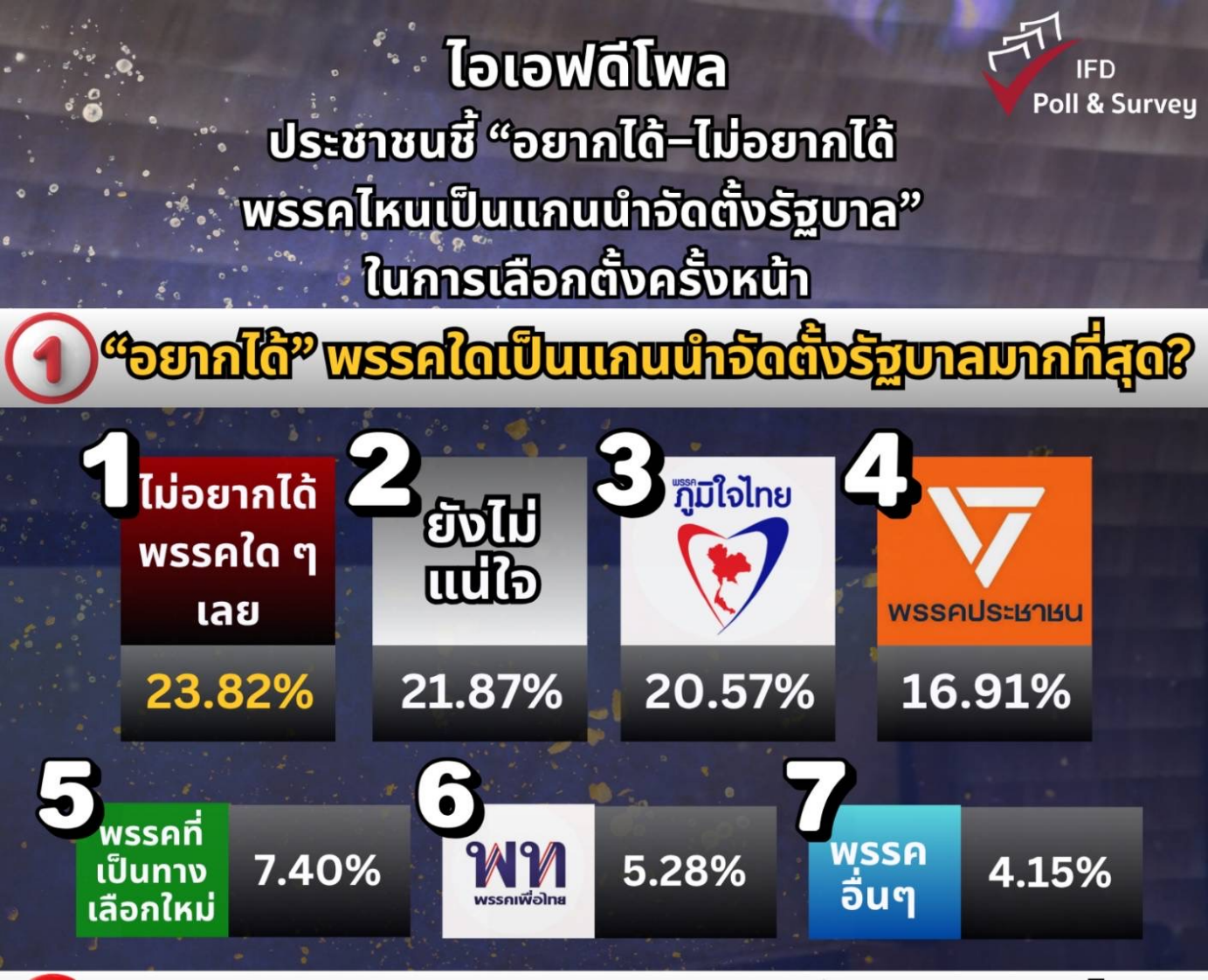
Photo: IFD Poll & Survey
Results revealed that a large portion of respondents had not yet decided on their political preference. The group that stated they “did not want any party” made up the largest share at 23.82%, while 21.87% said they were “still uncertain,” totaling nearly half of all respondents. Among individual parties, Bhumjaithai Party led with 20.57%, followed by People’s Party at 17%, potential new parties at 7.5%, Pheu Thai Party at 5.28%, and other smaller parties combined at around 4%.
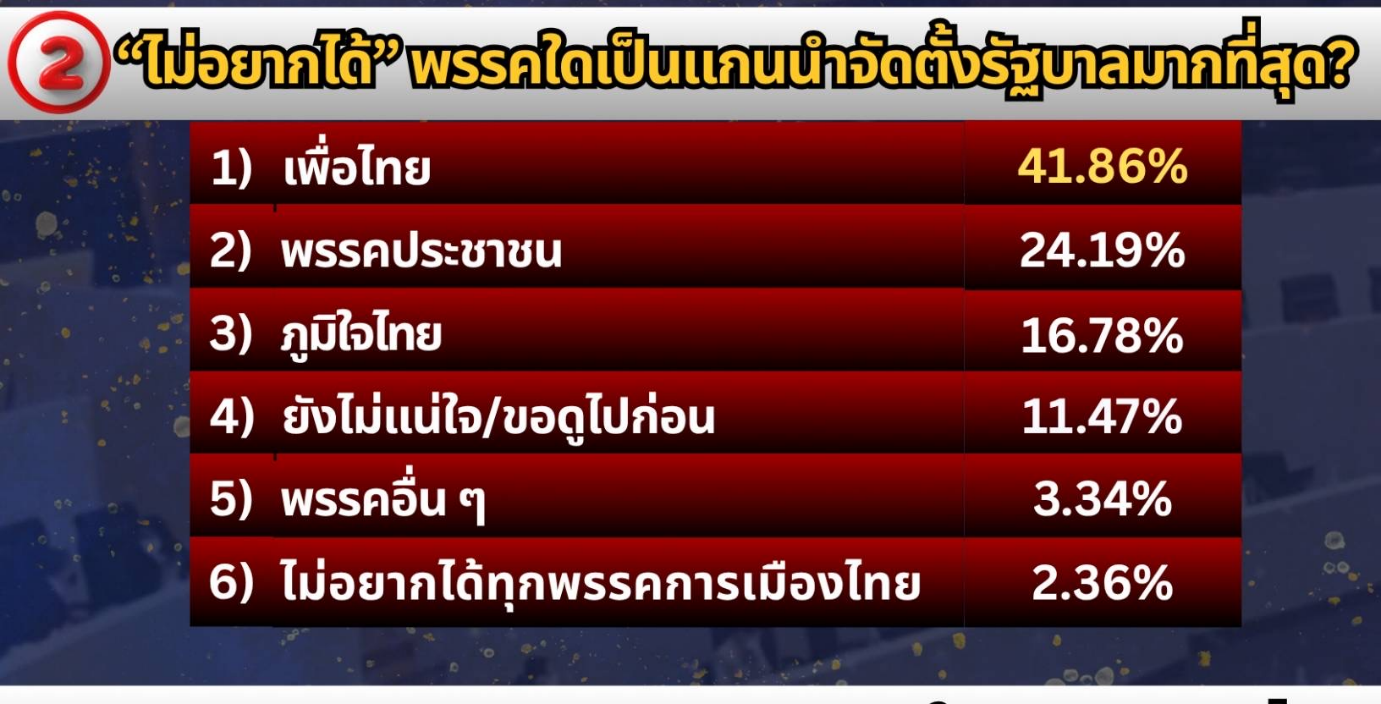
Photo: IFD Poll & Survey
Conversely, the survey found a strong wave of rejection toward major political parties. Pheu Thai Party topped the list of those the public “did not want” to lead the government, at 41.86%, nearly half of all respondents, followed by People’s Party at 24%, and Bhumjaithai Party at approximately 17%.
Professor Dr. Kriengsak commented that all three major parties, Pheu Thai, Bhumjaithai, and People’s Party, received “failing grades” in public confidence regarding their suitability to form the next government. When combining the “don’t want” scores for all three, over 80% of respondents rejected the idea of these “Romance of the Three Kingdoms” leading the country.
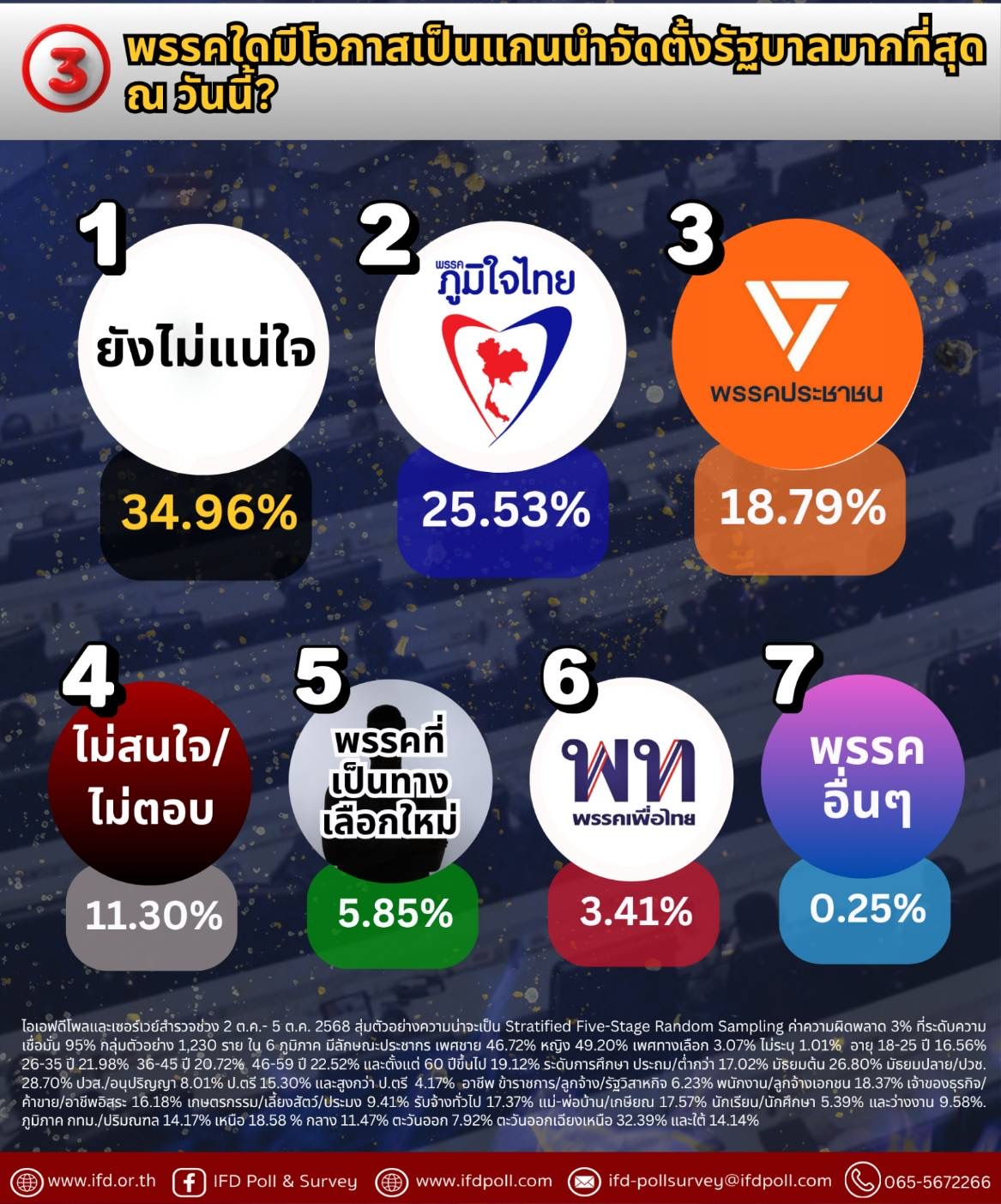
Photo: IFD Poll & Survey
When asked which party has the highest chance of forming the next government, Bhumjaithai Party led with 26%, followed by the People’s Party at 19-20%, and Pheu Thai Party trailing at only 3.4%. Meanwhile, 35% of respondents remained undecided, and over 6% believed that an as-yet-unannounced new party could emerge as a major contender, reflecting a growing appetite for alternative political choices in Thailand.
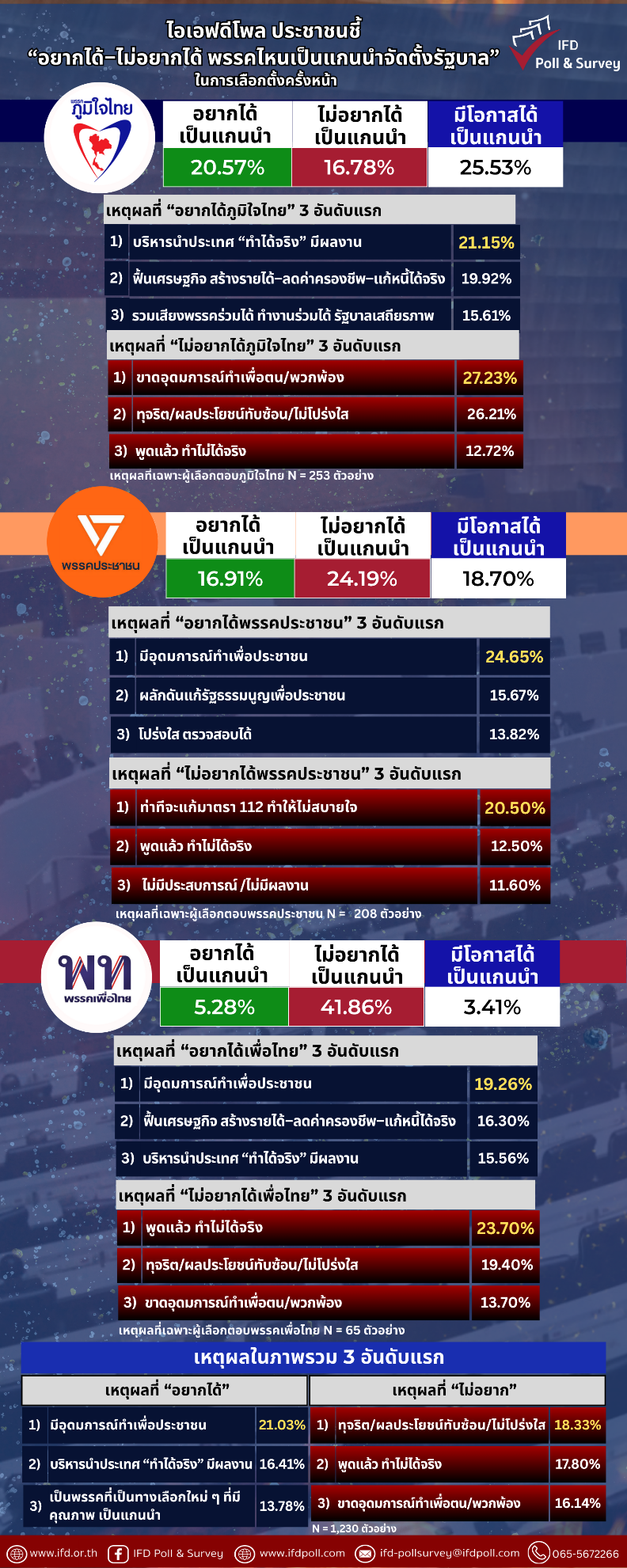
Photo: IFD Poll & Survey
The poll also highlighted the main reasons behind public rejection of existing parties: corruption and conflicts of interest at 19%, followed by failure to deliver on promises at 17–18%, and lack of clear political ideology at 16%. In Pheu Thai’s case, respondents cited “unfulfilled promises” at 24% and “corruption issues” 20% as key factors.
In contrast, respondents who expressed support for certain parties said their main reasons were the belief that those parties “possess genuine political ideals and work for the people” at 21% and “produce real, measurable results” at 16%.
Copywriter: Siam Associated Press (SAP) Editorial Department
Pictures: Some illustrations come from the Internet. If there is any infringement, please contact us to delete it.
Source of material: official media /online news
Copywriter: Siam Associated Press (SAP) Editorial Department
Pictures: Some illustrations come from the Internet. If there is any infringement, please contact us to delete it.
Source of material: official media /online news
273/3 Ratchadaphisek Rd., Ratchadaphisek, Din Daeng, Bangkok, 10400
Email reporter@sapnewsth.com
Tel. 099 569 5964