



15-Year Shin Corp saga comes to an end – “Thaksin” ordered to repay 17.6 billion baht
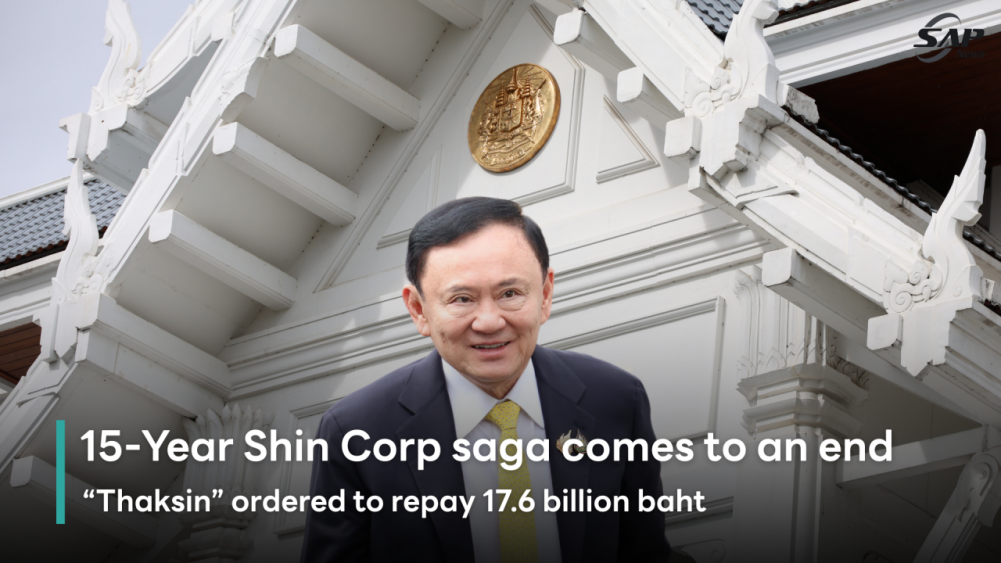
On 17 November 2025, the Supreme Court overturned the judgement of the Specialized Appeal Court and the Central Tax Court, ruling to dismiss the lawsuit filed by Mr. Thaksin Shinawatra against the Revenue Department, regarding the Department’s tax assessment, surcharges, and penalties over the sale of shares of Shin Corporation Public Company Limited, amounting to 17.6 billion baht.
This Supreme Court ruling requires Mr. Thaksin to comply with the tax assessment notice and pay personal income tax from the sale of Shin Corporation shares as assessed by the Revenue Department.
Timeline of the Shin Corp Share Case
1998 Mr. Thaksin held 32,920,000 shares in Shin Corporation Public Company Limited.
1999 Mr. Thaksin established Ample Rich Investment Limited, a foreign legal entity registered in the British Virgin Islands, with himself as the sole shareholder.
The British Virgin Islands is considered a tax haven for investors. Under the International Business Companies Act of 1984, companies registered there are not required to disclose financial statements or accounting records and enjoy several investor-friendly benefits.
2000 Mr. Thaksin transferred part of his shares in Ample Rich to Mr. Panthongtae Shinawatra, his son, making Panthongtae a director of the company.
2001 As Mr. Thaksin prepared to enter politics, he sold his shares in Shin Corporation to Ample Rich Investment Limited.
2005 Ample Rich restructured its shareholding. Ms. Pintongta Shinawatra, his daughter, became a joint shareholder with Panthongtae, leaving Mr. Thaksin with no shares in the company.
20 January 2006 While serving as Prime Minister, Mr. Thaksin announced the Telecommunications Business Act (No. 2), raising the ceiling for foreign ownership in telecom businesses from 25% to 49%, effective 21 January 2006.
23 January 2006 The Shinawatra family sold all their Shin Corp shares to Temasek Holdings for 73 billion baht, at 49.25 baht per share, without paying tax because Thai individuals are exempt from personal income tax on gains from the sale of securities listed on the Stock Exchange of Thailand.
The controversy arose from the shares acquired by Panthongtae and Pintongta from Ample Rich for 1 baht per share (shares originally sold by Thaksin in 2001), even though the market price was 49.25 baht.
Public scrutiny focused not on the tax exemption on market sales, which was legal, but on the fact that the two children could acquire shares worth 49.25 baht for only 1 baht. The difference in value constitutes taxable income under Section 39 of the Revenue Code. Due to this issue, the Revenue Department summoned Panthongtae and Pintongta for clarification and issued tax assessments.
2010 In a separate criminal case involving political officeholders, the Supreme Court ruled that all Shin Corp shares belonged to Mr. Thaksin, with Panthongtae, Pintongta, and Temasek acting only as nominees.
Following this ruling, Panthongtae and Pintongta submitted the Supreme Court’s findings to the Central Tax Court to show that the shares did not belong to them but to their father. The Tax Court agreed.
As a result, the Revenue Department issued a tax assessment on Mr. Thaksin. This marked the beginning of the lawsuit in which Thaksin was the plaintiff, suing the Revenue Department for issuing a tax assessment without first summoning him for clarification — a procedural violation.
2017 Thaksin’s legal team appealed the case.
2023 The Specialized Appeal Court ruled in Thaksin’s favor, ordering the cancellation of the Revenue Department’s tax assessment due to improper procedure. Thaksin won in both the first and second courts.
17 November 2025 The Supreme Court overturned the Appeal Court’s judgment and reinstated the tax assessment. Mr. Thaksin must now pay 17.6 billion baht in taxes as assessed by the Revenue Department.
Asset Seizure Process: The Conclusion of the 15-Year Shin Corp Share Case
On 18 November 2025, at Government House, Dr. Ekniti Nitithanprapas, Deputy Prime Minister and Minister of Finance, spoke to the media about enforcing the tax ruling. He stated that the government must adhere to the Supreme Court judgment and the Revenue Department will review the details and proceed according to proper procedures.
When asked about the statute of limitations and the timeline for tax payment, Dr. Ekniti reiterated that the Revenue Department would study the matter in detail.
Mr. Lawaron Saengsanit, Permanent Secretary of the Ministry of Finance, explained that the next step is for the Office of the Attorney General to conduct asset tracing, whether the assets are in Thailand or abroad. The process then moves to the Legal Execution Department, and finally the Revenue Department.
Reporters also asked whether a special committee should be set up due to the large amount involved, and about timelines for enforcement. Mr. Lawaron responded that the Ministry must wait for the Revenue Department’s report and will provide clarification when there is concrete information.
Mr. Pakorn Nilprapunt, Secretary-General of the Council of State, stated that the asset seizure process must follow legal procedures, beginning with the Ministry of Finance seeking a court order for enforcement. Any assets recovered will become state property. The timeline ultimately depends on the asset-tracing process.
Copywriter: Siam Associated Press (SAP) Editorial Department
Pictures: Some illustrations come from the Internet. If there is any infringement, please contact us to delete it.
Source of material: official media /online news
Copywriter: Siam Associated Press (SAP) Editorial Department
Pictures: Some illustrations come from the Internet. If there is any infringement, please contact us to delete it.
Source of material: official media /online news
273/3 Ratchadaphisek Rd., Ratchadaphisek, Din Daeng, Bangkok, 10400
Email reporter@sapnewsth.com
Tel. 099 569 5964