



Trump enforces 15% global tariff despite Supreme Court ruling, China and India to benefit from lower rates
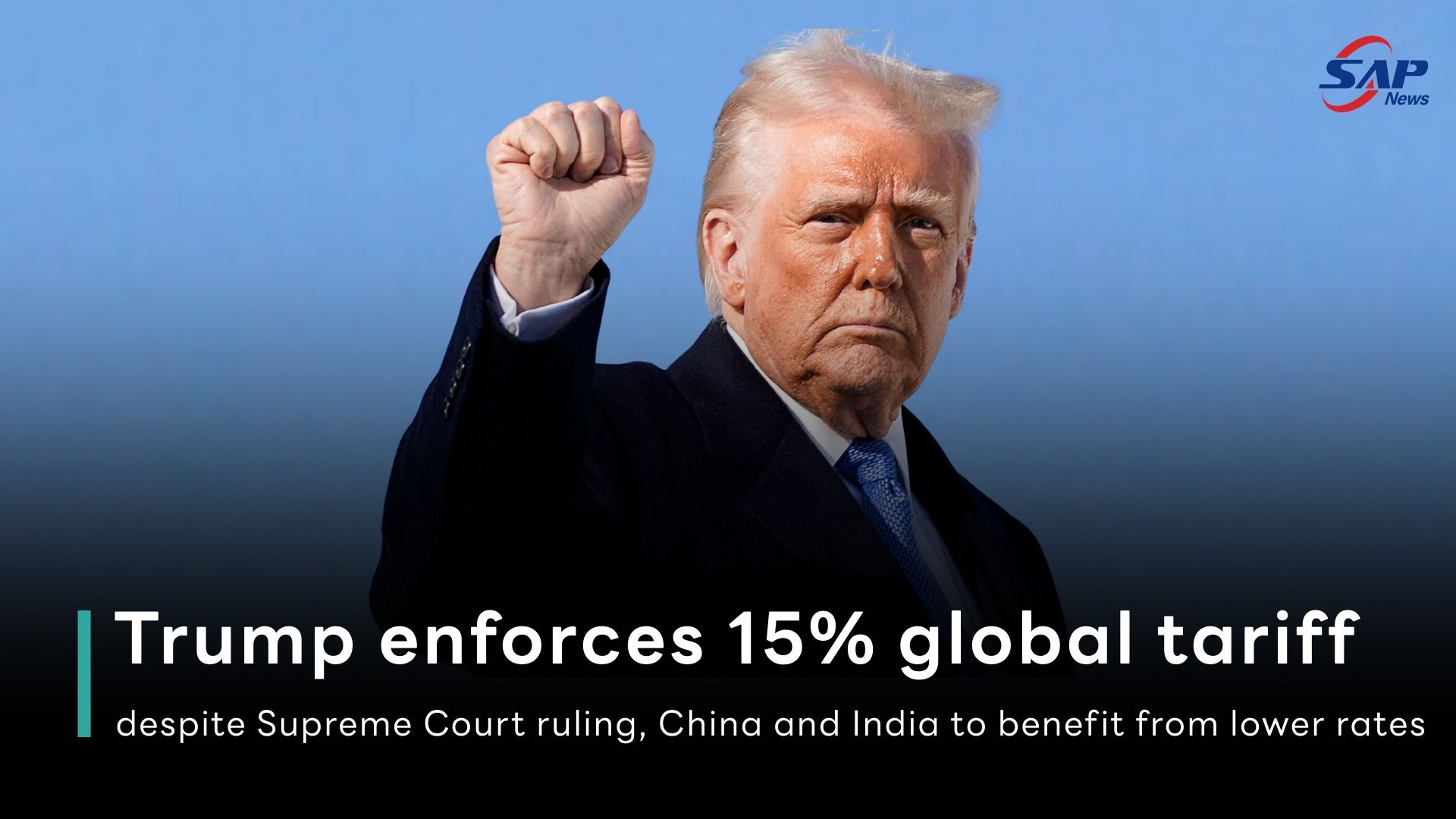
On February 20, 2026 (local time), the U.S. Supreme Court ruled 6-3 to uphold a lower court's decision that President Donald Trump unlawfully exercised his authority in setting customs tariffs on other countries. The court stated that this action exceeded the scope of presidential powers. While it was an executive action under the International Emergency Economic Powers Act (IEEPA), the court ruled that the situation could not be considered a national emergency; therefore, the authority to determine tariff rates belongs to the legislative branch or Congress.
IEEPA is a law designed to handle emergency situations. If a situation is deemed an emergency, the executive branch, led by the President, possesses broad powers to set customs tariffs with foreign nations.
However, the court found that Trump's Reciprocal Tariffs did not meet the criteria for emergency tariff setting. Consequently, both the lower court and the Supreme Court ruled the action unlawful and ordered a "stay" (suspension) on the collection of said tariffs.
Despite the Supreme Court's ruling that the IEEPA tariff collection was unlawful, there is still no clear guidance regarding the refund of collected taxes to consumers and businesses. Trump told reporters that any potential refunds would be tied up in the litigation process for several years.
Meanwhile, several reports indicate that approximately $130 billion or around 4 trillion Thai Baht has been collected through these reciprocal tariffs. Some experts analyze that if the court orders refunds, only large corporations might receive them, as they have the financial resources necessary for the refund application process.
15% Universal Tariff Rate
Following the Supreme Court's decision, Trump retaliated by signing a proclamation to use an alternative law: Section 122 of the Trade Act. This allows him to temporarily levy customs tariffs at a rate of 10% for all countries.
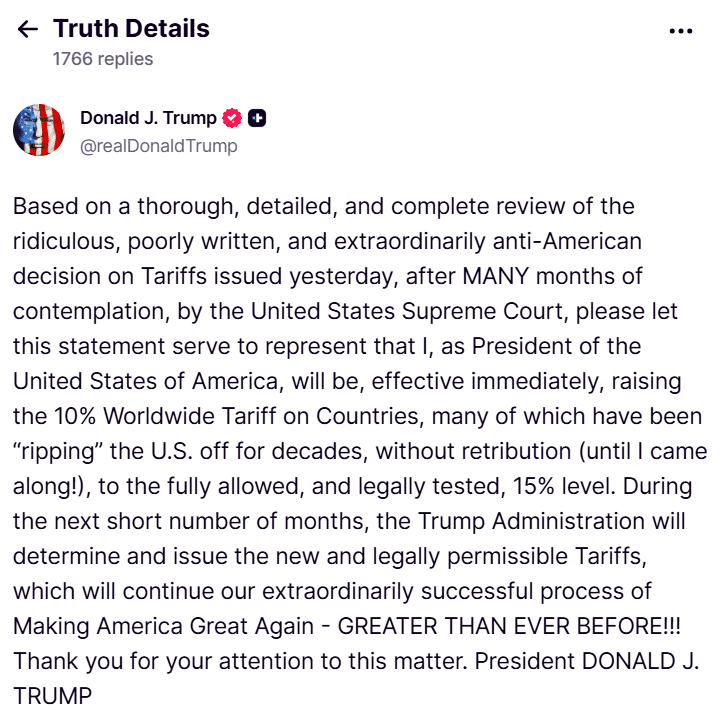
Photo: Truth Social (@realDonaldTrump)
Subsequently, on February 21 (local time), Trump posted on Truth Social stating that the U.S. would increase the temporary tariff from 10% to 15%. Under Section 122, the U.S. can collect these tariffs for 150 days unless Congress considers an extension. The universal tariff rate will take effect starting February 24, 2026, at 00:01 local time.
In addition to the 15% universal tariff, Trump is examining whether other laws can be used to levy additional duties, such as Section 301 of the Trade Act which grants the U.S. Trade Representative power to set tariffs if trading partners engage in unfair practices and Section 232 of the Trade Expansion Act which allows the executive branch to set import tariffs on goods deemed a threat to national security. These laws can only be enforced after an investigation is completed.
U.S. Treasury Secretary Scott Bessent stated that collecting the universal tariff under Section 122, combined with tariffs under Sections 301 and 232 to replace previous tax revenue, will result in this year's tax revenue remaining largely unchanged from before.
However, the U.S. has measures to exempt certain strategic and economically significant goods from import tariffs to reduce the impact on consumers and maintain internal stability. Exempted or limited categories include agricultural products and beef under free trade agreements such as with Canada and Mexico, as well as goods already subject to security-related taxes like steel and automobiles. Furthermore, these exemptions cover high-necessity items such as critical minerals.
Global Market Dynamics: China and India Gain Advantage
The shift from reciprocal tariffs to a universal tariff has significantly impacted global market volatility. Specifically, countries that previously benefited from low import tariffs are now at a disadvantage, while countries that were previously hit with higher rates than others have emerged as winners.
“China, India, and Brazil” are three countries that were heavily affected by the reciprocal tariffs, facing rates of 30%, 50%, and 50%, respectively, before the Supreme Court's ruling. Therefore, the enforcement of a universal rate gives these countries a competitive edge in the global market, making them the group that benefits most from the new tax structure.
Experts analyze that the universal tariff will favor low-cost producers in Asia, particularly China, as goods exported to the U.S. will remain cheap even after including the tax.
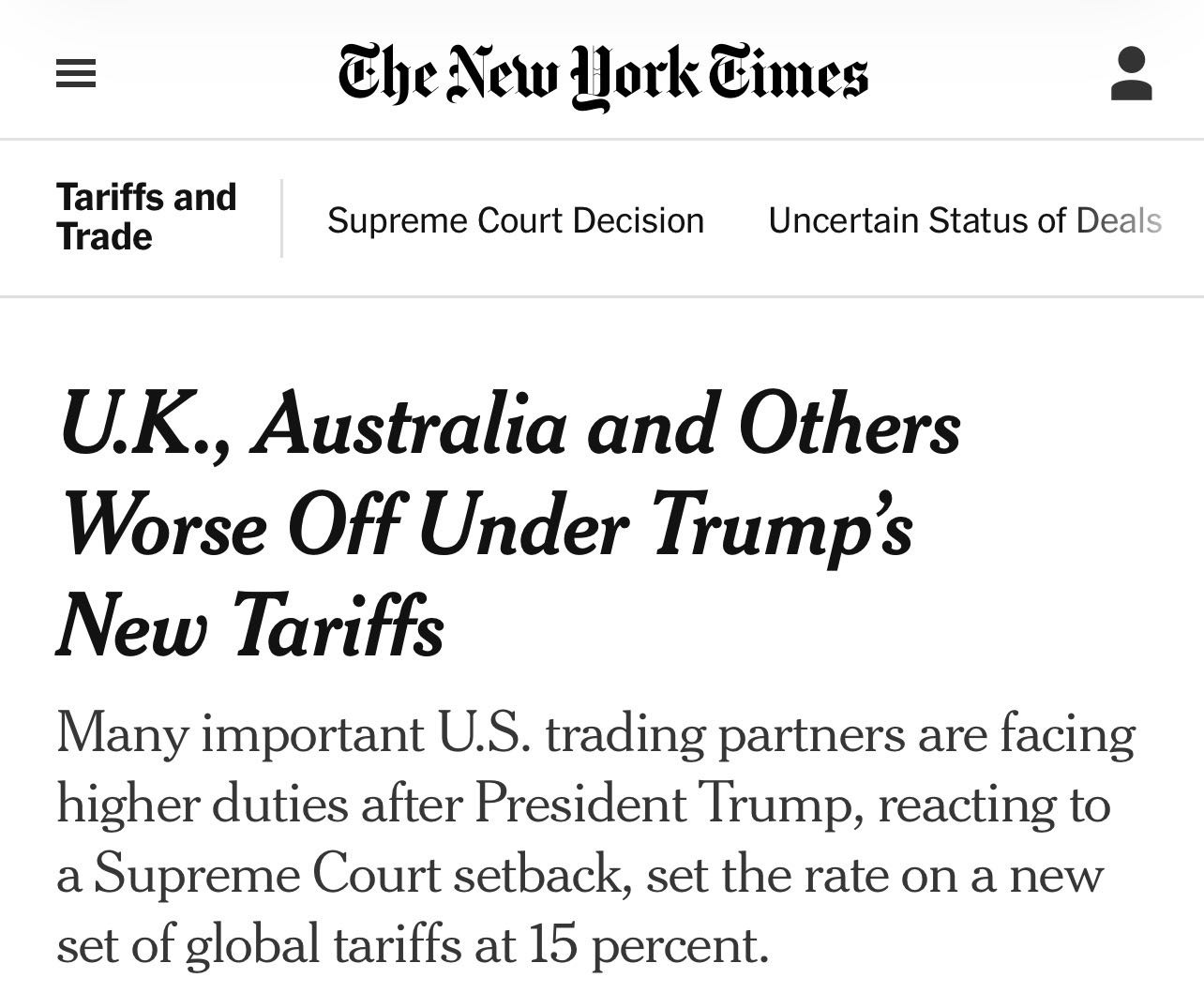
Photo: The New York Times
Conversely, the United Kingdom and Australia, which previously benefited from reciprocal rates as low as 10%, have become victims of the new system as their rates increase by 5%. As for Japan, although the universal and reciprocal rates are both 15%, the fact that the rate is now equal for all countries reduces the competitive advantage Japan once held in exporting goods to the U.S.
This change in tariff rates impacts not only competitive advantages but also international negotiation agreements. When countries previously negotiated reciprocal rates with the U.S., some, such as India and Indonesia, used concessions as a bargaining tool.
Trump has warned countries to stick to the original criteria used in those negotiations; otherwise, the U.S. will consider additional new forms of taxation.
Does Thailand Truly Benefit?
Thailand is considered one of the countries benefiting from the universal rate, as its rate dropped from 19% to 15%. However, the lower tax rate is not a definitive indicator of long-term benefits.
The Thailand Business and News analyzed the impact on the Thai economy, stating that in the short term (3-6 months), the lower tariff rate will have a positive effect on Thai exports, allowing goods to compete on a level playing field.
Initially, there may be a front-loading phenomenon where Thai exporters rush shipments to take advantage of the lower rate before the 150-day window expires. Primary beneficiaries include electronics, electrical appliances, processed foods, and auto parts, which will boost capital market confidence and stimulate the relocation of production bases to Thailand.
However, in the long term, after the 150-day period for the 15% universal tariff ends, the global market may face uncertainty. The U.S. might consider stricter new measures to reduce trade deficits with various countries, including Thailand, which remains one of the top countries with which the U.S. holds a trade deficit.
Additionally, Thailand may face factors such as a strengthening Baht if the Dollar weakens. The risk of cheap Chinese goods flooding the ASEAN market instead of the U.S. market remains a significant pressure for the private sector and SMEs in maintaining competitiveness.
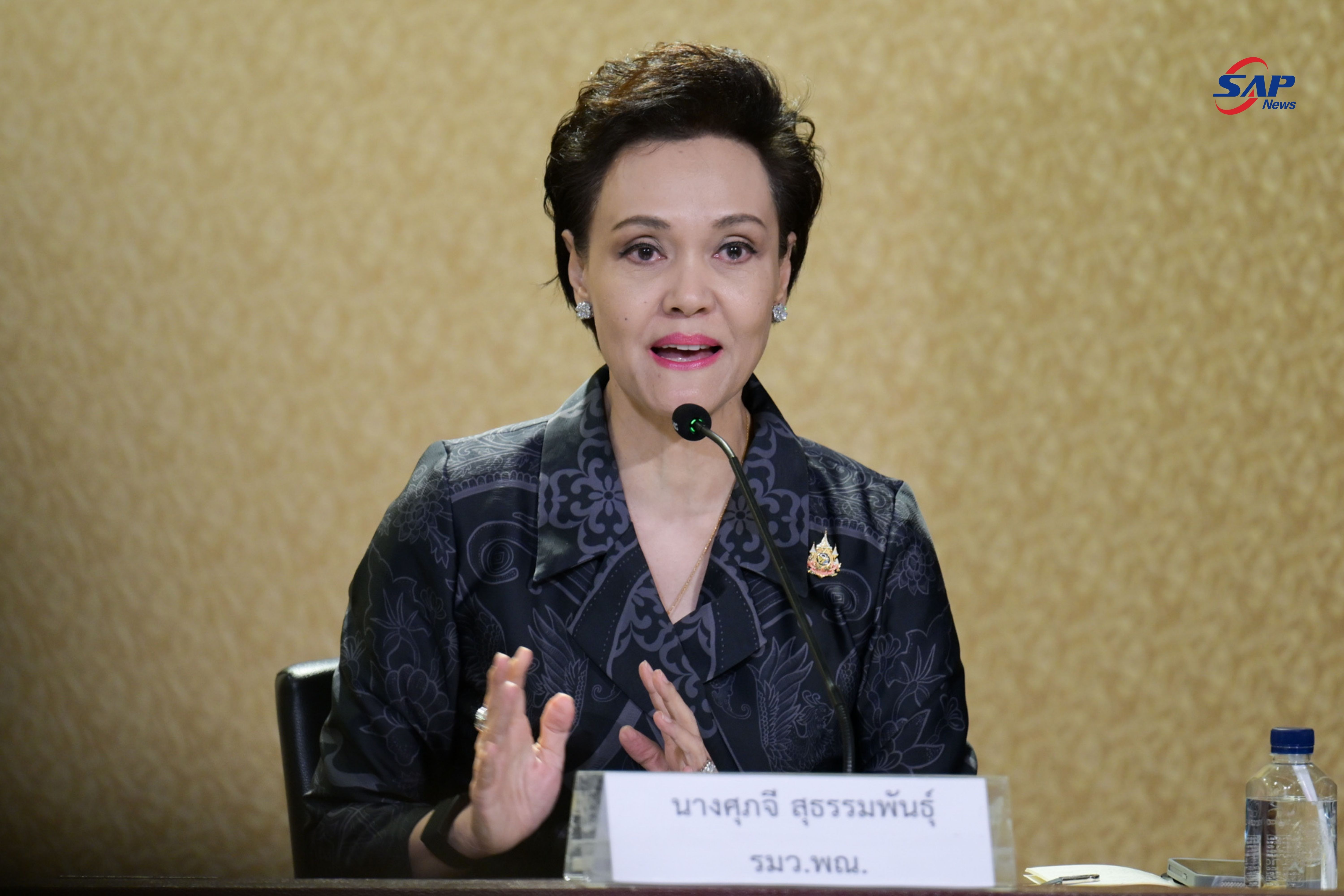
Ms. Suphajee Suthumpun, Thailand’s Minister of Commerce/ Photo: Weeraphat Ratsameerueangrong via SAP NEWS
Ms. Suphajee Suthumpun, Minister of Commerce, stated that while Thailand benefits from lower customs rates, the government will continue to negotiate consistently to maintain trade and investment stability and reduce risks from future tax volatility. She emphasized that the Ministry is closely monitoring U.S. trade policies.
Ms. Suphajee added that she has assigned the Department of International Trade Negotiations to conduct a comprehensive assessment of the situation, including potential changes in measures, legal and practical clarity, and the impact on the business sector.
SOURCE: BBC & Thailand Business and News
Copywriter: Siam Associated Press (SAP) Editorial Department
Pictures: Some illustrations come from the Internet. If there is any infringement, please contact us to delete it.
Source of material: official media /online news
273/3 Ratchadaphisek Rd., Ratchadaphisek, Din Daeng, Bangkok, 10400
Email reporter@sapnewsth.com
Tel. 099 569 5964